Meat & Seafood Processing
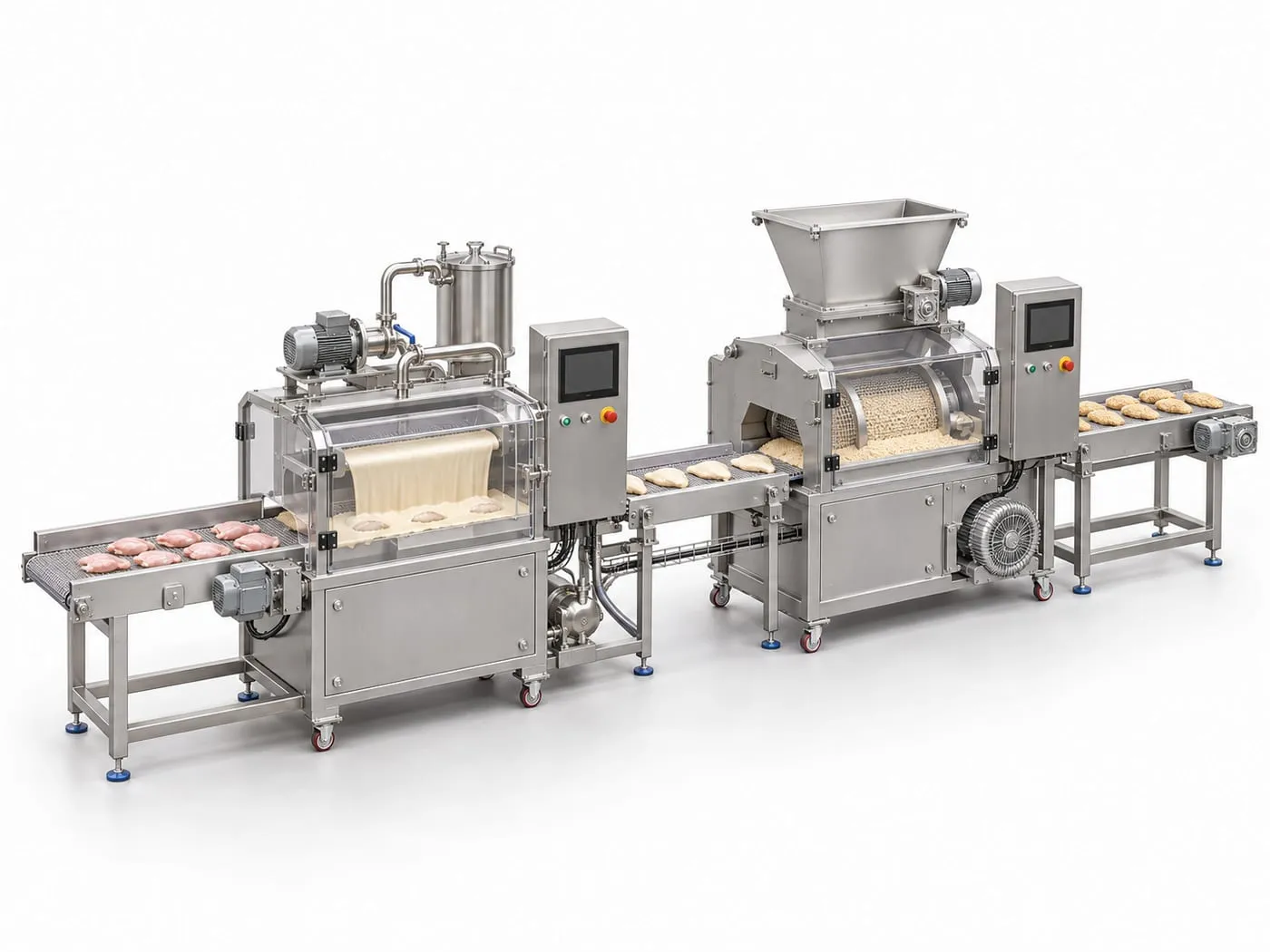
Coating and Breading Line
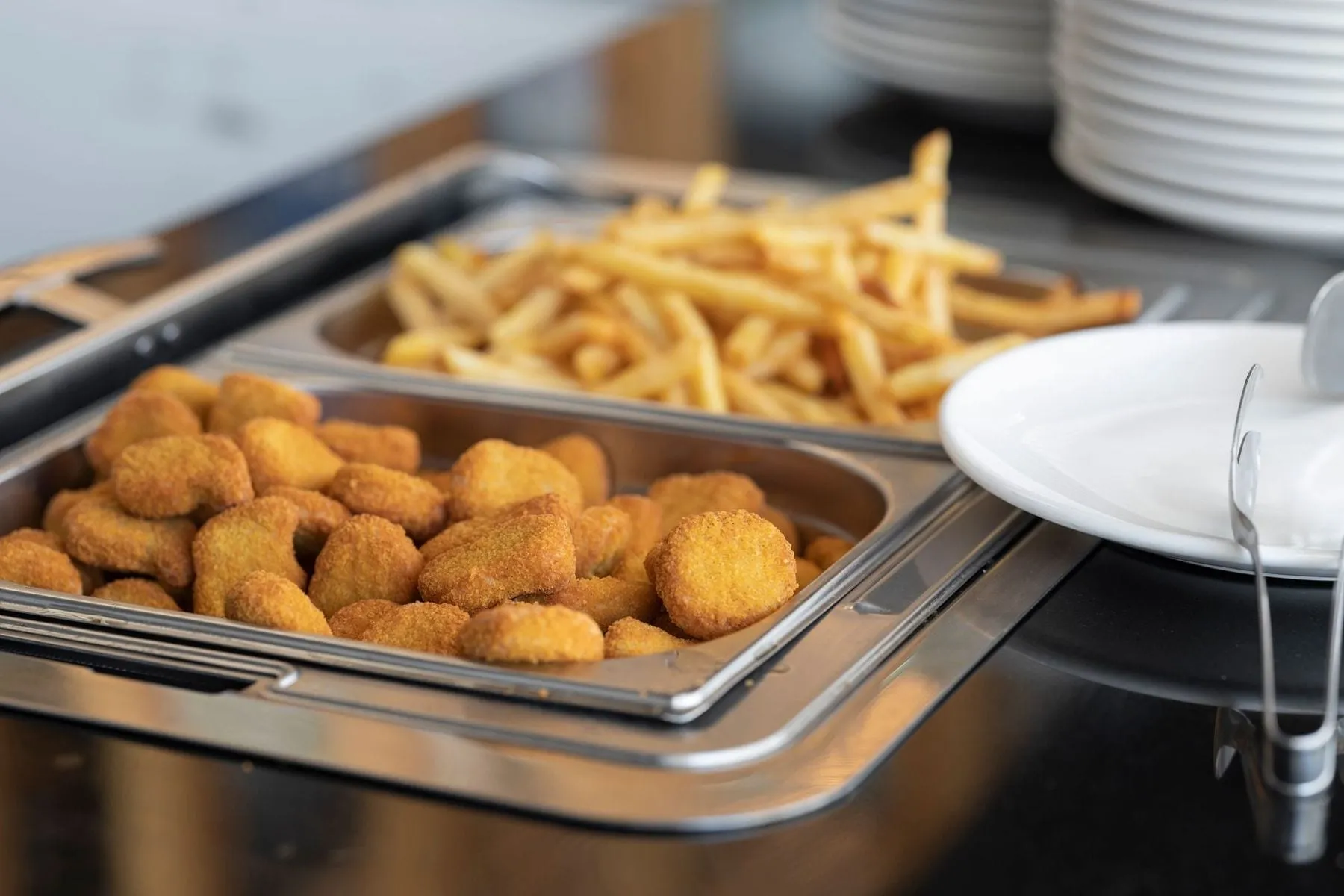
Factories making breaded chicken, fish fingers, coated vegetables or nuggets for frozen and food-service markets.
Sized to belt width and coated product output (kg/h of finished product)

06 · Meat & Seafood Processing — Equipment
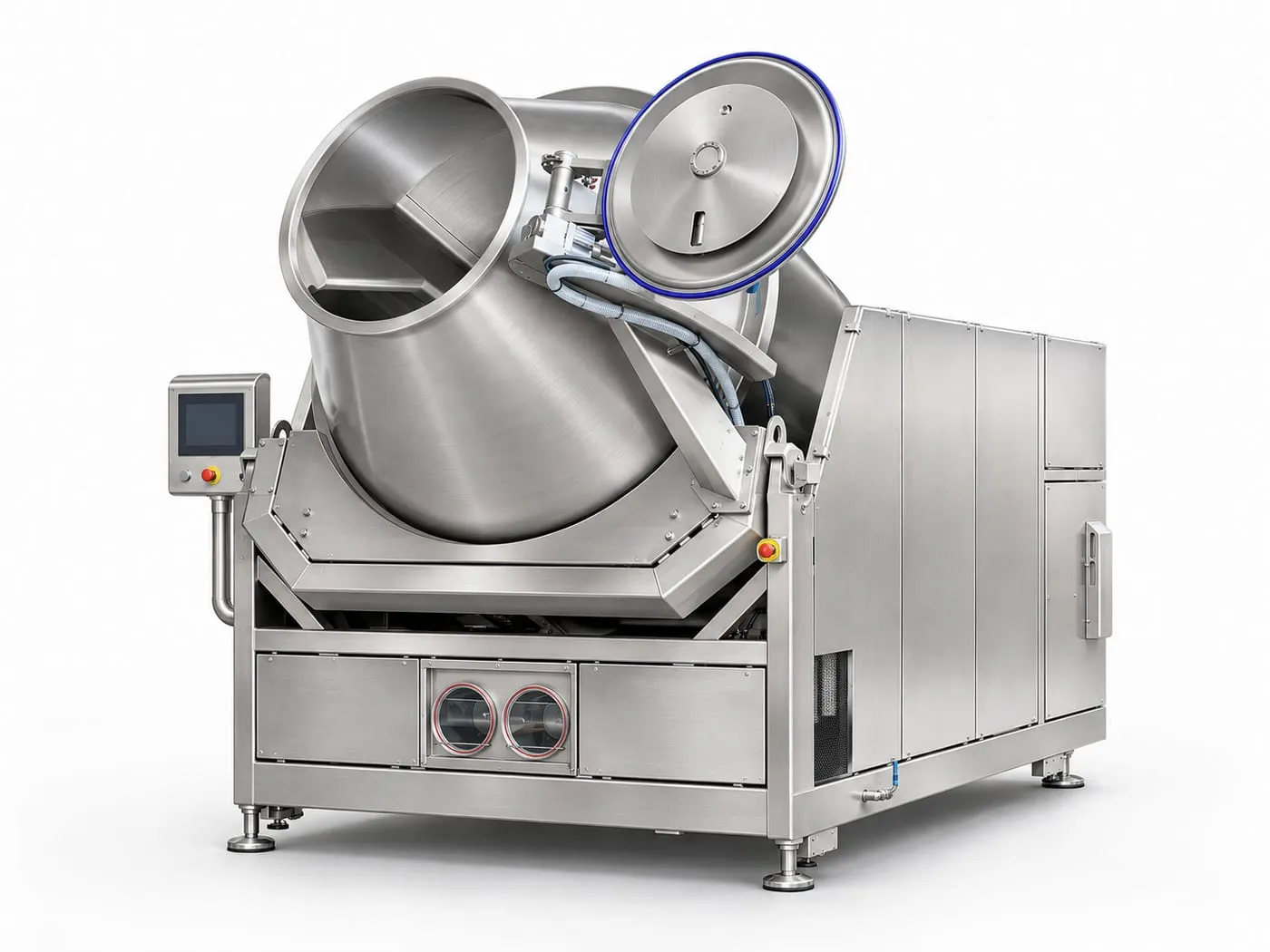
Turns meat or poultry in a drum under vacuum so marinade is distributed and taken up evenly, with controlled speed, time and pauses.
Short answer: A vacuum tumbler rotates meat with its brine or marinade in a sealed drum under vacuum, so the liquid spreads evenly and is taken up by the meat. The main configuration choices are the drum size based on effective load, how product is unloaded, and whether the drum needs its own cooling.
Meat and brine are loaded into a drum fitted with internal paddles; food-contact parts in stainless steel are standard on most models, to be confirmed per quote. The door is sealed and a vacuum pump draws air out of the drum. As the drum turns, the paddles lift the meat and let it drop, which massages the surface and helps salt-soluble proteins come out. Removing air reduces foaming and helps the marinade make contact with the whole surface.
The controller runs a programme of rotation and rest periods, with set speed and vacuum. Rest periods let the meat relax and absorb liquid. Because tumbling generates some heat, product temperature is held down either by placing the tumbler in a chilled room or by using a refrigerated jacket on the drum wall.
| Form | Suits | Watch out for |
|---|---|---|
| Horizontal drum | Small to mid batch plants | Manual unloading takes labour |
| Tilting discharge | Larger batches, unloading into bins or conveyors | Needs height clearance around the machine |
| Refrigerated jacket | Long cycles in an unchilled room | Needs a chiller or refrigeration connection |
Tumbling normally follows a brine injector for whole-muscle products, or comes straight after cutting for diced or small items. Marinated product then moves to cooking, coating on a batter and breading line, freezing in a food freezer, or packing on a vacuum packaging machine.
Horizontal drum
the simple choice for batch marinating where product is unloaded by hand or into a trolley.
Tilting discharge
the drum tips to unload into bins or onto a conveyor, useful for larger batches and fewer manual handling steps.
Refrigerated jacket
a cooled drum wall keeps product cold during long tumbling cycles when the room itself is not chilled.
Our engineers check these points with you, so the quotation fits your site rather than a catalogue default.
For thin cuts, wings or diced meat, tumbling alone is often enough. For thick whole muscle such as ham or whole breast, many plants inject first so brine reaches the centre, then tumble to spread it and work the surface proteins.
A tumbler needs free space for the product to lift and fall. Overloading reduces the tumbling action and gives uneven results. We size the drum on the effective load for your product rather than its total volume.
Piece size, meat temperature, brine recipe, vacuum level and drum speed. Times are set during trials with your recipe; we do not give a fixed number without knowing the product.
Tell us your raw material, finished product and target output. Our engineers reply with a matched configuration and quotation.
What to send with your inquiry
Email sales@hnfoda.com
Meat & Seafood Processing
Factories making breaded chicken, fish fingers, coated vegetables or nuggets for frozen and food-service markets.
Sized to belt width and coated product output (kg/h of finished product)
Meat & Seafood Processing
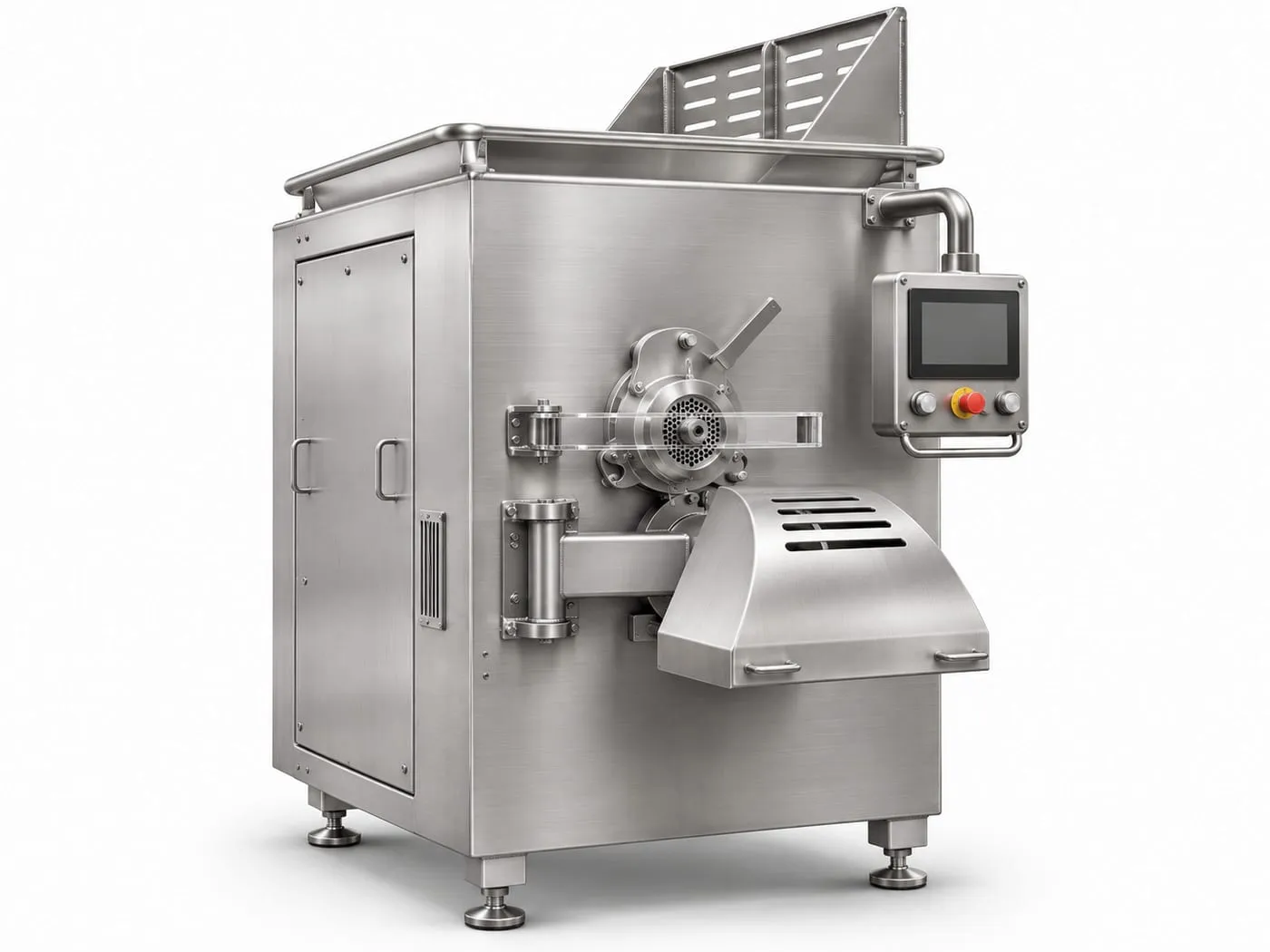
Meat plants and food factories making sausages, patties, dumpling fillings or minced products.
Sized to raw meat input (kg/h) at a stated feed temperature and plate size
Meat & Seafood Processing
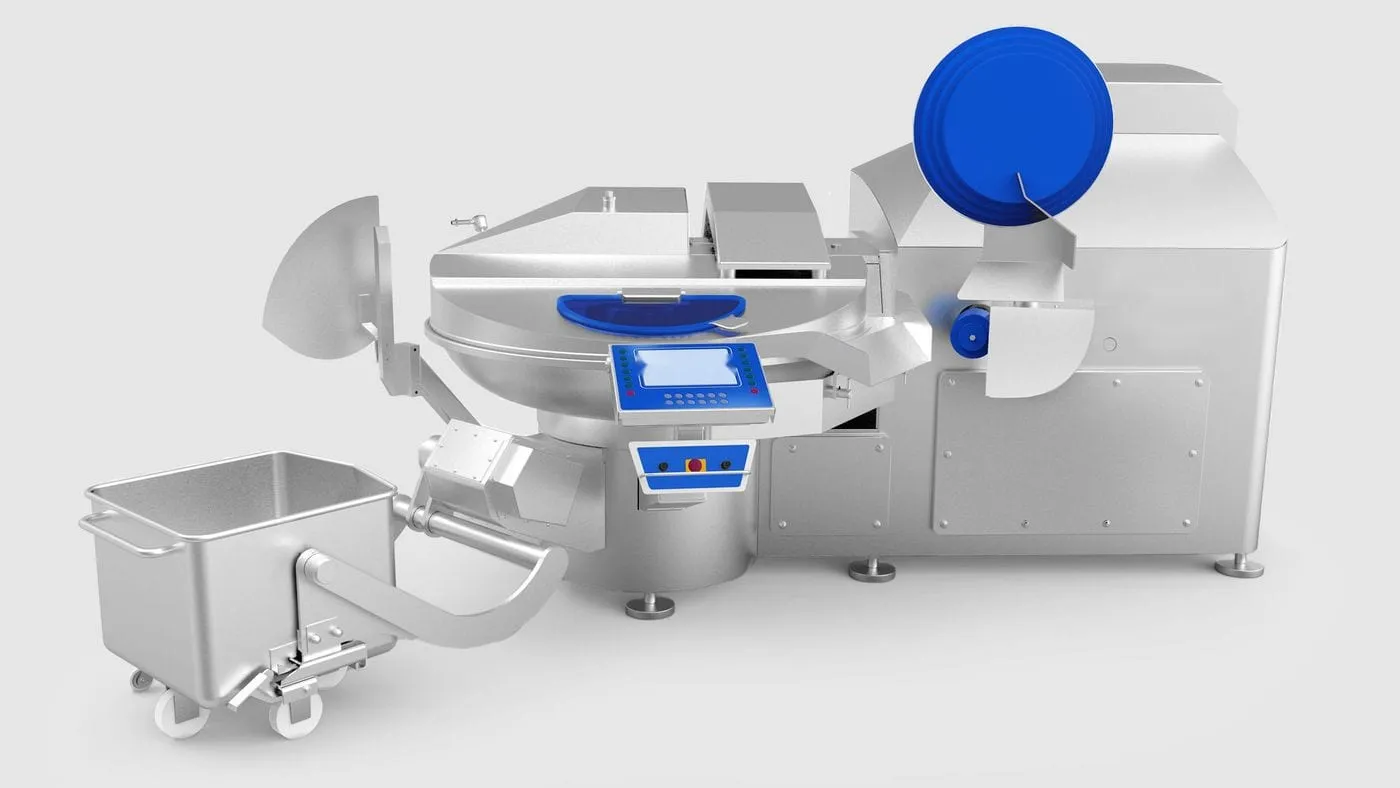
Sausage, meatball, fish ball and dumpling-filling producers who need fine or emulsified textures.
Sized to bowl volume and batch weight (kg per batch)
Meat & Seafood Processing
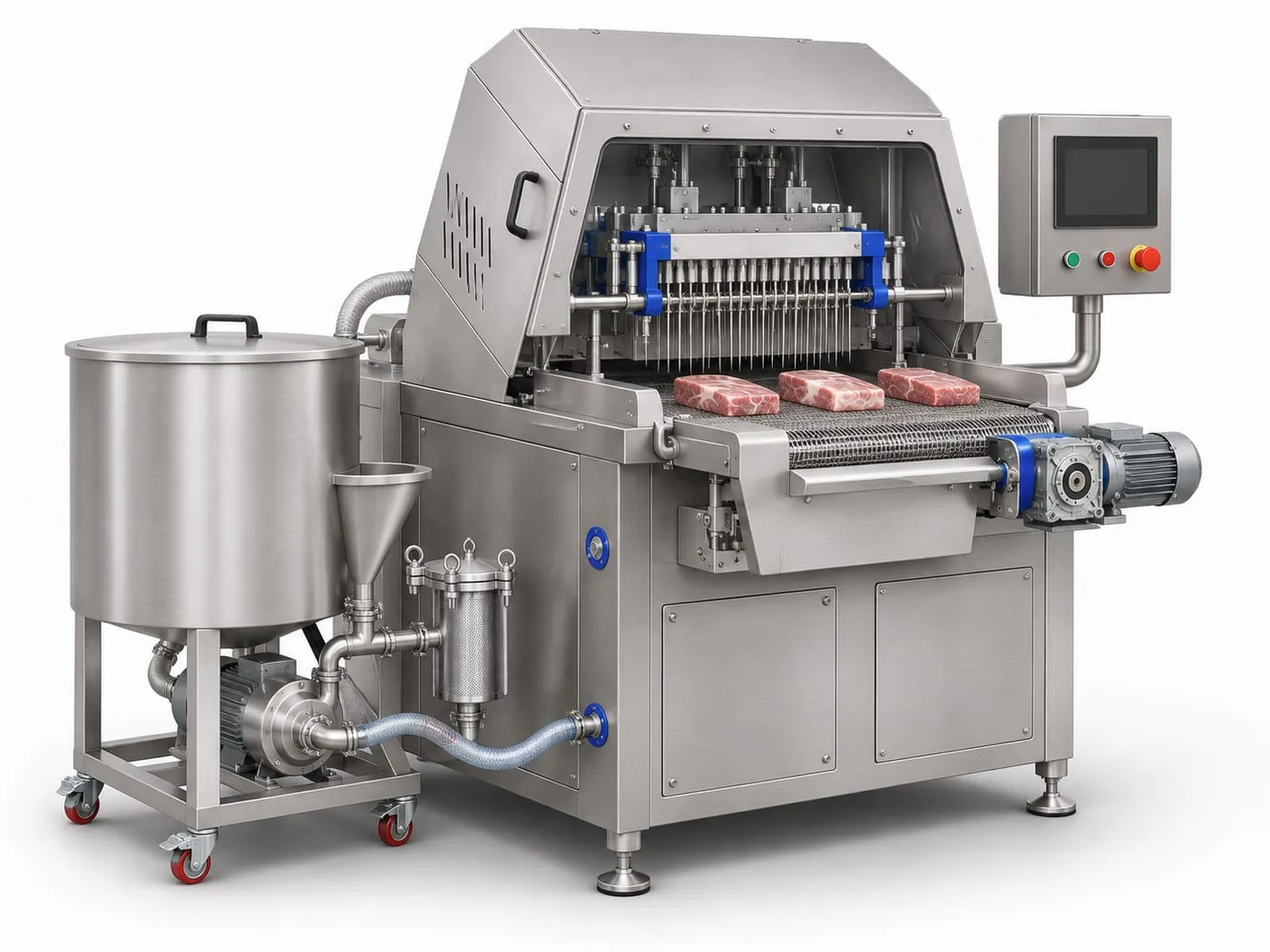
Processors making ham, bacon, cured cuts or marinated whole poultry and large cuts.
Sized to belt width and raw meat throughput (kg/h) at the target injection rate