Fruit & Vegetable Processing
Blanching and Cooling Line
Frozen vegetable, dehydrated vegetable and canning plants that need controlled heat treatment before the next step.
Sized to product input (kg/h) at your residence time and piece thickness

01 · Fruit & Vegetable Processing — Equipment
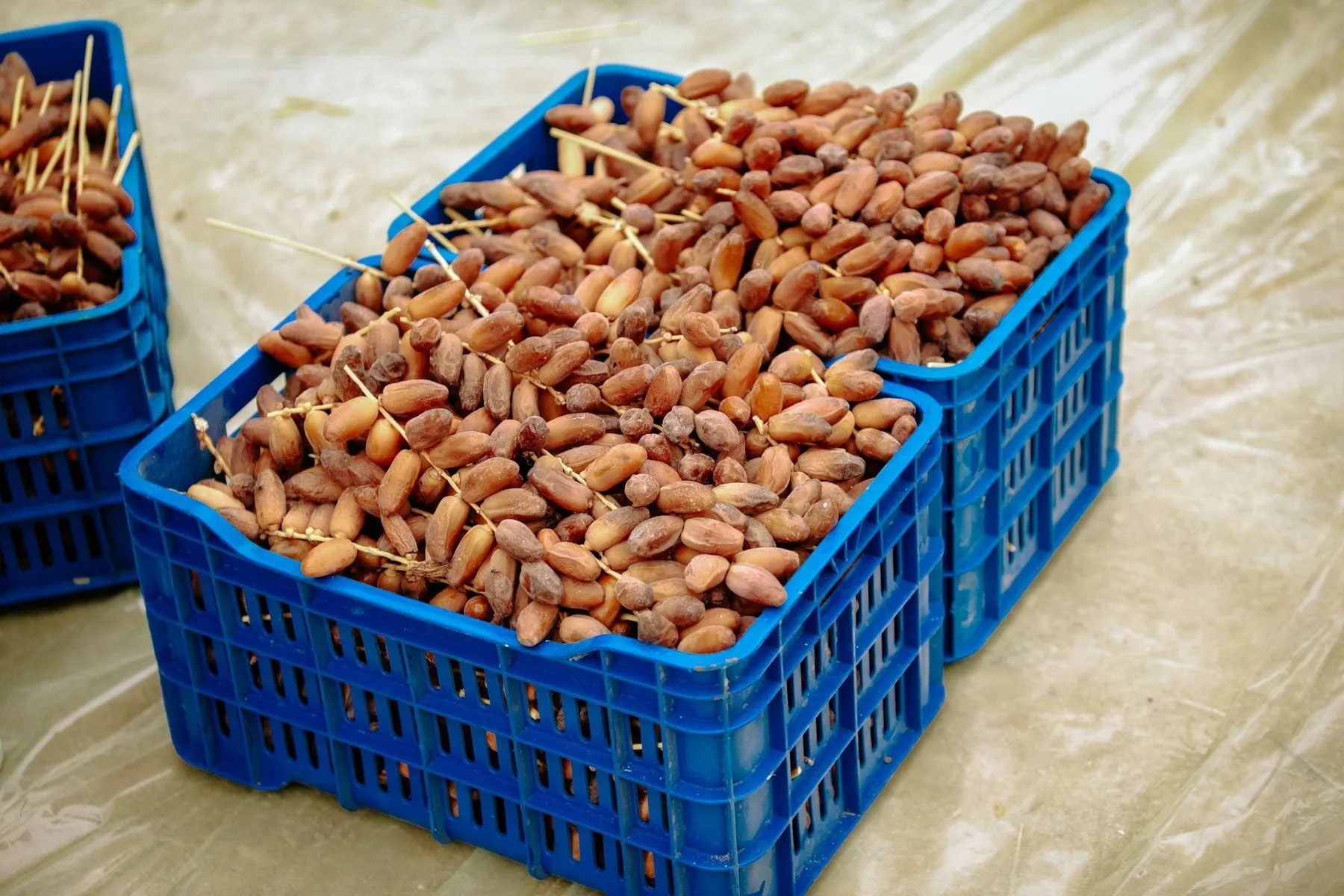
Removes stones from dates, cherries, plums and similar fruit so they can be sold whole, sliced, dried or made into paste.
Short answer: A fruit pitting machine removes the stone from dates, cherries, plums, apricots and similar fruit so the flesh can be sold whole, sliced, dried or made into paste. The fruit species and how even its size is decide the tooling, and your end product decides whether the fruit must stay whole or can be opened.
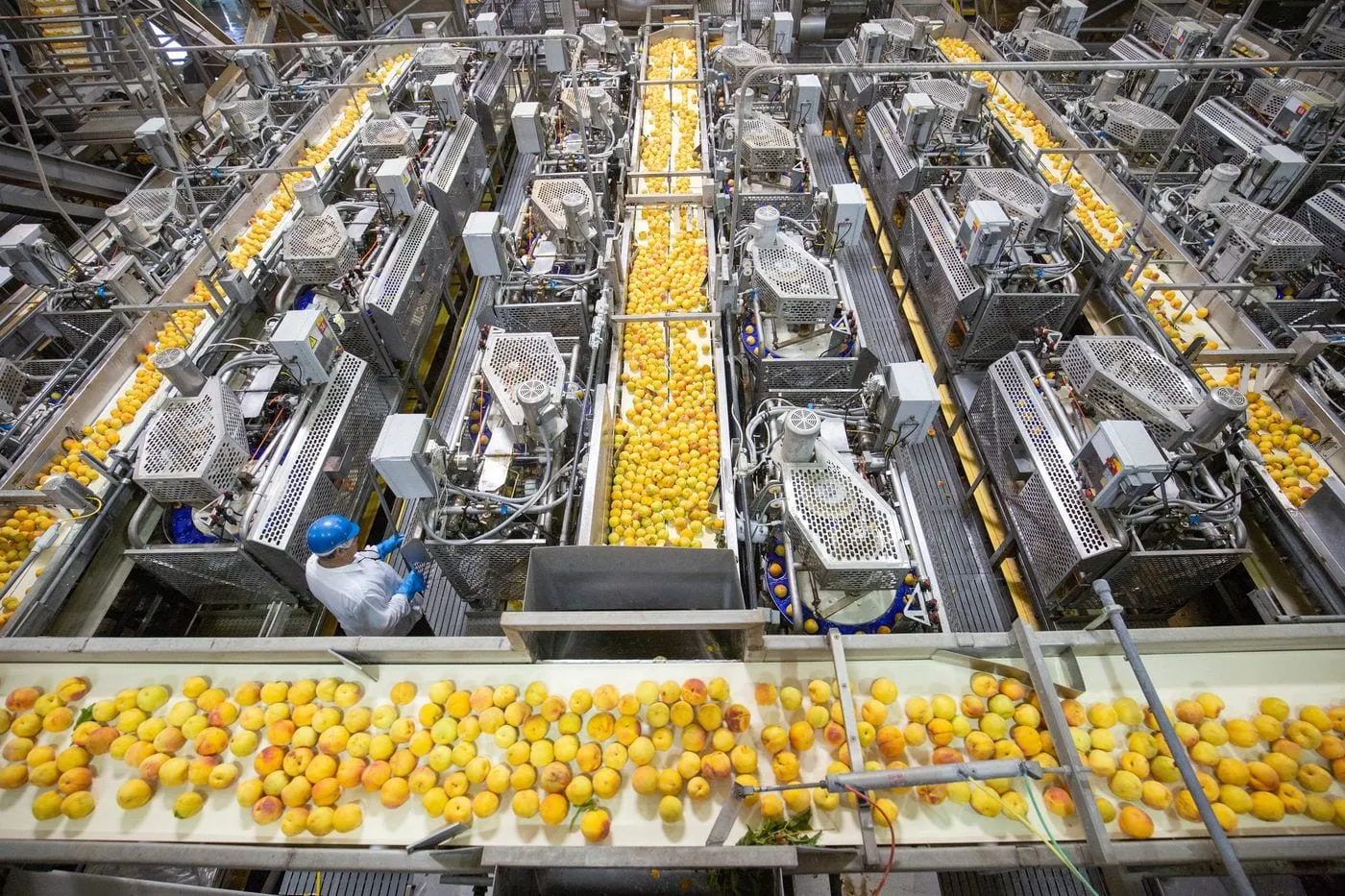
Fruit is fed from a hopper onto a vibrating tray or chain that places one piece in each cup. In a punch pitter, the cup carries the fruit under a pin that pushes the stone out through the bottom; the stone falls into one outlet and the pitted fruit is lifted off into another. Several lanes work side by side.
A roller pitter passes the fruit between profiled rollers that split or press the flesh away from the stone, which then drops through a gap. This leaves the fruit open, so it suits products that will be dried, sliced or made into paste rather than sold as whole fruit.
Dedicated machines combine these principles with tooling for a single fruit, such as dates or jujubes, to keep the stone removal reliable at higher speed.
| Form | Suits | Watch out for |
|---|---|---|
| Positioned punch pitter | Whole pitted dates, cherries, olives, plums | Needs graded fruit; lower speed per lane |
| Roller pitter | Fruit for paste, slices or drying | Fruit is not kept whole |
| Dedicated multi-lane | High volume of one fruit and size range | Less flexible for other fruit |
Pitting follows a fruit and vegetable washer and a fruit and vegetable sorter. Pitted fruit goes on to a hot-air dryer, a fruit and vegetable pulping line or packing. For dates, the pitter is usually part of a date processing line.
Positioned punch pitter
each fruit sits in a cup and a pin pushes the stone out; best when the fruit must stay whole.
Roller pitter
rollers open the fruit and separate the stone; suits fruit that will be sliced, dried or pulped.
Dedicated multi-lane pitter
tooling built for one fruit and size range to reach higher throughput.
Our engineers check these points with you, so the quotation fits your site rather than a catalogue default.
The cups and pins are made for a size range. Fruit that is too small sits off-centre and gets torn; fruit that is too large jams or keeps its stone. Grading the fruit first gives a cleaner result.
Usually only with a different set of cups and pins, and sometimes not at all, because the fruit shape and stone size differ a lot. Tell us every fruit you plan to run.
It depends on fruit uniformity, ripeness and machine setting, so we do not quote a fixed figure. For products where stone fragments are a safety issue, plants often add an inspection step after pitting.
Tell us your raw material, finished product and target output. Our engineers reply with a matched configuration and quotation.
What to send with your inquiry
Email sales@hnfoda.com
Fruit & Vegetable Processing
Frozen vegetable, dehydrated vegetable and canning plants that need controlled heat treatment before the next step.
Sized to product input (kg/h) at your residence time and piece thickness
Fruit & Vegetable Processing
Plants producing fruit puree, tomato paste base, jam, baby food, nectar or sauce bases.
Sized to raw fruit input (kg/h); pulp output depends on fruit and screen size
Fruit & Vegetable Processing
Plants washing fresh produce before peeling, cutting, blanching, drying or packing.
Sized to raw produce input (kg/h), not finished product
Fruit & Vegetable Processing
Potato, carrot, cassava, ginger and taro processors who wash and peel before cutting.
Sized to raw root crop input (kg/h or kg per batch)