Skip to content

02 · Dried Fruit & Nut Processing — Equipment

Freeze Dryer

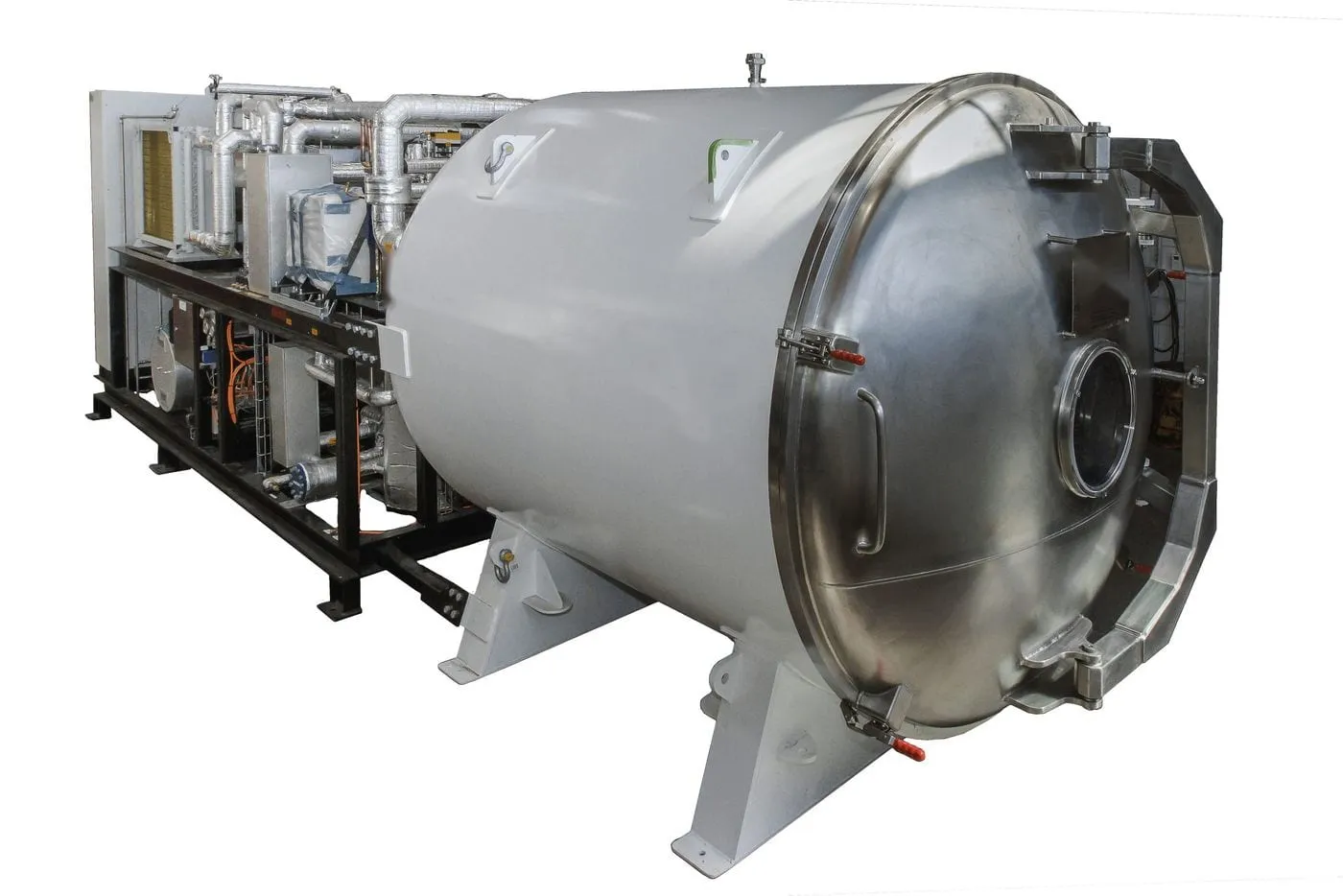
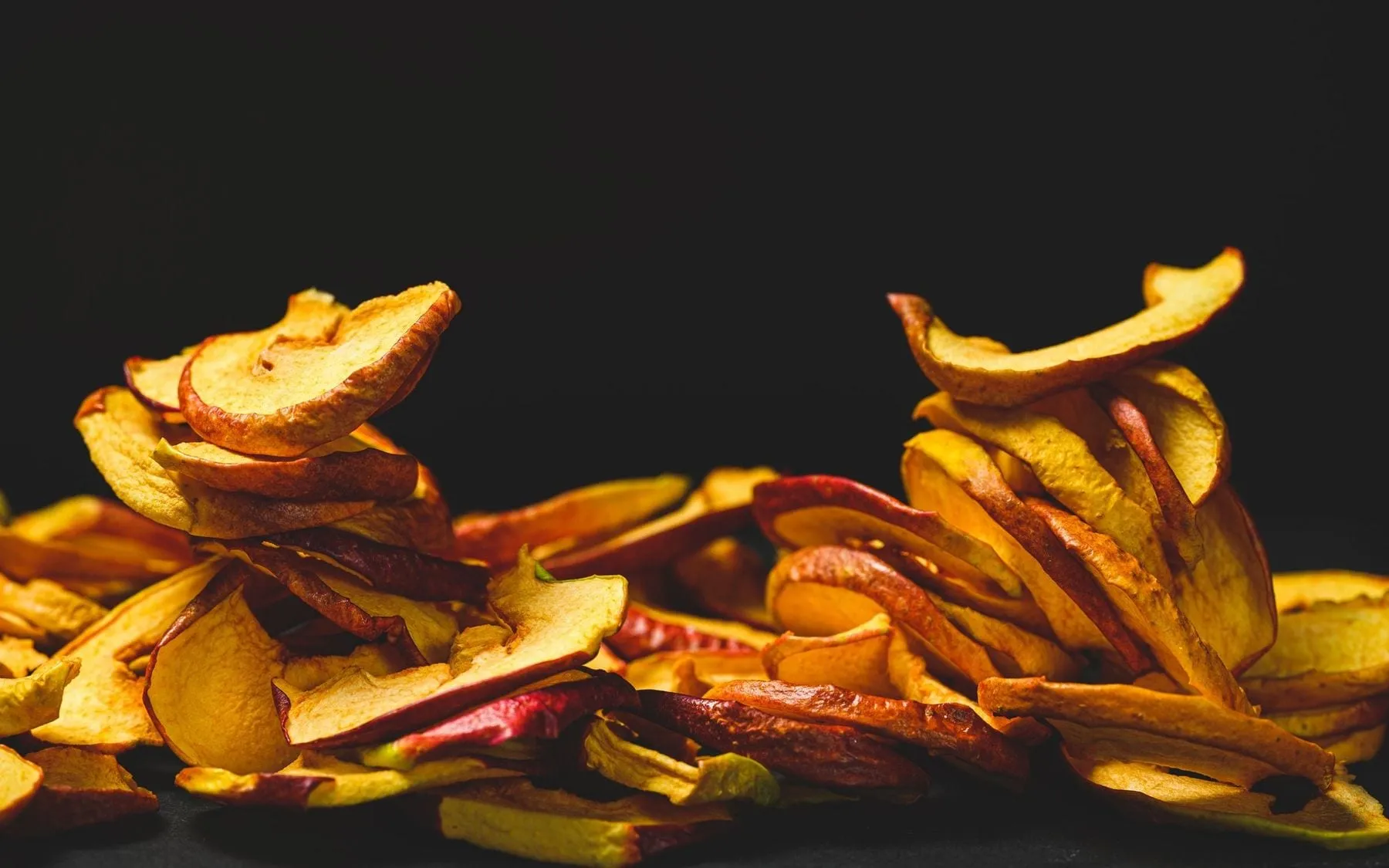
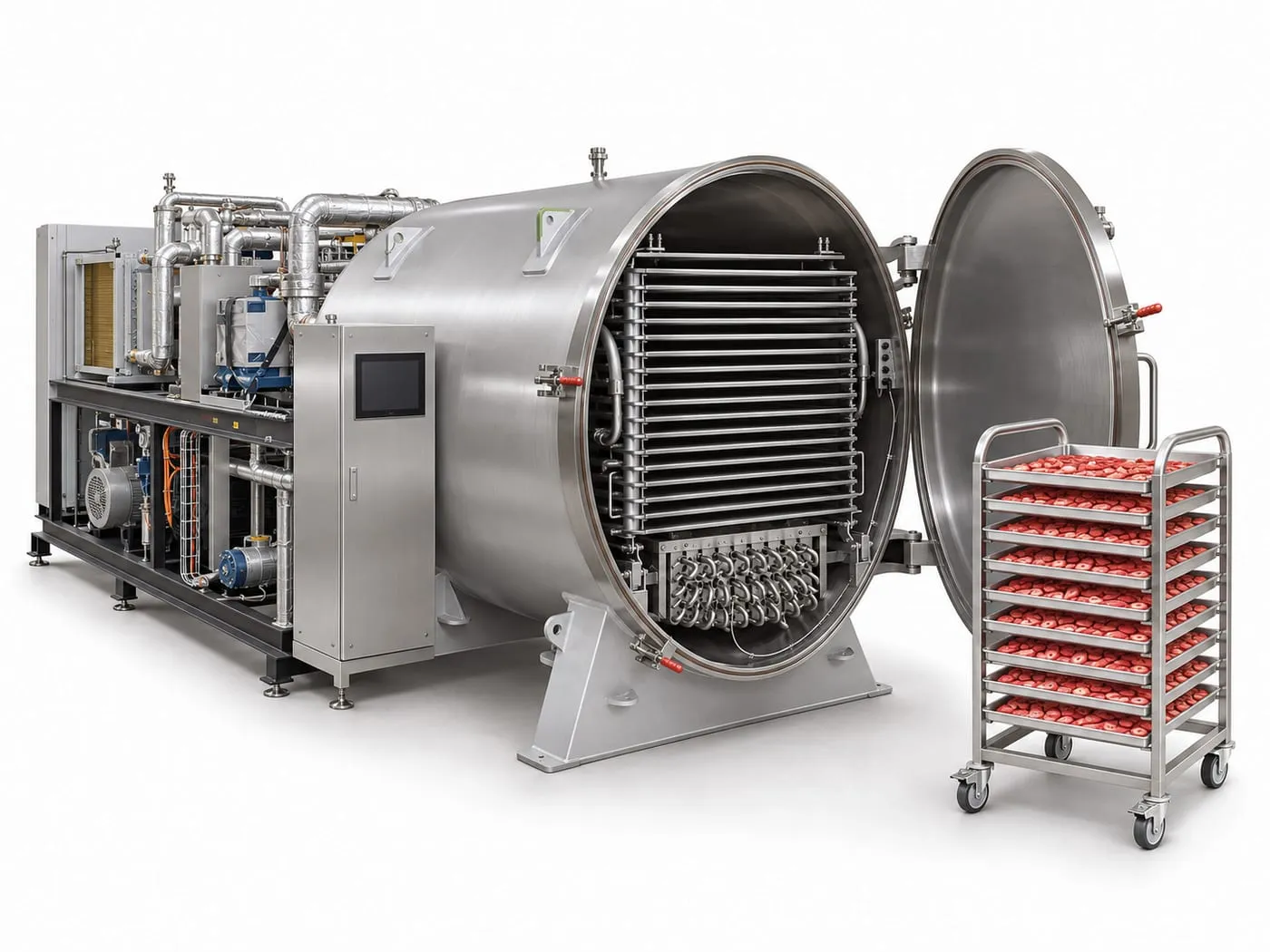
Freezes food and removes the ice under vacuum by sublimation, producing crisp, light products such as freeze-dried fruit and vegetable snacks.

Rating
Sized to fresh product loading per batch (kg or tray area) and cycle time
Versions
Cabinet batch unit · Industrial tray system
Best for
Producers of freeze-dried fruit, vegetable snacks, instant food ingredients and other high-value dried products
  • Batch sizes from development scale to production chambers
  • Shelf heating and vacuum controlled through the cycle
  • Condenser sized for the water load of your product
  • Suited to crisp, light products with good colour retention

Short answer: A freeze dryer first freezes food and then removes the ice under vacuum, so the water turns directly into vapour without the product shrinking much. The batch load of fresh product, the target cycle time and the condenser ice capacity together decide the size of the machine, and the texture and rehydration you want decide the cycle.

How it works

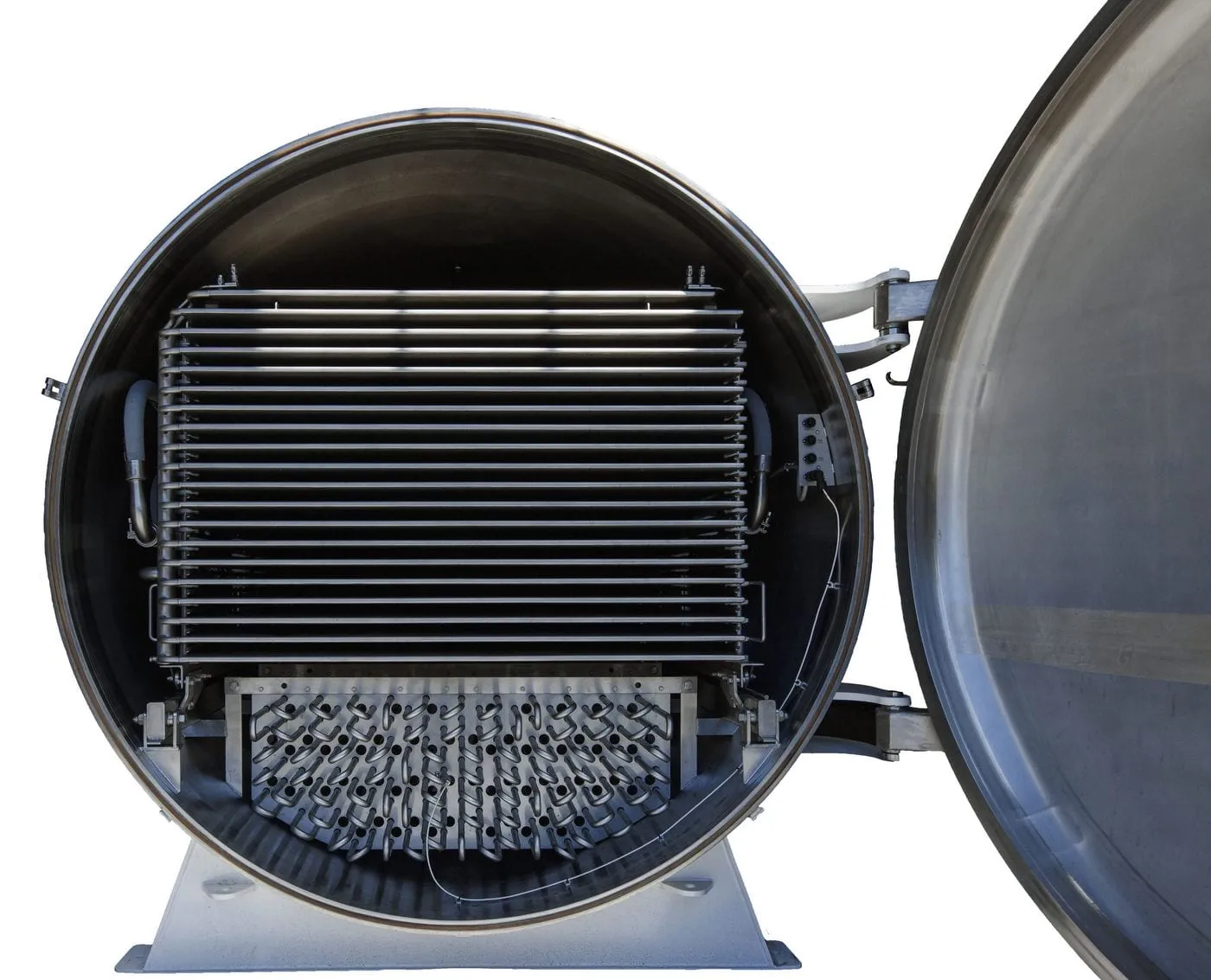
Prepared product is spread on trays and frozen, either on the dryer shelves or in a separate freezer. The trays go into a vacuum chamber, and vacuum pumps lower the pressure. Gentle heat is supplied through the shelves, so the ice in the product sublimes into vapour. The vapour travels to a very cold condenser, where it freezes again; this is the main drying stage.

When most of the ice is gone, shelf temperature is raised for secondary drying to remove water still bound in the product. At the end the chamber is brought back to atmospheric pressure, often with dry air or nitrogen, and the product is packed quickly because it picks up moisture from the air. The condenser is then defrosted before the next batch.

Which configuration fits

Form Suits Watch out for
Cabinet batch unit Product development, small-scale premium lines Throughput limited by single chamber cycles
Industrial tray system Daily production of fruit and vegetable snacks Needs freezing, tray handling and dry packing room

What we need from you to quote

  • Products, preparation (slices, dice, whole, puree) and thickness
  • Fresh product weight per day and how many batches per day you plan
  • Required final moisture, texture and rehydration behaviour
  • Freezing method before drying: on-shelf or a separate freezer
  • Power supply, cooling water and room conditions
  • Packaging method and moisture protection

Where it sits in a line

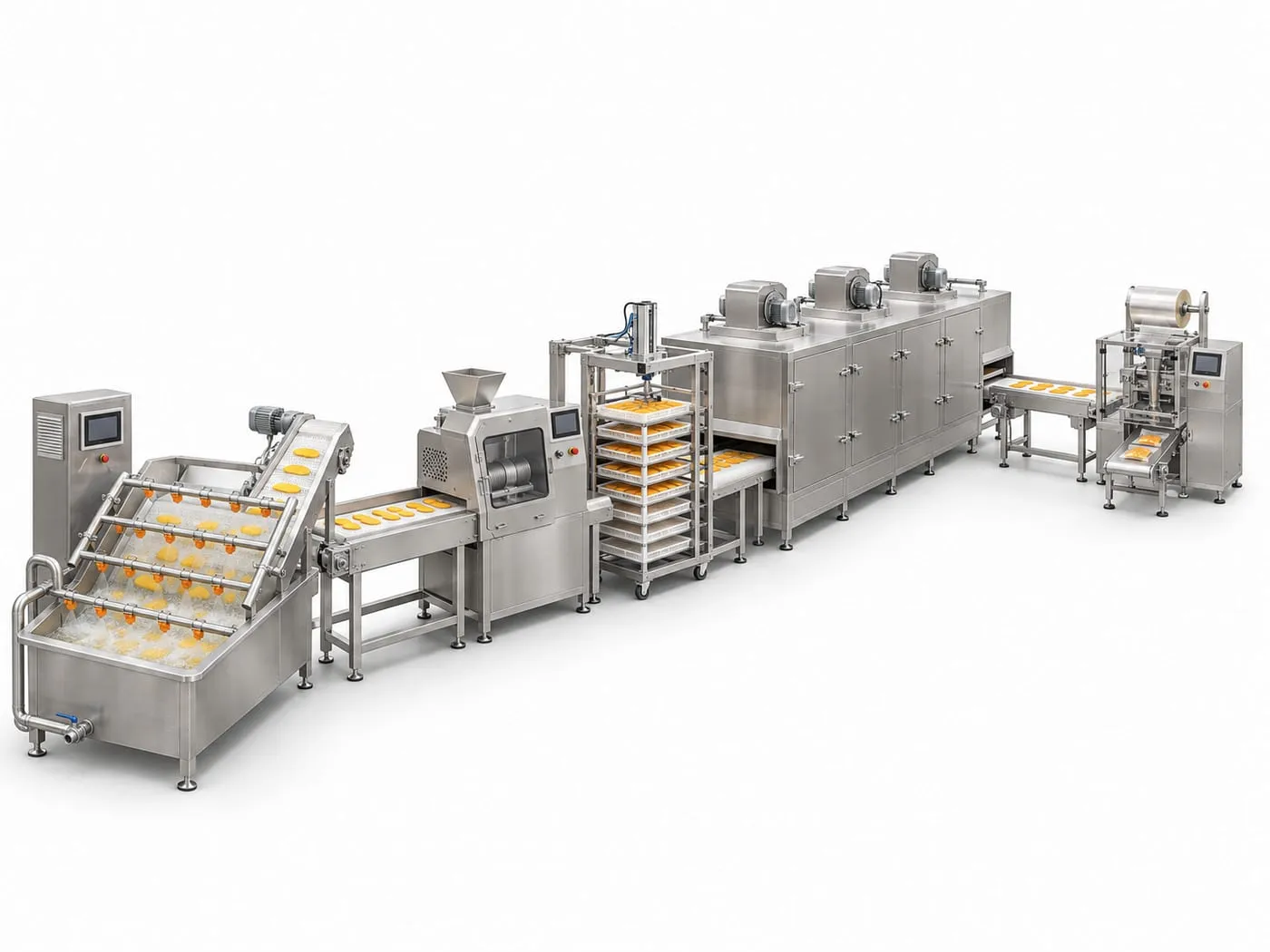
Product is prepared by a fruit and vegetable washer and a vegetable cutting machine, and may be pre-frozen in a food freezer. After drying it goes to packing, often with a multihead weigher and moisture-barrier pouches. It is the drying option for crisp products in a dried fruit processing line; compare it with a hot-air dryer.

Common configurations

  1. Option A

    Cabinet batch unit

    a single chamber with shelves; suits pilot production, product development and smaller batches.

  2. Option B

    Industrial tray system

    larger chambers with trolleys and separate freezing; suits continuous daily production.

What we confirm before quoting

Our engineers check these points with you, so the quotation fits your site rather than a catalogue default.

  1. 01Fresh product load per batch and tray area
  2. 02Target cycle time
  3. 03Condenser ice capacity for the water to be removed per batch
  4. 04Rehydration and texture requirements of the finished product
  5. 05How the end of drying is confirmed
  6. 06Freezing method before drying and packing after it

Frequently asked questions

  1. How long is a freeze-drying cycle?

    Cycles are long compared with hot-air drying and depend on product thickness, water content, loading and shelf temperature. We estimate the cycle from your product and refine it during trials.

  2. What affects the running cost?

    Refrigeration for freezing and the condenser, vacuum pumps and shelf heating all use energy over a long cycle. Loading density, cycle optimisation and local energy prices make the biggest difference.

  3. How do I know when drying is finished?

    Common methods are watching product and shelf temperatures converge, a pressure rise test when the chamber is isolated, and checking residual moisture of samples. We agree the method with you at commissioning.

Get a quote for the Freeze Dryer

Tell us your raw material, finished product and target output. Our engineers reply with a matched configuration and quotation.

What to send with your inquiry

  1. 1Raw material and its condition
  2. 2Finished product and packaging
  3. 3Target output — raw input or finished product
  4. 4Site photos, power supply, utilities

Email sales@hnfoda.com

Send your inquiry

Your details are used only to answer your inquiry — see our Privacy Policy.

Buyer guides

  • Dried Fruit & Nut Processing

    Dried Fruit Processing Line

    Investors and food companies starting or expanding dried fruit, fruit chip or dried fruit snack production.

    Sized to fresh fruit input (kg/h or tonnes per day); dried output depends on moisture removed

  • Dried Fruit & Nut Processing

    Date Processing Line

    Date packers and processors adding value with washed, pitted or paste products for retail and industry.

    Sized to whole date input (kg/h or tonnes per day)

  • Dried Fruit & Nut Processing

    Nut Butter Production Line

    Food companies and brand owners launching peanut butter, almond butter or nut spread products.

    Sized to roasted nut input (kg/h); output is close to input for pure nut butter

  • Dried Fruit & Nut Processing

    Nut Seasoning Line

    Snack nut producers making salted, spiced, honey-roasted or coated nuts.

    Sized to roasted nut input (kg/h) plus the seasoning added

WhatsAppRequest a quote