Bakery & Snack Food
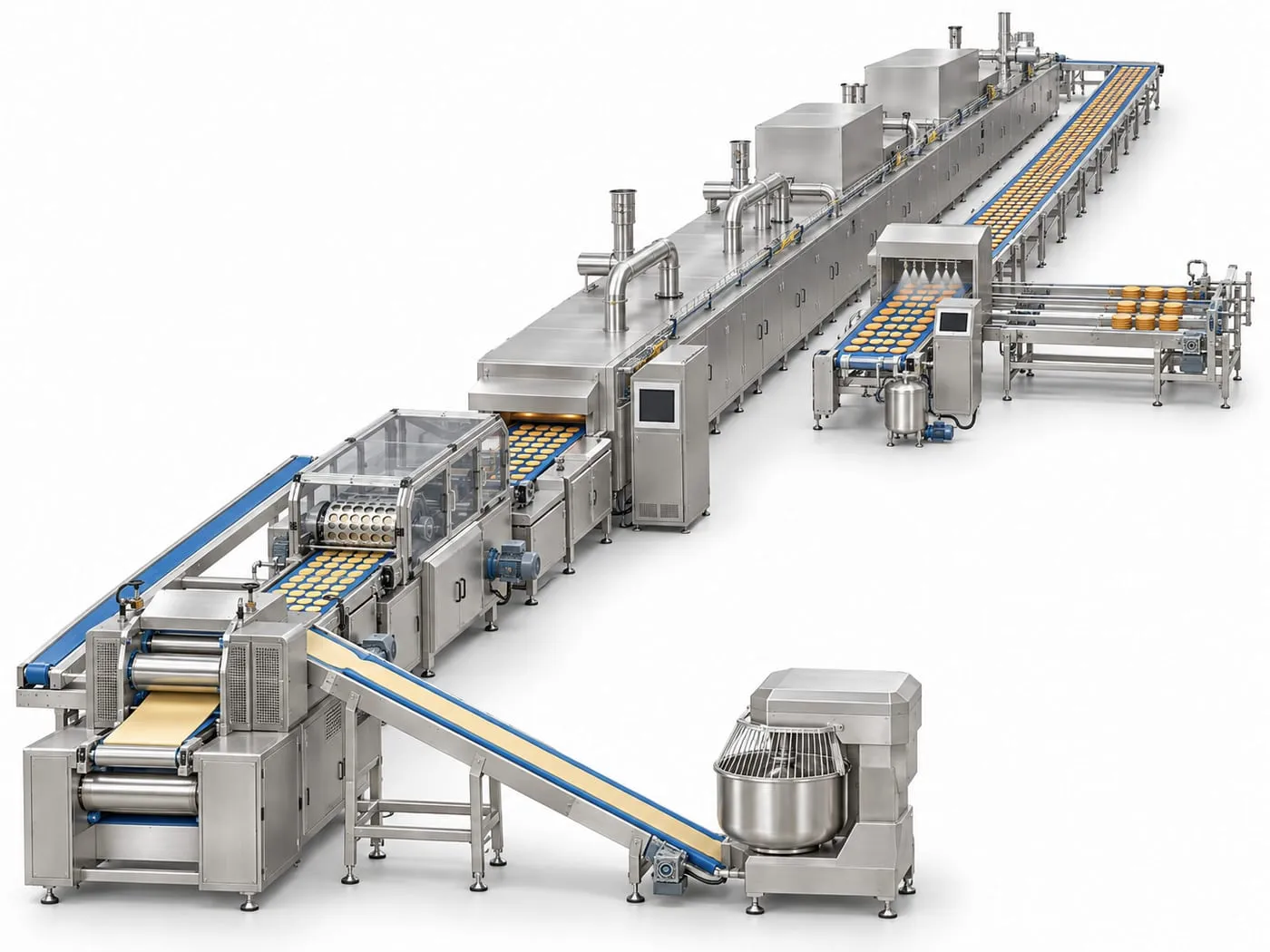
Biscuit Production Line
Biscuit factories, private-label bakeries and investors entering packaged biscuits.
Sized to baked biscuits per hour (kg/h of finished product) for a given size and weight

05 · Bakery & Snack Food — Equipment
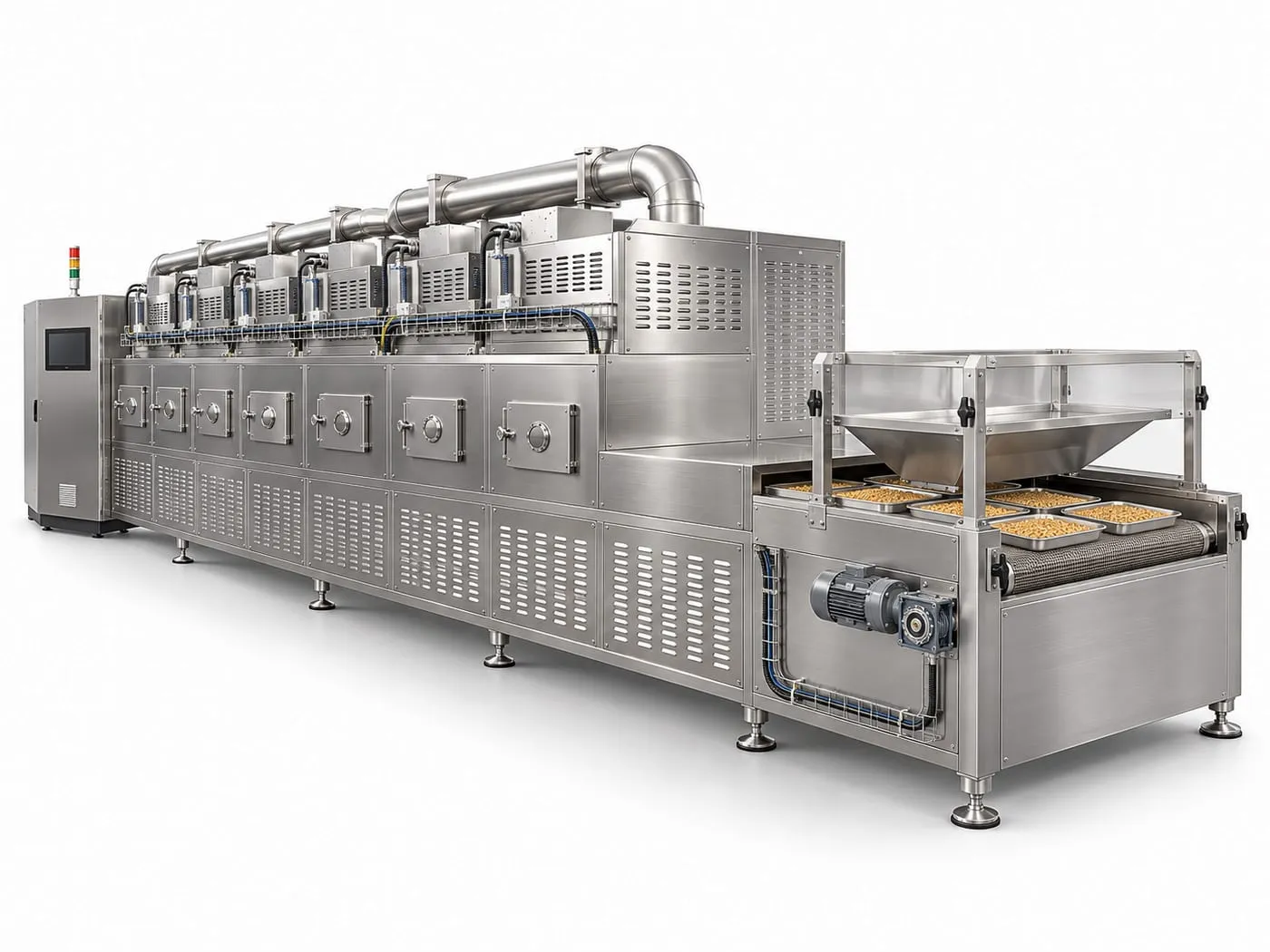
Heats product from the inside using microwave energy, used for drying, final moisture removal or heat treatment of suitable foods.
Short answer: A microwave food dryer uses microwave energy to heat water inside the product directly, so moisture moves out faster than with hot air alone. It is used for drying, final moisture removal and some heat treatment of suitable products. How your product absorbs microwave energy, how thick the layer is and how much water must be removed decide whether a belt, batch or combined dryer fits.
A continuous unit has a conveyor belt running through shielded metal cavities, microwave generators feeding those cavities, moisture extraction fans, shielded inlet and outlet tunnels and a control panel with safety interlocks.
| Form | Suits | Watch out for |
|---|---|---|
| Continuous belt | Steady production of one product family | Even layer and feed rate |
| Batch | Trials, small lots, frequent product changes | Manual loading, cycle time |
| Combined with hot air | Products with surface and inner moisture | More controls; longer machine |
Microwave drying is often most useful at the end of a drying process, where hot air alone slows down. Because results vary so much between products, a sample trial is the most reliable way to judge power, belt speed and layer thickness before the dryer is sized. Electricity cost per kilogram of water removed is also worth comparing with your hot-air option.
The microwave dryer is often placed after a hot air dryer to finish drying, or after extrusion on the extruded snack production line. It can also treat products from the instant porridge production line or spices from a spice grinding machine, before cooling and packing.
Continuous belt
product travels on a belt through shielded microwave cavities, for steady production.
Batch
product is loaded into a cabinet and treated in cycles, for trials, small volumes or varied products.
Combined drying
microwave works together with hot air, using hot air for surface moisture and microwave for inner moisture.
Our engineers check these points with you, so the quotation fits your site rather than a catalogue default.
Many grain, powder, spice, snack and fruit or vegetable products can be treated, but results depend on moisture, shape, salt and fat content. We recommend sample trials before deciding.
Microwave energy is not always absorbed evenly. Thick layers, corners and dense pieces can overheat. Even layer thickness, belt speed, power control and combined hot air reduce hot spots.
The cavities are shielded, inlets and outlets are designed to contain the energy, and doors have safety interlocks. Leakage checks are part of commissioning and regular maintenance.
Tell us your raw material, finished product and target output. Our engineers reply with a matched configuration and quotation.
What to send with your inquiry
Email sales@hnfoda.com
Compare hot-air, heat pump, freeze and microwave dryers for mango and tropical fruit: quality, energy, sizing and a quote checklist.
Bakery & Snack Food
Biscuit factories, private-label bakeries and investors entering packaged biscuits.
Sized to baked biscuits per hour (kg/h of finished product) for a given size and weight
Bakery & Snack Food
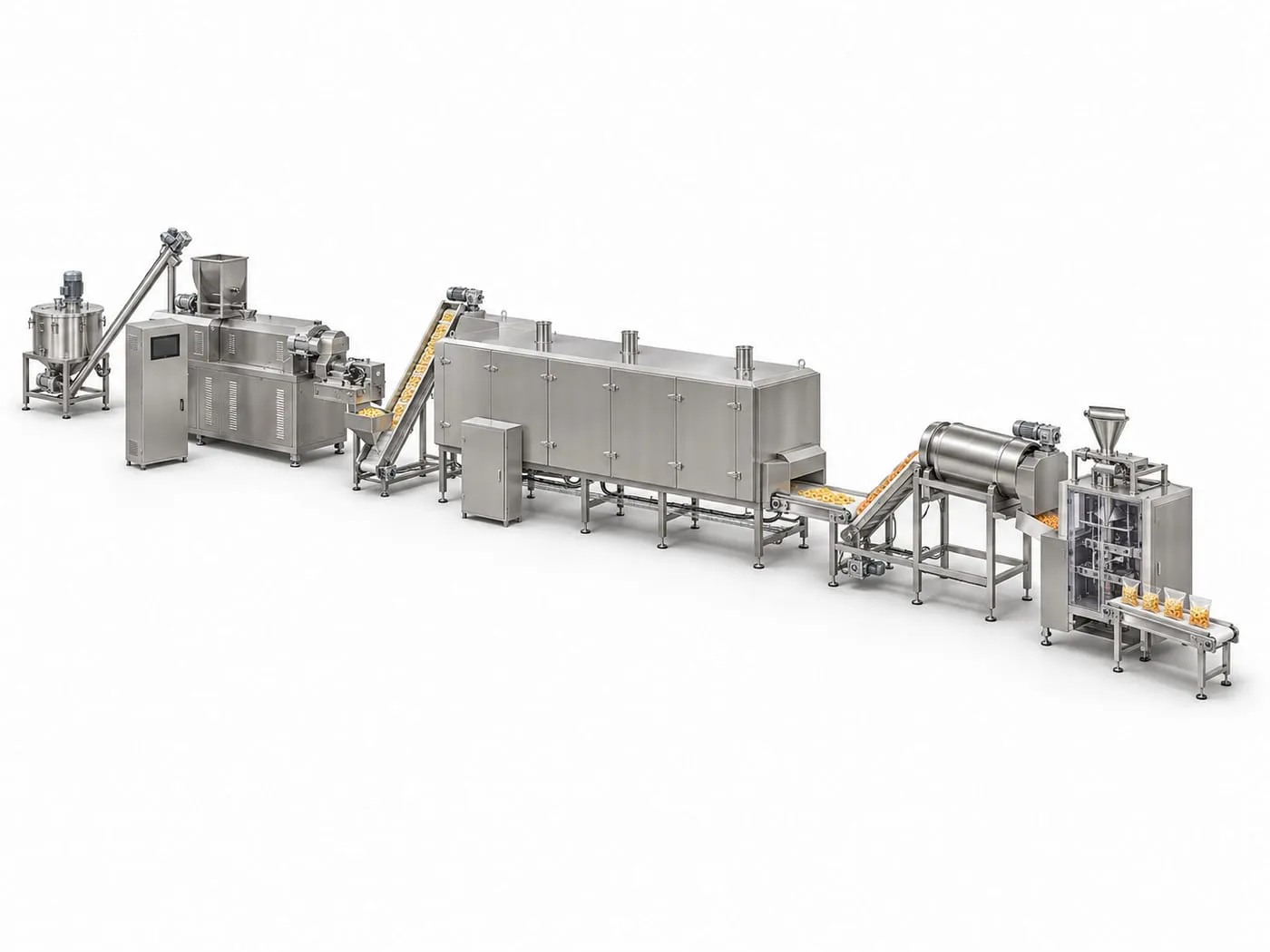
Snack brands and contract manufacturers making corn puffs, cereal shapes and snack pellets.
Sized to extruder throughput (kg/h of dry mix) with finished output stated separately
Bakery & Snack Food
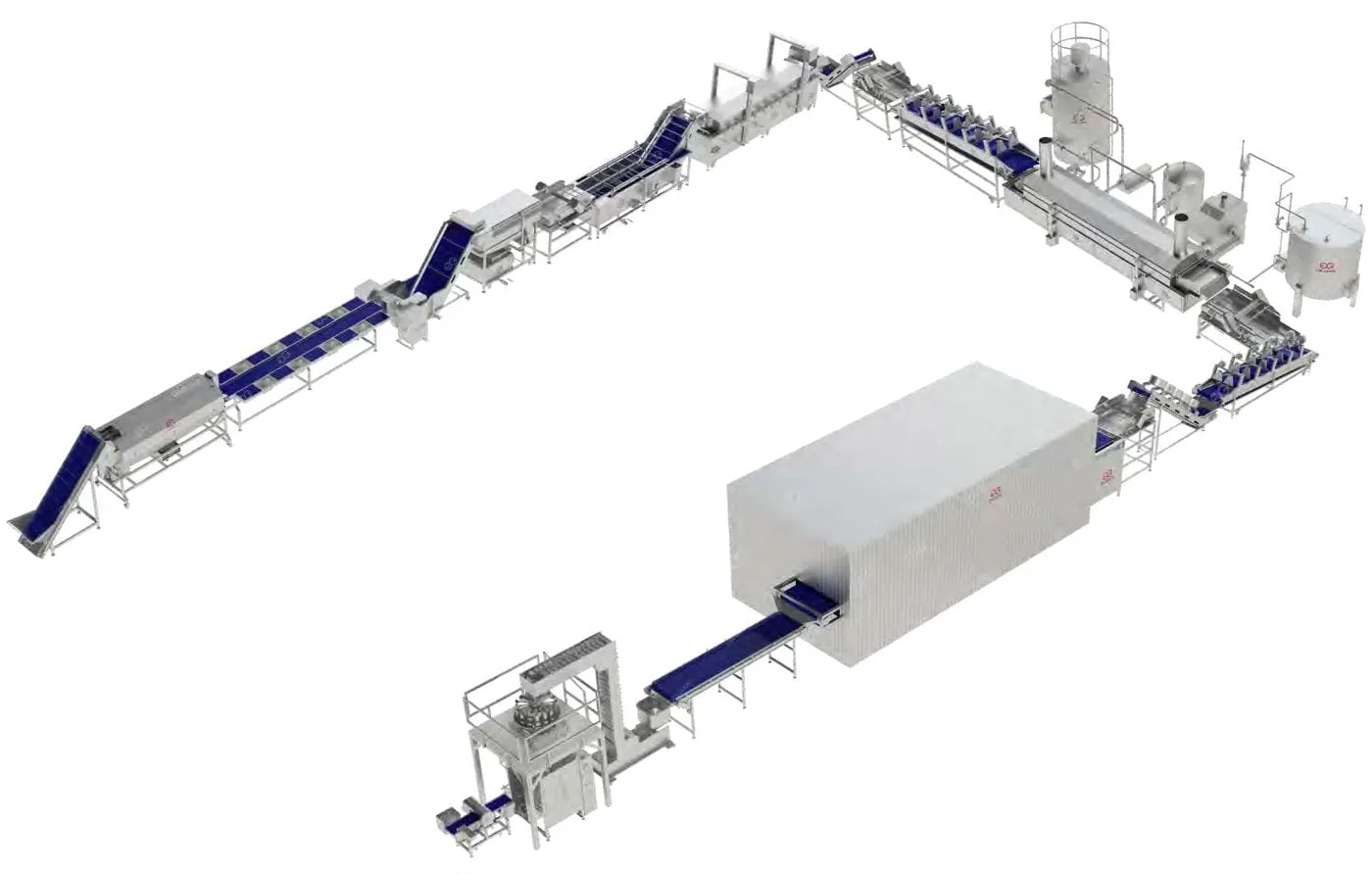
Potato snack brands, frozen fries producers and agricultural investors near potato growing areas.
Sized to fresh potato input (kg/h) with finished output stated separately
Bakery & Snack Food
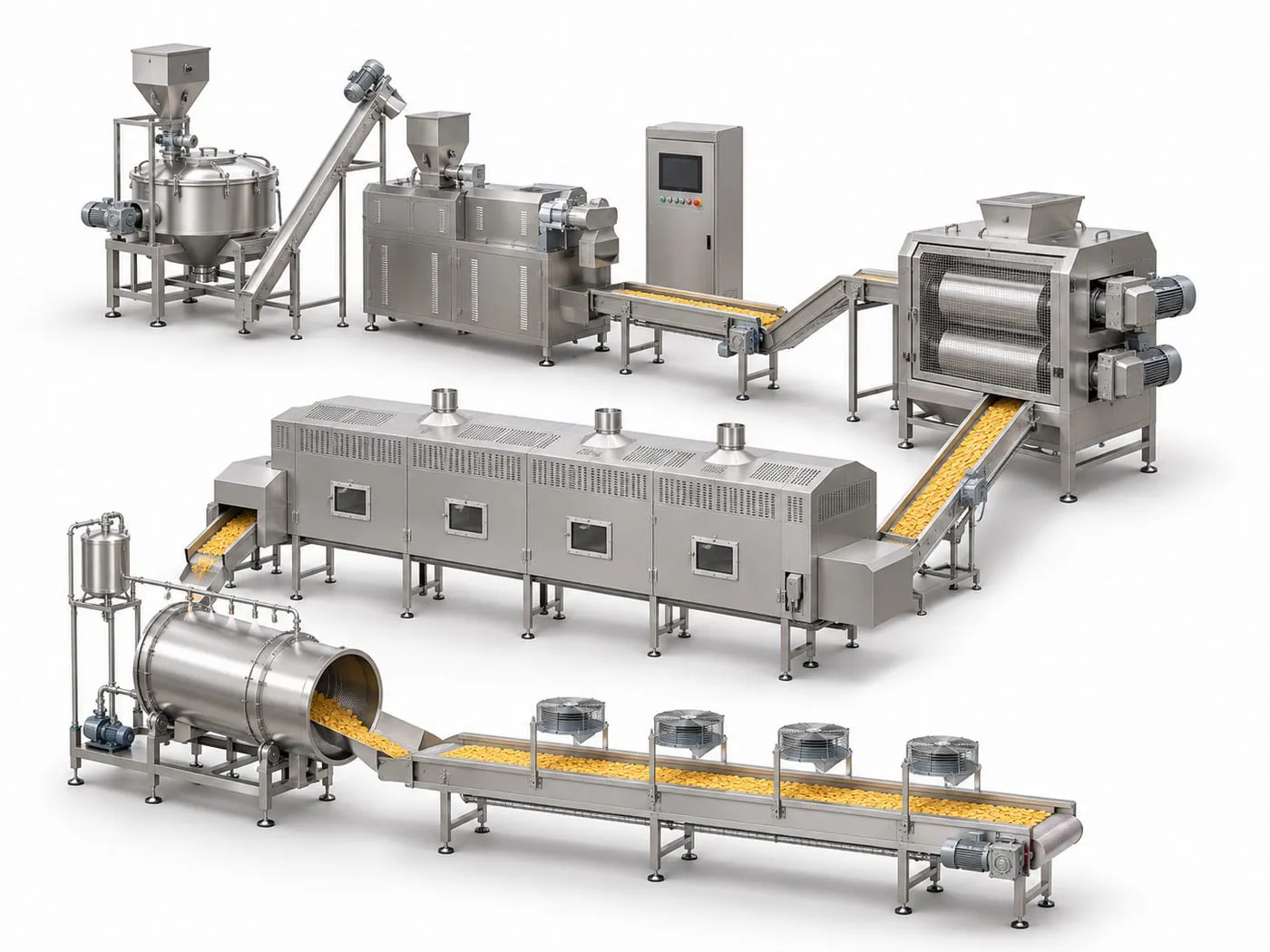
Breakfast cereal brands, private-label packers and snack plants adding corn flakes or coated cereals.
Sized to finished cereal output (kg/h) for a set flake thickness