Instant Noodle & Frozen Food
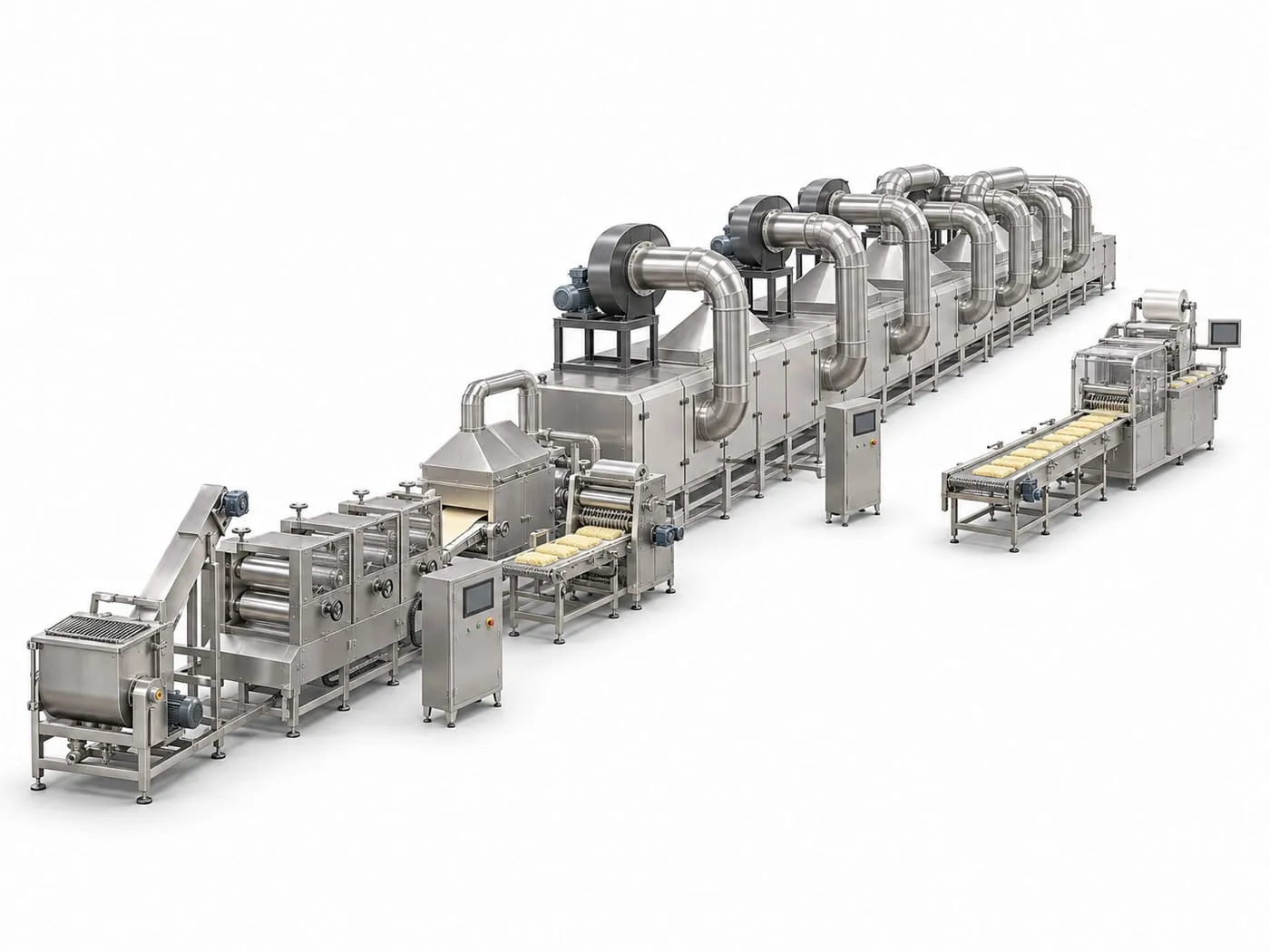
Instant Noodle Production Line
New and expanding noodle brands that need one supplier for the whole line, from dough mixing to packing.
Sized to finished noodle blocks per hour at a set block weight

04 · Instant Noodle & Frozen Food — Equipment
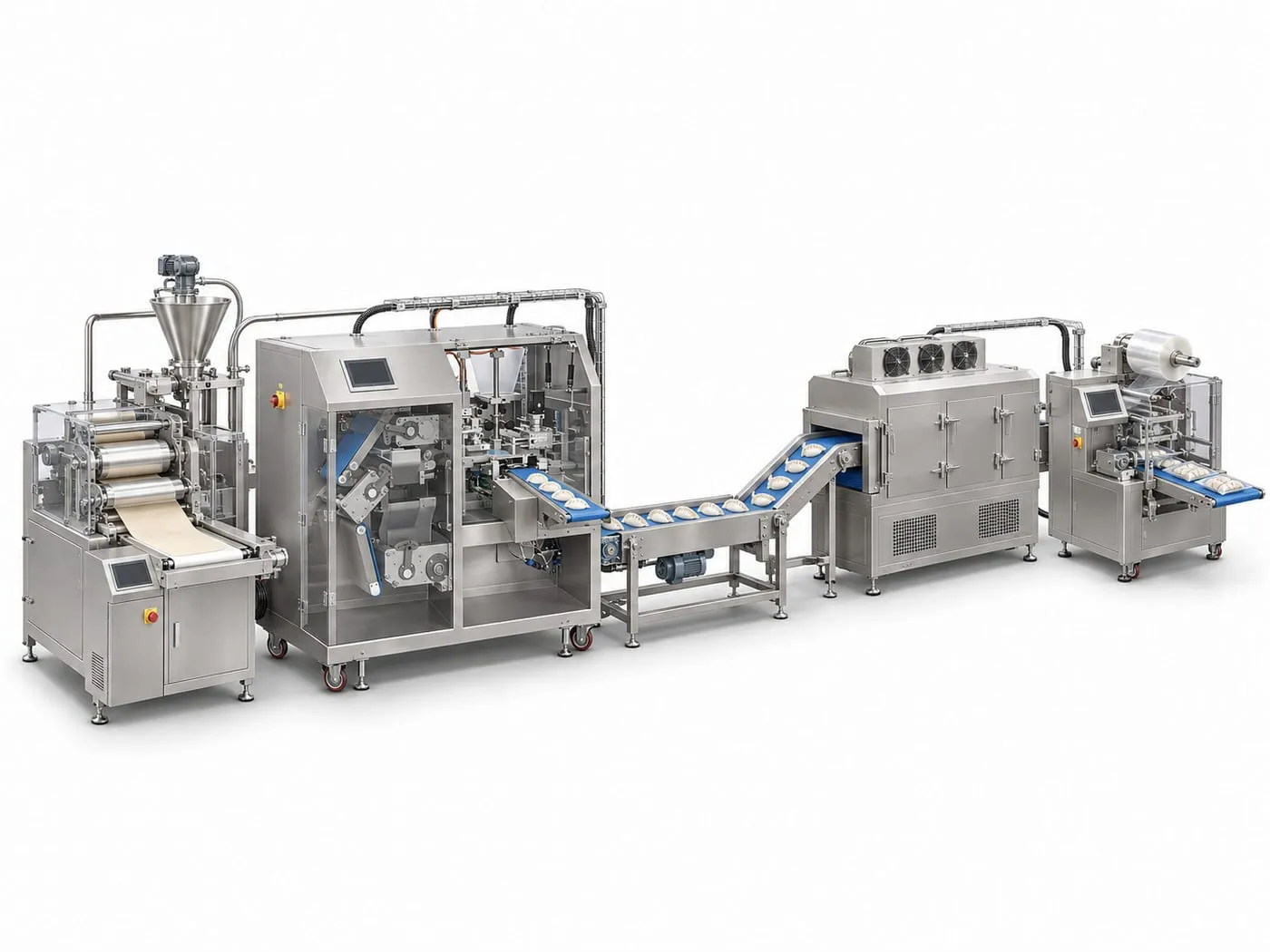
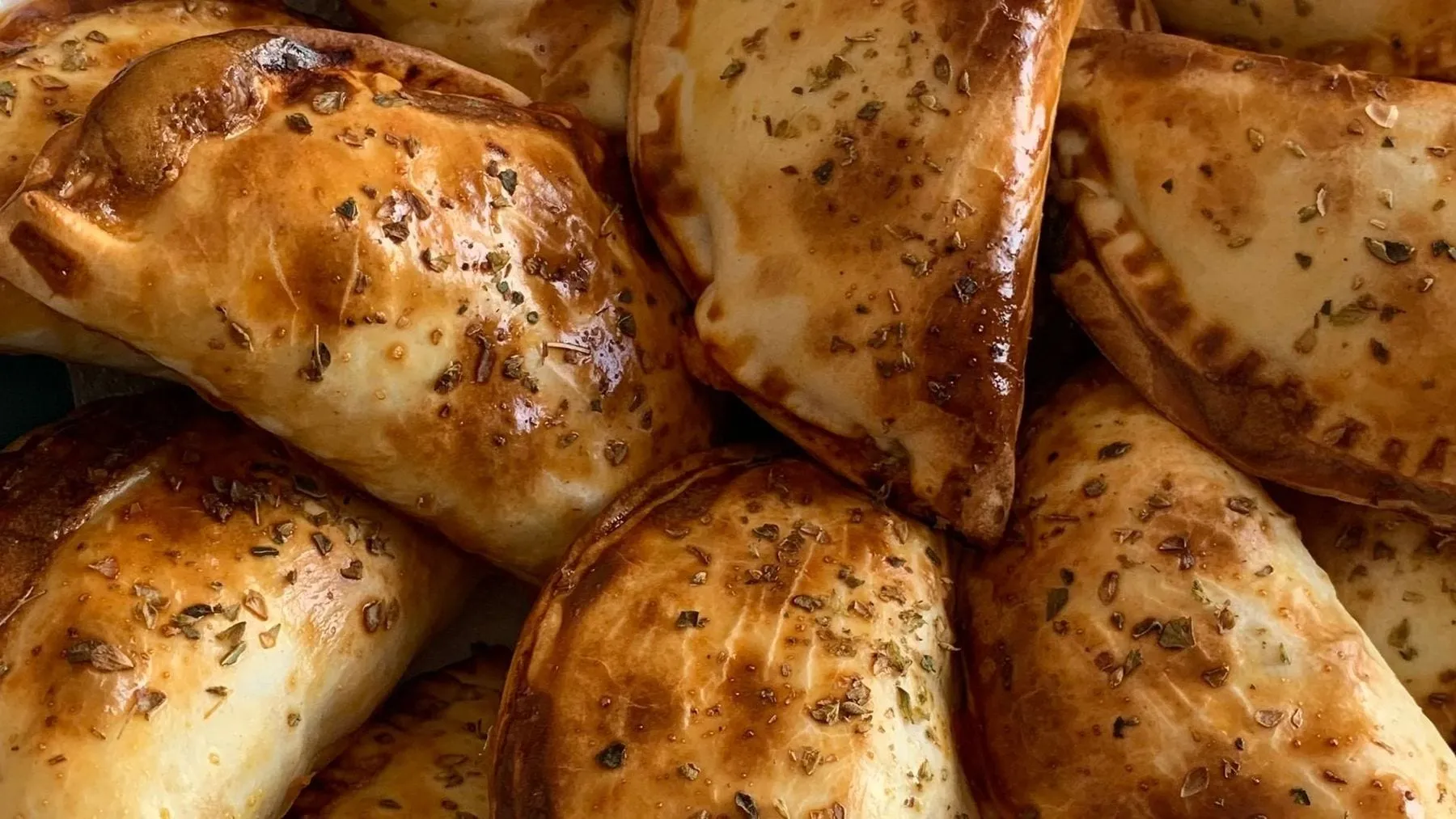
Rolls dough into sheets, doses filling, folds and seals the edge to form empanadas or pastel, ready to bake, fry or freeze.
Short answer: An empanada and pastel forming machine sheets the dough, places a measured portion of filling, folds the dough over and crimps the edge. The dough recipe, the filling texture and the route after forming (baking, frying or freezing) decide the configuration.
Dough is rolled to a set thickness, either by a sheeter in the line or by rolls inside the machine. A dosing unit places filling on the dough, a folding station closes it into a half-moon and a die or wheel crimps and cuts the edge. The pieces drop to a belt and move on to the oven, the fryer or the freezer.
Empanada dough is usually baked or fried and is somewhat firmer; Brazilian pastel dough is thinner and is fried. That difference changes the sheeting settings and often the tooling, so say which product you want to make.
Filling goes in cooked and cooled. Thick fillings with small, even pieces dose accurately and stay inside the fold, while loose or watery ones run to the edge and stop it sealing. Dough that is too elastic springs back after sheeting, so many plants let it rest before it reaches the machine.
| Form | Suits | Watch out for |
|---|---|---|
| Table-top forming machine | Bakeries, small kitchens | Hand feeding limits output |
| Line with dough sheeter | Steady production | Dough must be rested and consistent |
| With baking, frying or freezing section | Finished or frozen product | Oven, fryer or freezer must match the forming rate |
Capacity is counted on finished pieces per hour at a stated size, not on kilograms of dough.
Dough is mixed in a vacuum dough mixer. After forming, pieces can be baked in a tunnel oven, fried in a continuous fryer or frozen in a food freezer. A similar product, the samosa and spring roll machine, can share the same fryer or freezer.
Table-top forming machine
fed with dough sheet or dough balls; suits a bakery or small production kitchen.
Line with dough sheeter
the sheeter rolls dough to thickness and feeds the forming station without hand handling.
With baking, frying or freezing section
formed pieces continue to an oven, a fryer or a freezer, depending on the product route.
Our engineers check these points with you, so the quotation fits your site rather than a catalogue default.
Often with different tooling, because the dough, thickness and cooking route differ. Tell us whether you need both so we can set up the tooling and the dough conditions.
Thick, cooled fillings dose evenly and seal well. Very wet or hot fillings weaken the dough edge and leak when baked or fried. We test the sample before quoting.
Hourly output, whether a dough sheeter is included, the number of tooling sets and the oven, fryer or freezer after forming.
Tell us your raw material, finished product and target output. Our engineers reply with a matched configuration and quotation.
What to send with your inquiry
Email sales@hnfoda.com
Instant Noodle & Frozen Food
New and expanding noodle brands that need one supplier for the whole line, from dough mixing to packing.
Sized to finished noodle blocks per hour at a set block weight
Instant Noodle & Frozen Food
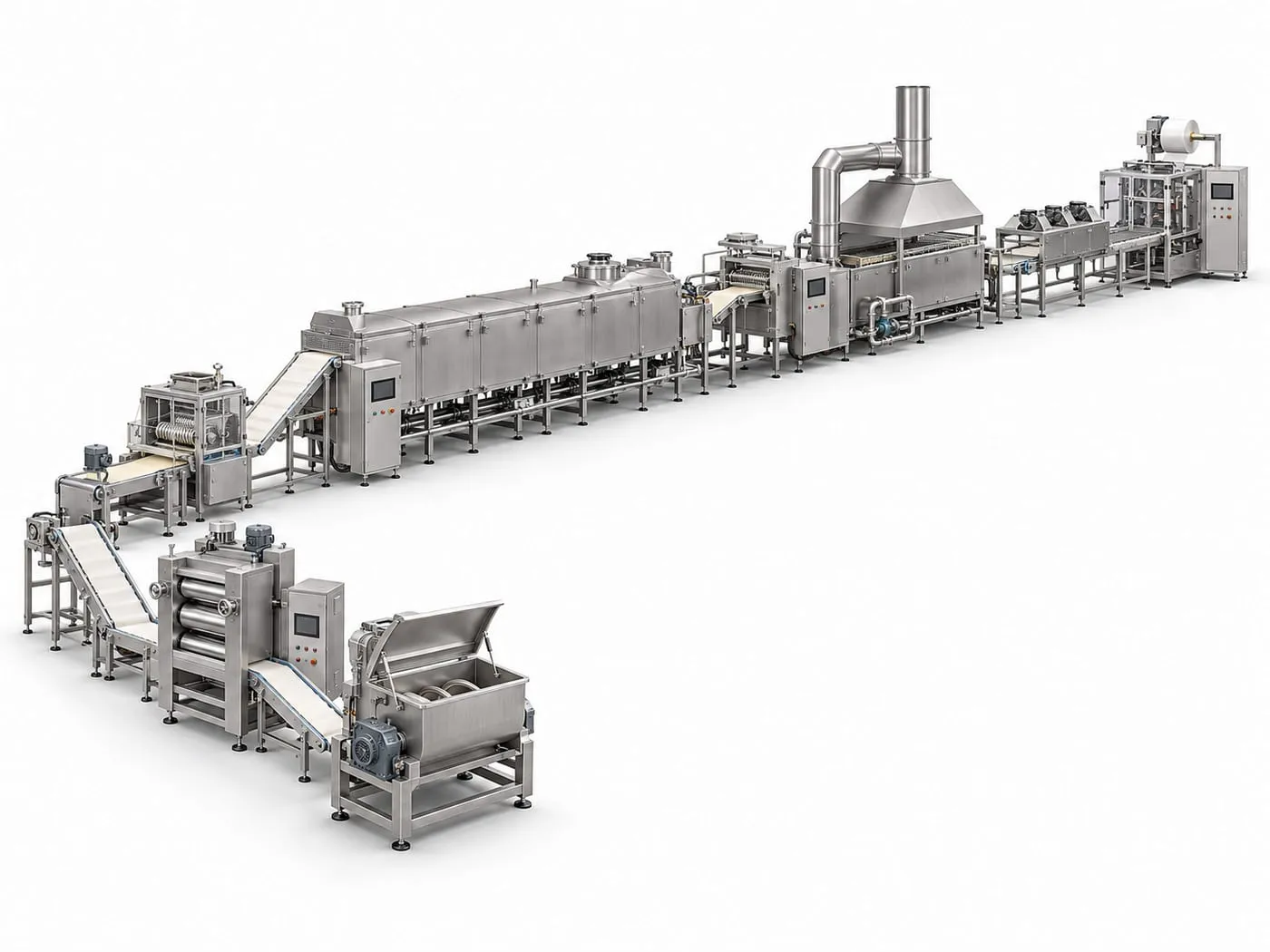
Noodle makers adding an air-dried, lower-fat product or building a dedicated non-fried plant.
Sized to dried noodle blocks per hour at a set block weight
Instant Noodle & Frozen Food
Frozen food factories and new brands moving from hand-made or semi-automatic dumplings to steady machine output.
Sized to finished frozen dumplings per hour at a set piece weight
Instant Noodle & Frozen Food
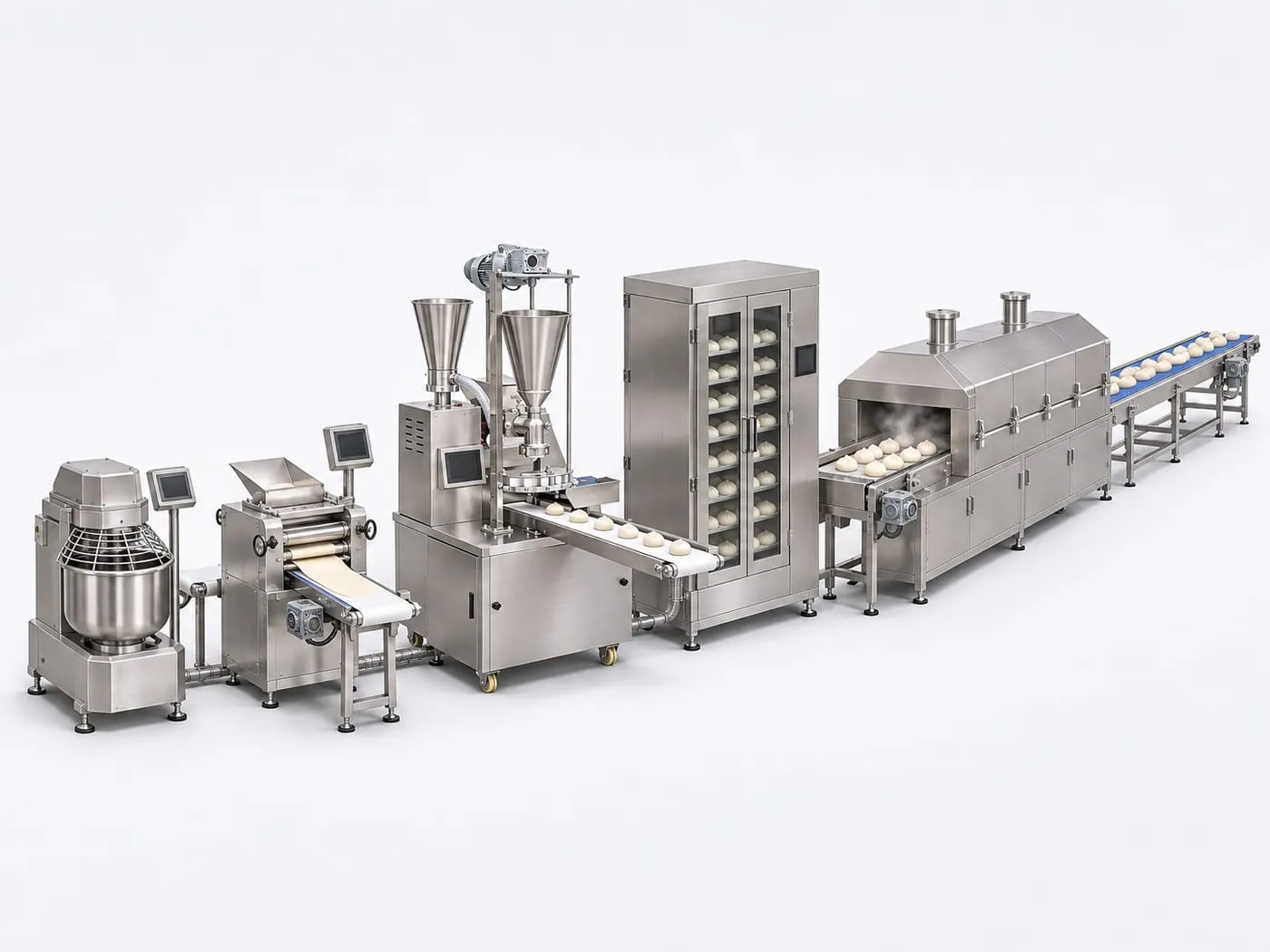
Central kitchens, frozen food plants and bakeries scaling up plain or filled steamed buns.
Sized to finished buns per hour at a set piece weight