Instant Noodle & Frozen Food
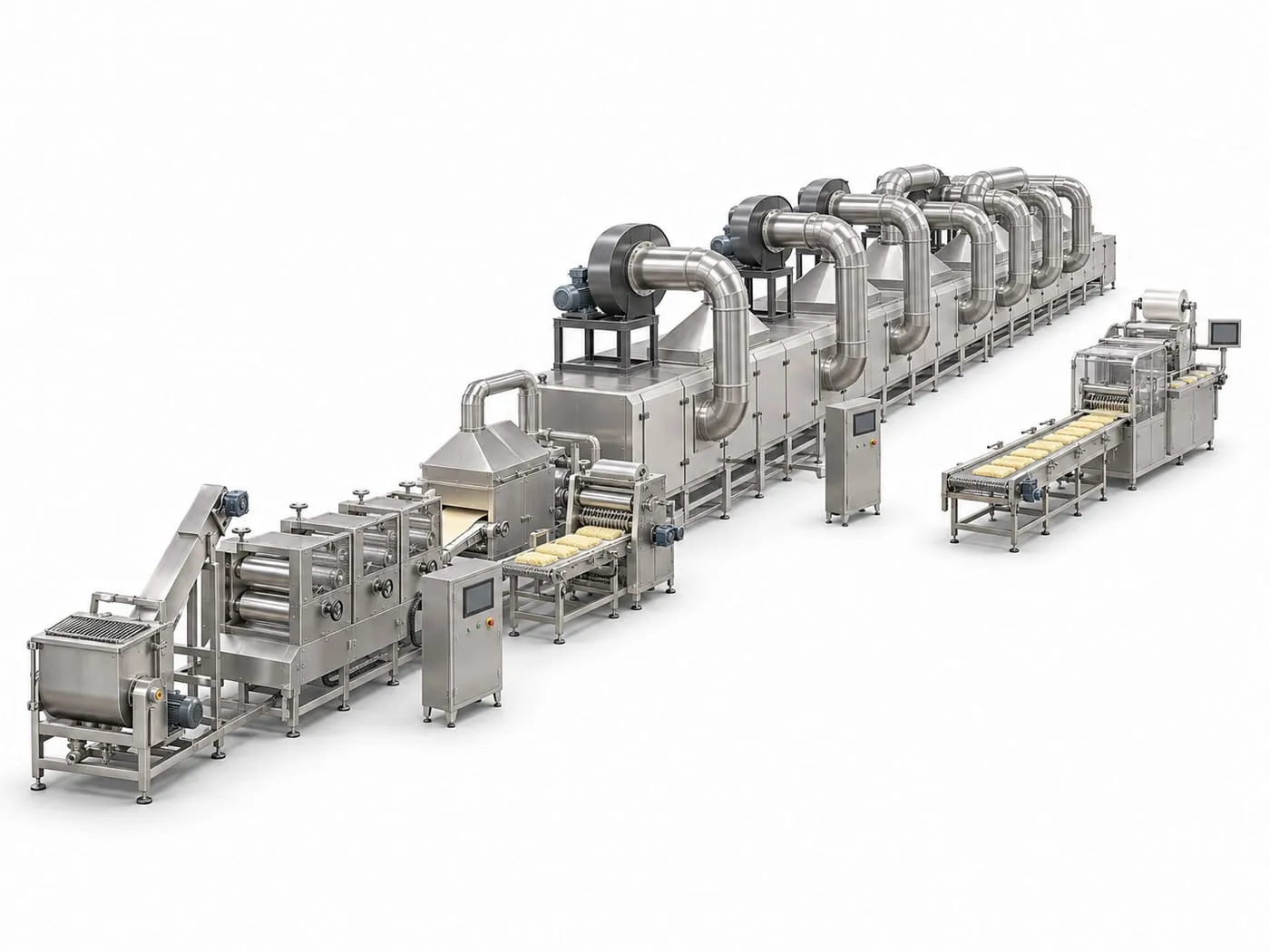
Instant Noodle Production Line
New and expanding noodle brands that need one supplier for the whole line, from dough mixing to packing.
Sized to finished noodle blocks per hour at a set block weight

04 · Instant Noodle & Frozen Food — Production line
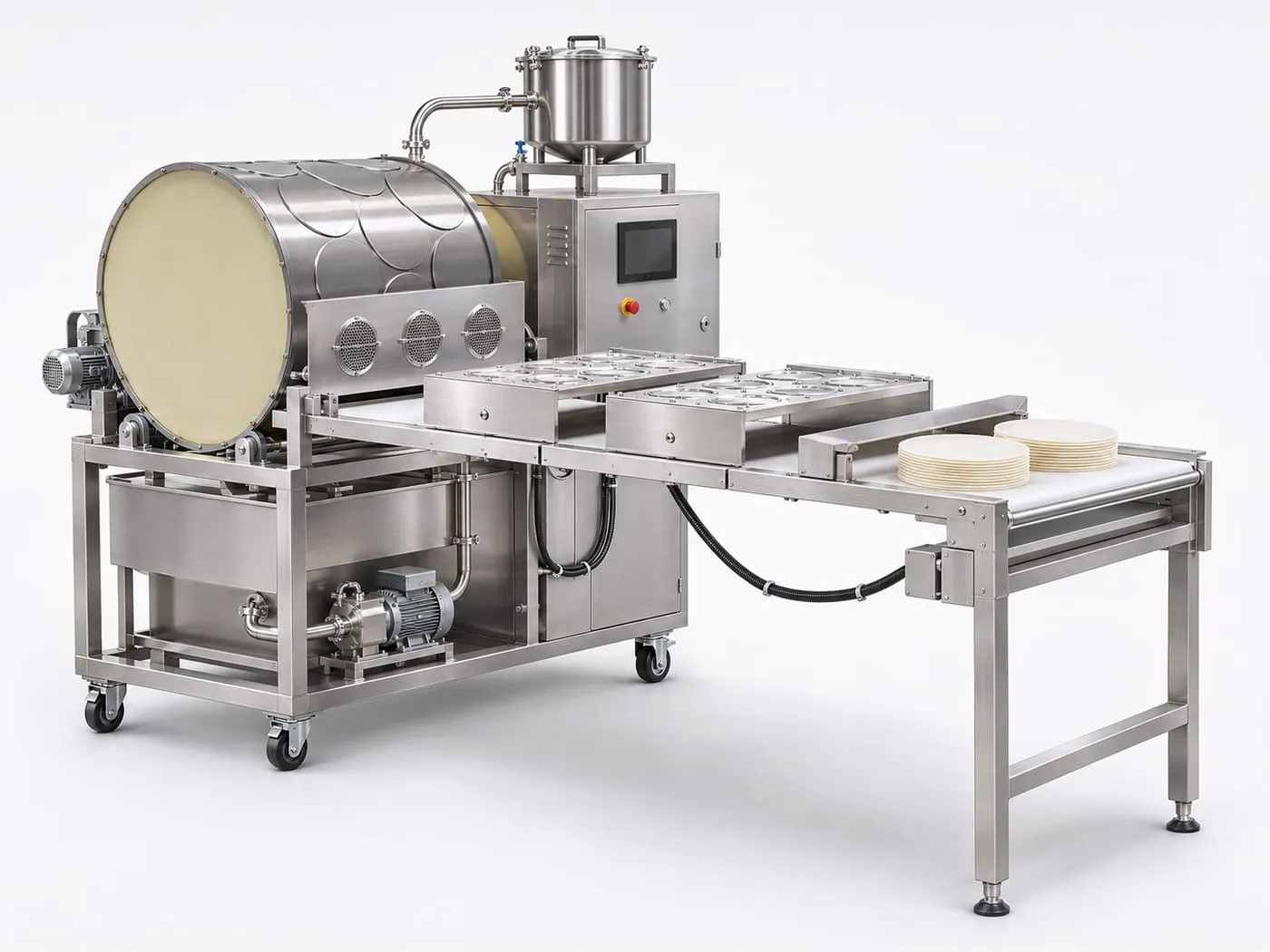
Spreads a measured batter layer onto a heated surface, sets it into a thin sheet, then peels, cuts and stacks the wrappers.
Short answer: A spring roll wrapper production line deposits a thin, even layer of batter onto a heated drum or steel belt, sets it into a sheet, peels it off and cuts and stacks the wrappers. The batter viscosity, the sheet thickness and how cleanly it releases from the heated surface decide whether a drum or a belt is the better choice.
| Form | Suits | Watch out for |
|---|---|---|
| Heated drum | Thin wrappers, compact footprint | Limited cooking length for thick sheets |
| Heated belt | Thicker or larger sheets | Longer machine, belt care |
| Cutting and stacking | Counted stacks for packing or filling | Cutter changes per size, sheet drying |
If you sell wrappers in more than one size, ask for cutting tools for each size at the quotation stage. Sheet thickness is set mainly by the batter film and cooking time, so changing thickness is a matter of settings and trials rather than new parts. Room humidity also matters: in a very dry room the finished sheets lose flexibility quickly.
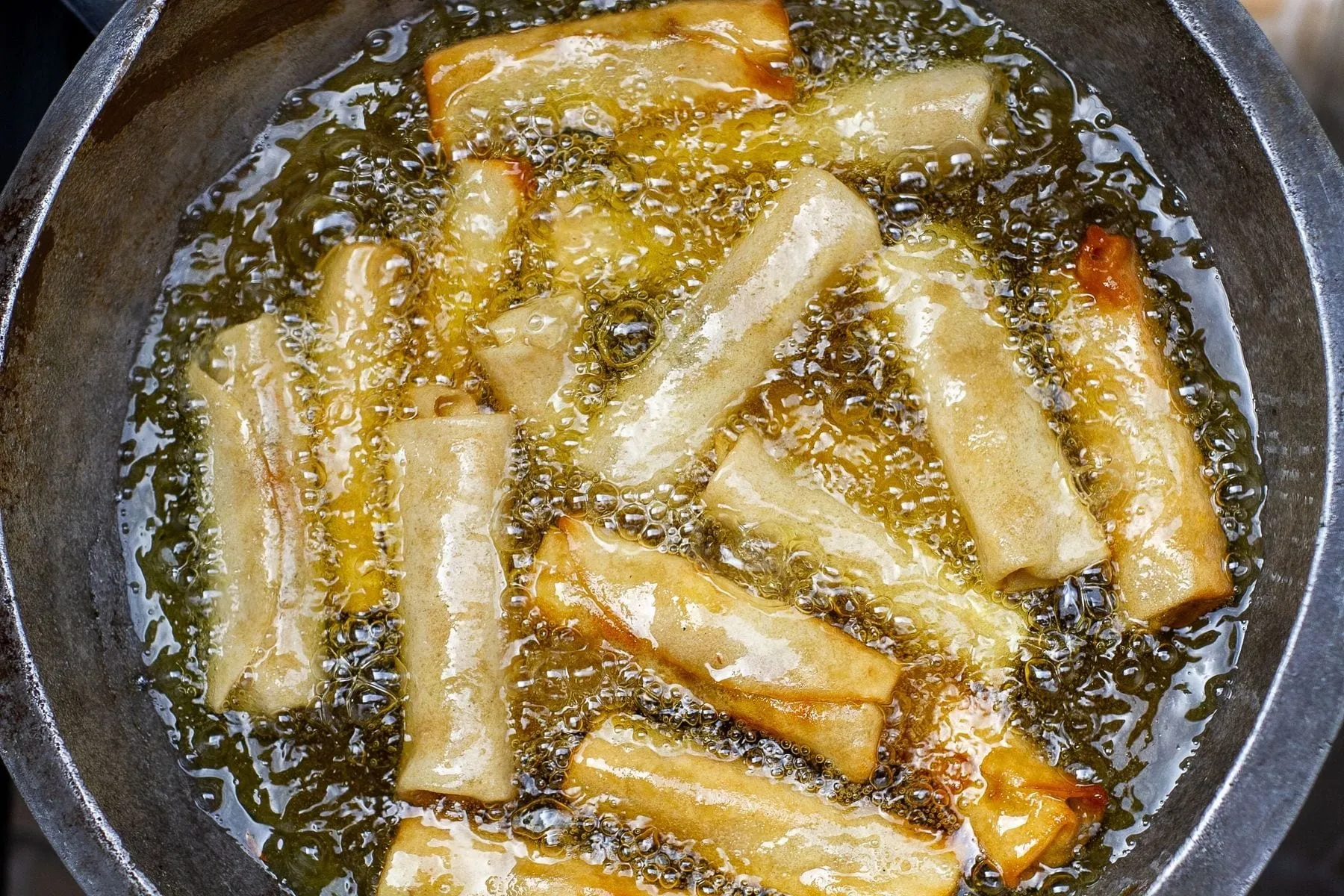
Batter is prepared in a mixer upstream. Wrappers then go to filling and rolling, often in the same area as a frozen dumpling production line or prepared meal production line. Filled rolls are frozen in a food freezer and packed; wrappers sold on their own are often packed on a vacuum packaging machine.
Heated drum
batter is coated onto a rotating heated drum and peeled off as a continuous film, compact and suited to thin sheets.
Heated belt
batter is spread on a heated steel belt, giving more cooking length for thicker or larger sheets.
Cutting and stacking
the film is cut into squares or rounds and counted into stacks ready for filling or packing.
Our engineers check these points with you, so the quotation fits your site rather than a catalogue default.
Drums suit thin sheets and compact layouts. Belts give more cooking length and suit thicker sheets or larger sizes. Tell us the sheet thickness and size you sell and we will recommend one.
Batter viscosity, surface temperature, surface condition and cooking time all affect release. These are set during commissioning with your batter, so we ask for your recipe in advance.
Most producers stack and pack them for chilled or frozen storage, or pass them straight to filling. Wrappers dry out quickly, so the time between cutting and packing should be short.
Tell us your raw material, finished product and target output. Our engineers reply with a matched configuration and quotation.
What to send with your inquiry
Email sales@hnfoda.com
How an automatic samosa and spring roll line works: wrapper sheets, filling and forming, frying or freezing, how to size it, and what to send for a quote.
Instant Noodle & Frozen Food
New and expanding noodle brands that need one supplier for the whole line, from dough mixing to packing.
Sized to finished noodle blocks per hour at a set block weight
Instant Noodle & Frozen Food
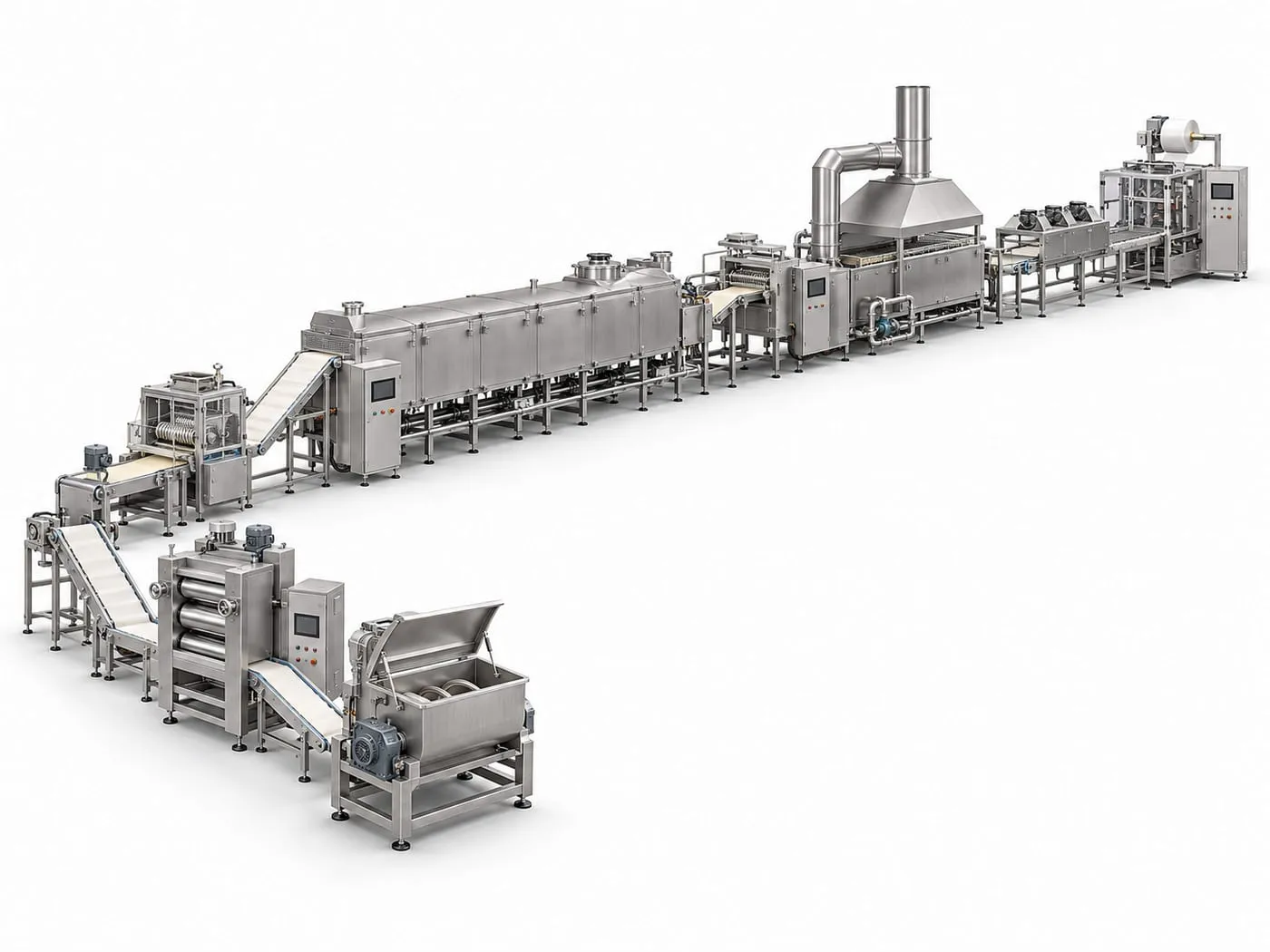
Noodle makers adding an air-dried, lower-fat product or building a dedicated non-fried plant.
Sized to dried noodle blocks per hour at a set block weight
Instant Noodle & Frozen Food
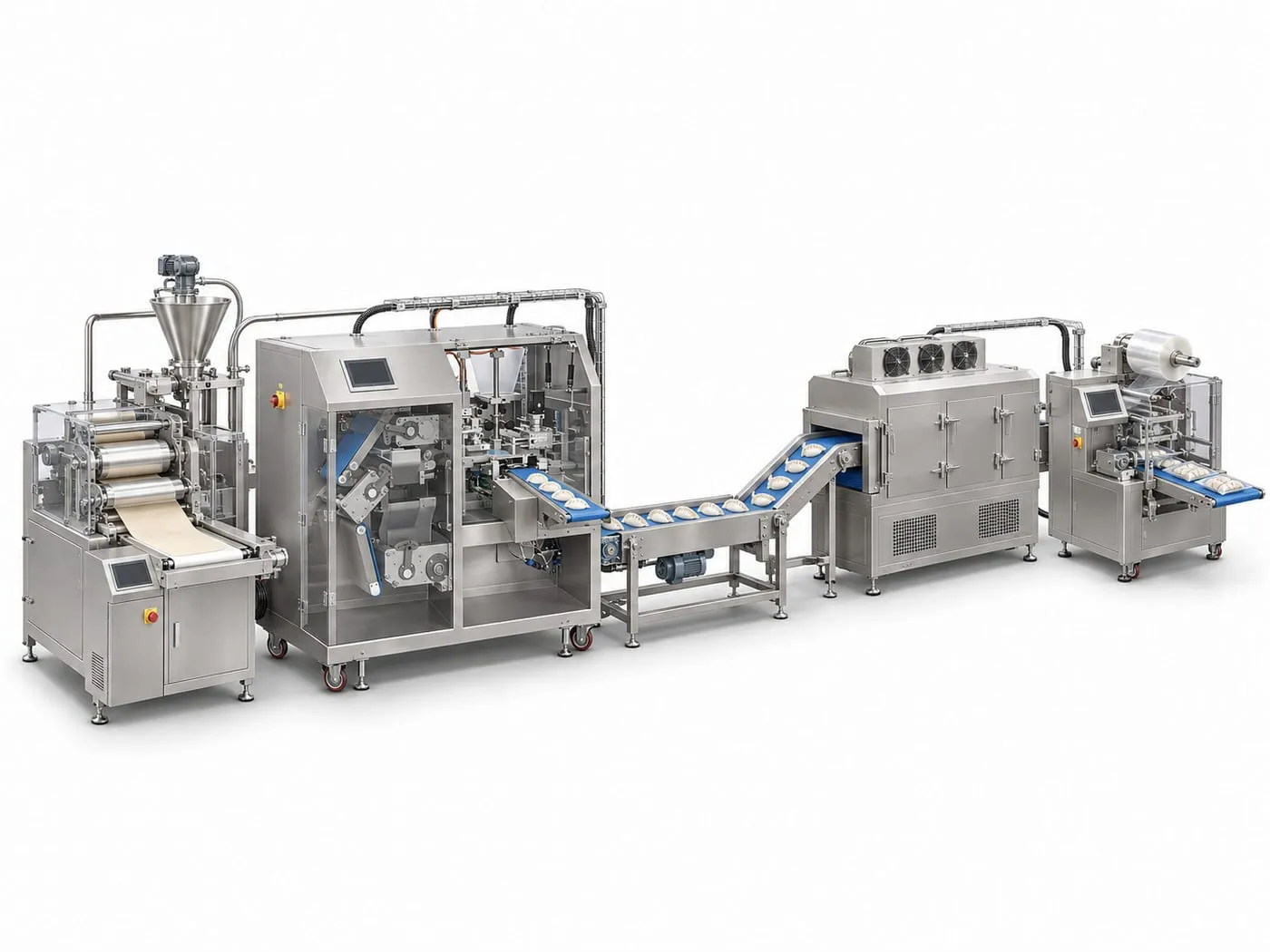
Frozen food factories and new brands moving from hand-made or semi-automatic dumplings to steady machine output.
Sized to finished frozen dumplings per hour at a set piece weight
Instant Noodle & Frozen Food
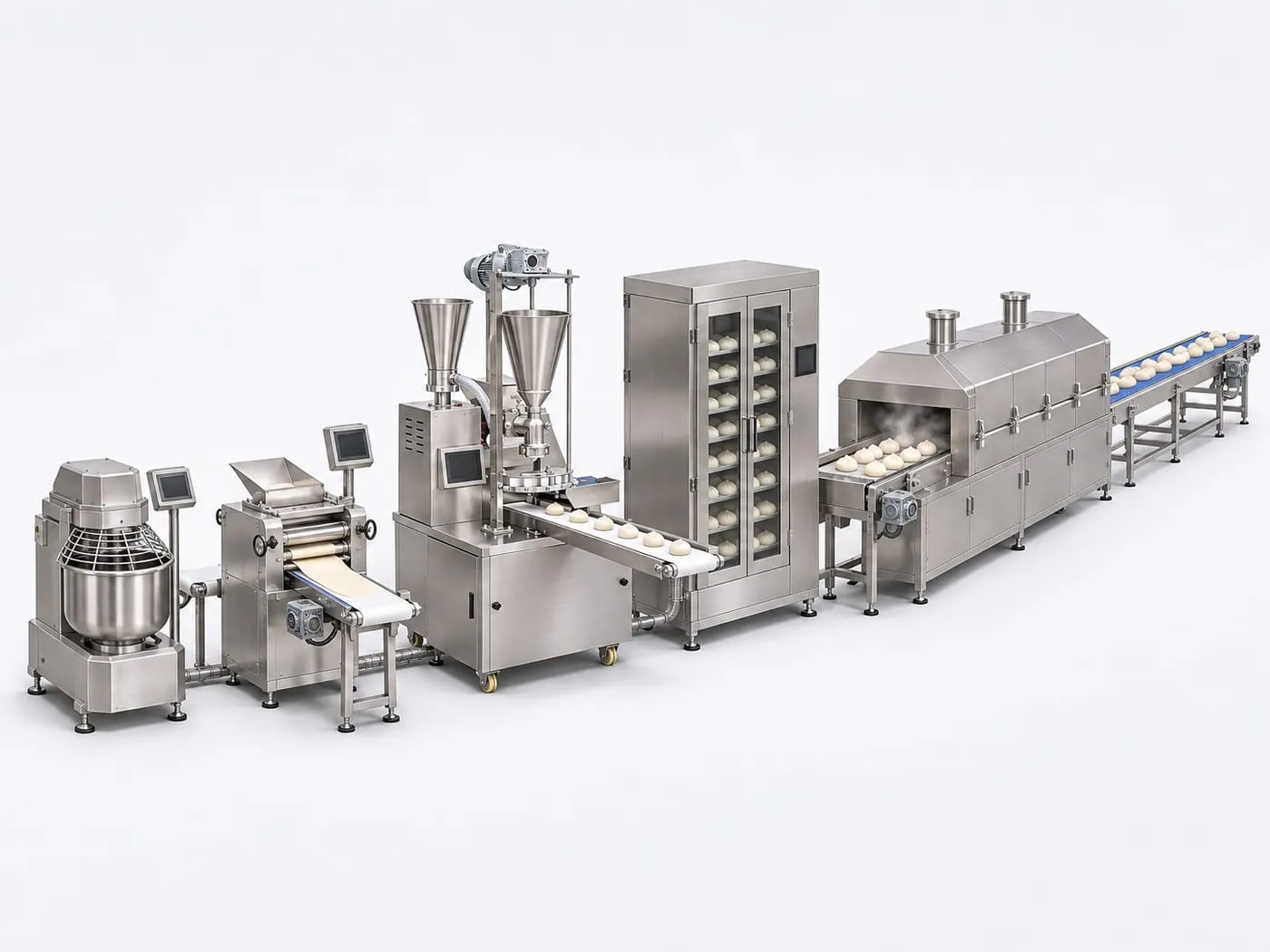
Central kitchens, frozen food plants and bakeries scaling up plain or filled steamed buns.
Sized to finished buns per hour at a set piece weight