Meat & Seafood Processing
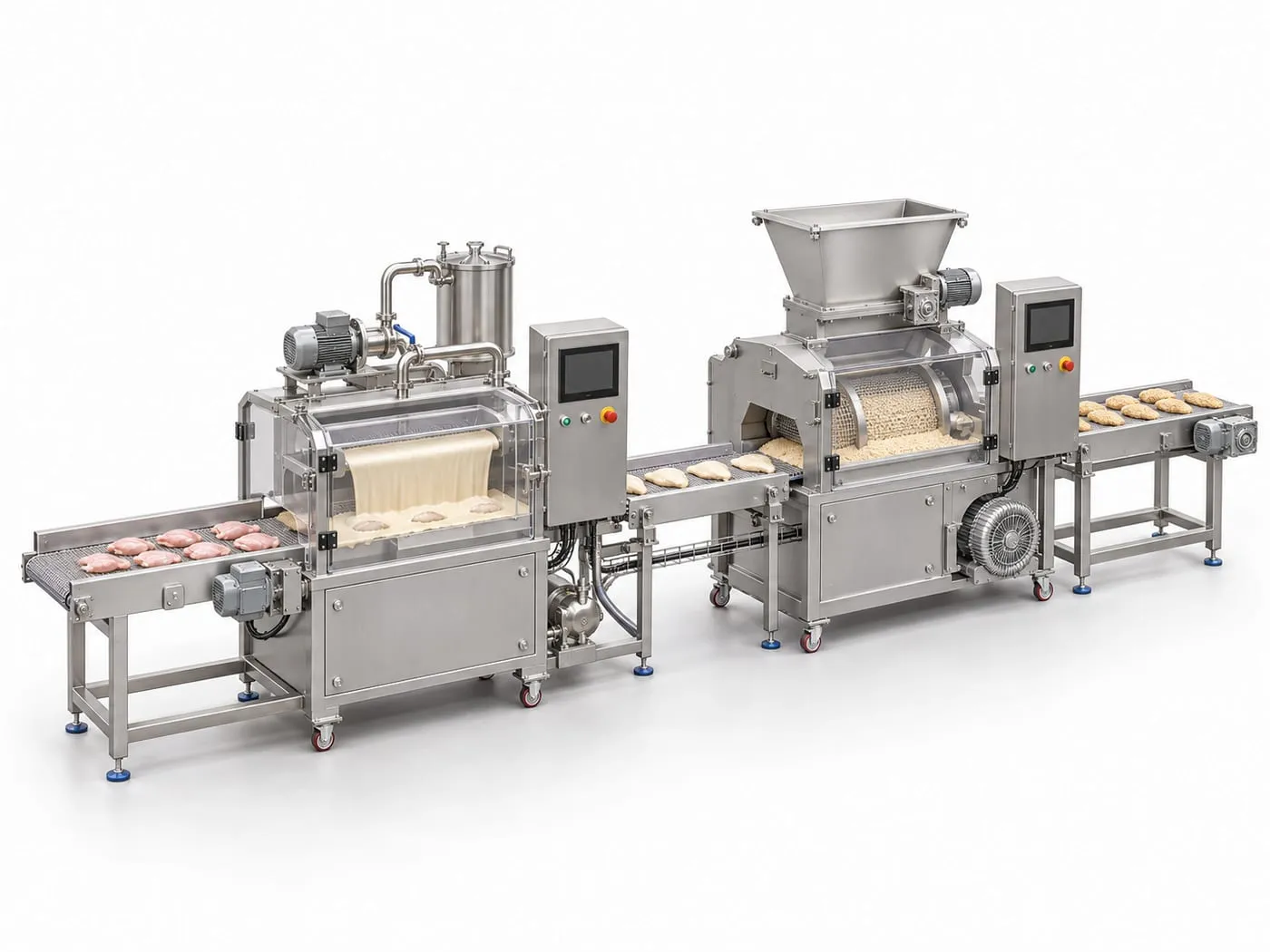
Coating and Breading Line
Factories making breaded chicken, fish fingers, coated vegetables or nuggets for frozen and food-service markets.
Sized to belt width and coated product output (kg/h of finished product)

06 · Meat & Seafood Processing — Equipment
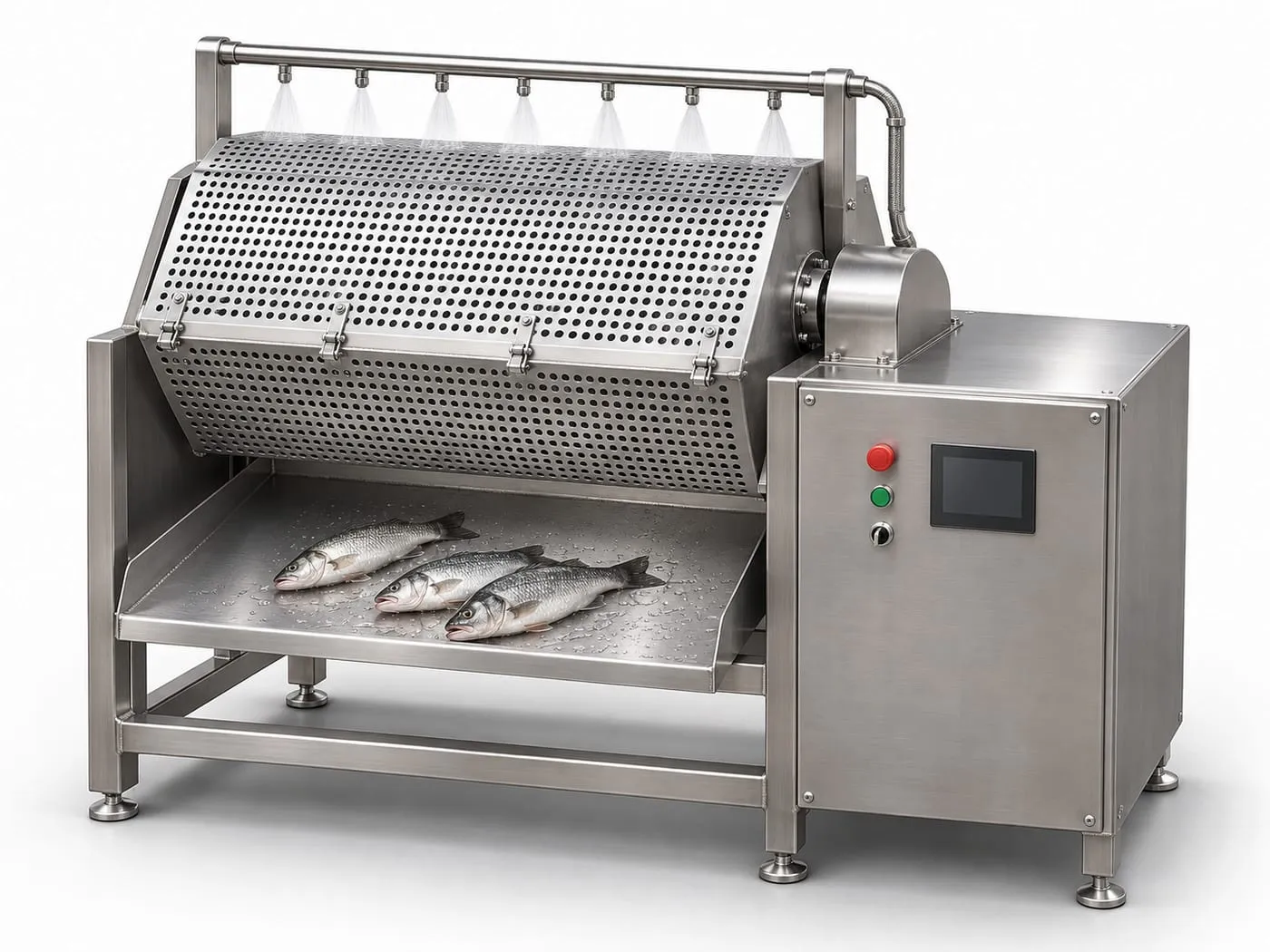
Removes scales from whole fish with water and a rotating drum or brush rollers, before washing, cutting, filleting or freezing.
Short answer: A fish descaling machine removes scales from whole fish using friction and running water, either in a tumbling drum or between rotating brushes. The choice between the two depends on your species and size range, how firmly the scales hold and how much skin damage your product can accept.
In a batch drum machine, fish are loaded into a perforated drum. As the drum turns, the fish rub against the drum wall and each other while water sprays in. Loosened scales pass through the perforations with the water and are collected below. After a set time, the drum is emptied.
In a continuous brush roller machine, fish are fed onto a conveyor or channel that carries them between rotating brushes. Water sprays wash the scales off as they lift. Brush speed, gap and conveyor speed are adjusted for fish size.
In both cases, the scales and dirty water leave through a drain where a screen or basket catches the scales.
| Form | Suits | Watch out for |
|---|---|---|
| Batch drum | Mixed species, smaller volumes, markets | Manual loading and unloading |
| Continuous brush roller | Steady supply of one species and size | Less forgiving of wide size ranges |
Fish with small, firmly attached scales usually need longer treatment, which raises the risk of skin damage. A trial run with your species is the most reliable way to set the machine.
Descaling is an early pre-treatment step, after receiving and washing and before gutting, cutting or filleting. Prepared fish can be frozen in a food freezer or packed on a vacuum packaging machine or tray sealer. Plants making fish balls or fish cakes go on to an industrial meat grinder and bowl cutter.
Batch drum descaler
fish tumble in a perforated drum with water for a set time; simple and suits mixed species and smaller volumes.
Continuous brush roller descaler
fish travel through rotating brushes and sprays; suits steady supply of one species and size.
Our engineers check these points with you, so the quotation fits your site rather than a catalogue default.
Some abrasion is unavoidable, and the risk rises with soft-skinned species or longer cycles. We set drum speed, time or brush pressure to your species, and recommend a trial with your fish before you commit.
A batch drum is the more flexible choice because cycle time can change per load. A continuous machine works best when species and size stay within a narrow range.
Descaling uses running water and produces a stream of scales and slime. Plan a drain with a screen or collection basket and a route for wastewater that meets your local rules.
Tell us your raw material, finished product and target output. Our engineers reply with a matched configuration and quotation.
What to send with your inquiry
Email sales@hnfoda.com
Meat & Seafood Processing
Factories making breaded chicken, fish fingers, coated vegetables or nuggets for frozen and food-service markets.
Sized to belt width and coated product output (kg/h of finished product)
Meat & Seafood Processing
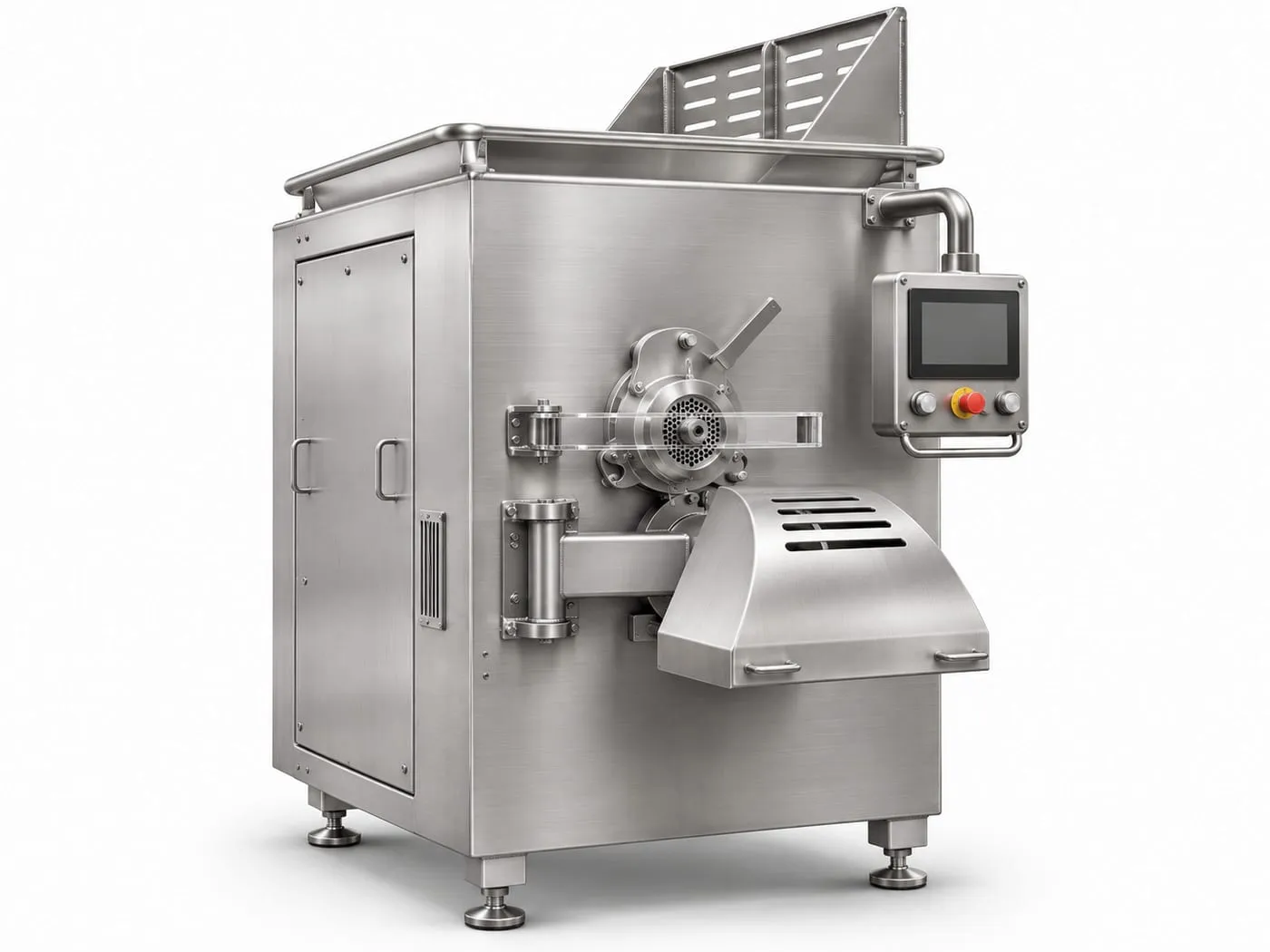
Meat plants and food factories making sausages, patties, dumpling fillings or minced products.
Sized to raw meat input (kg/h) at a stated feed temperature and plate size
Meat & Seafood Processing
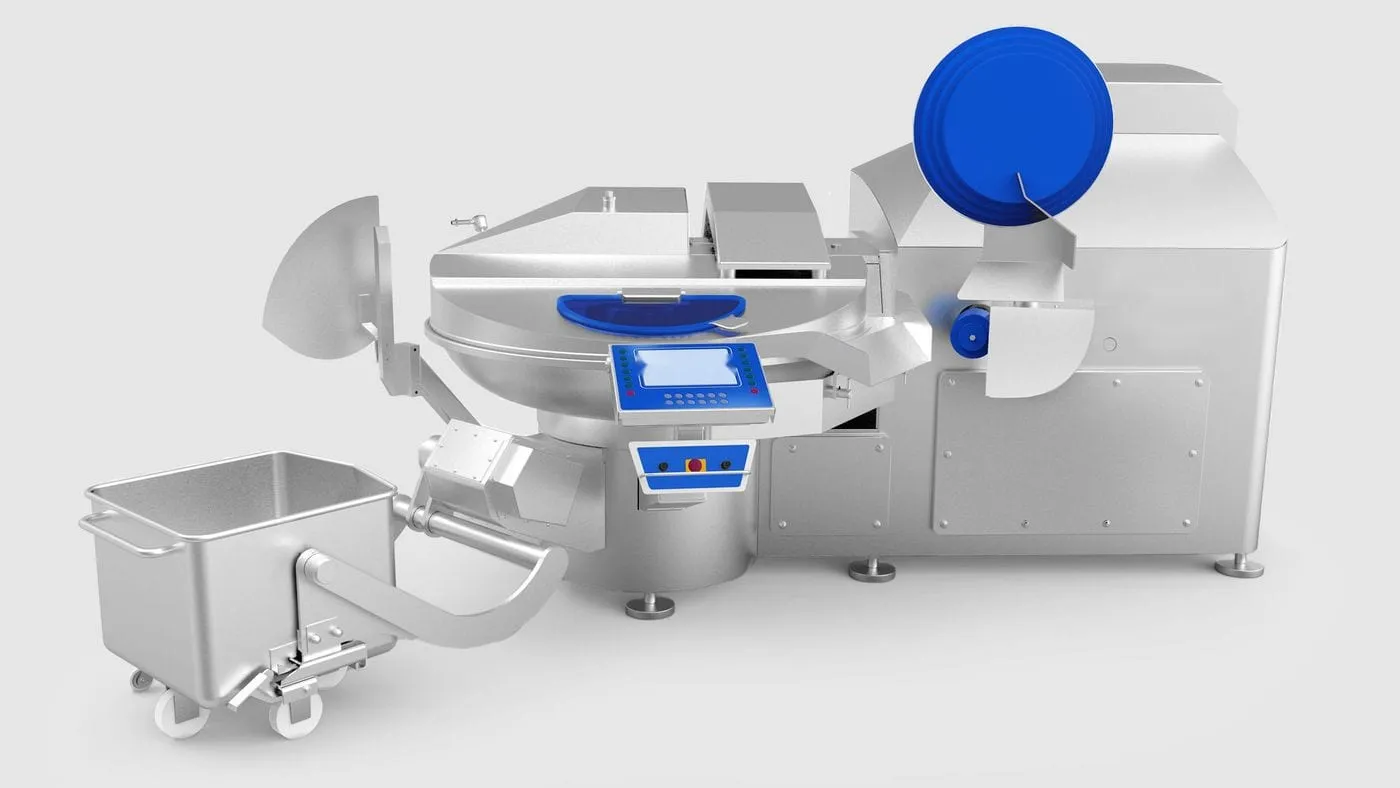
Sausage, meatball, fish ball and dumpling-filling producers who need fine or emulsified textures.
Sized to bowl volume and batch weight (kg per batch)
Meat & Seafood Processing
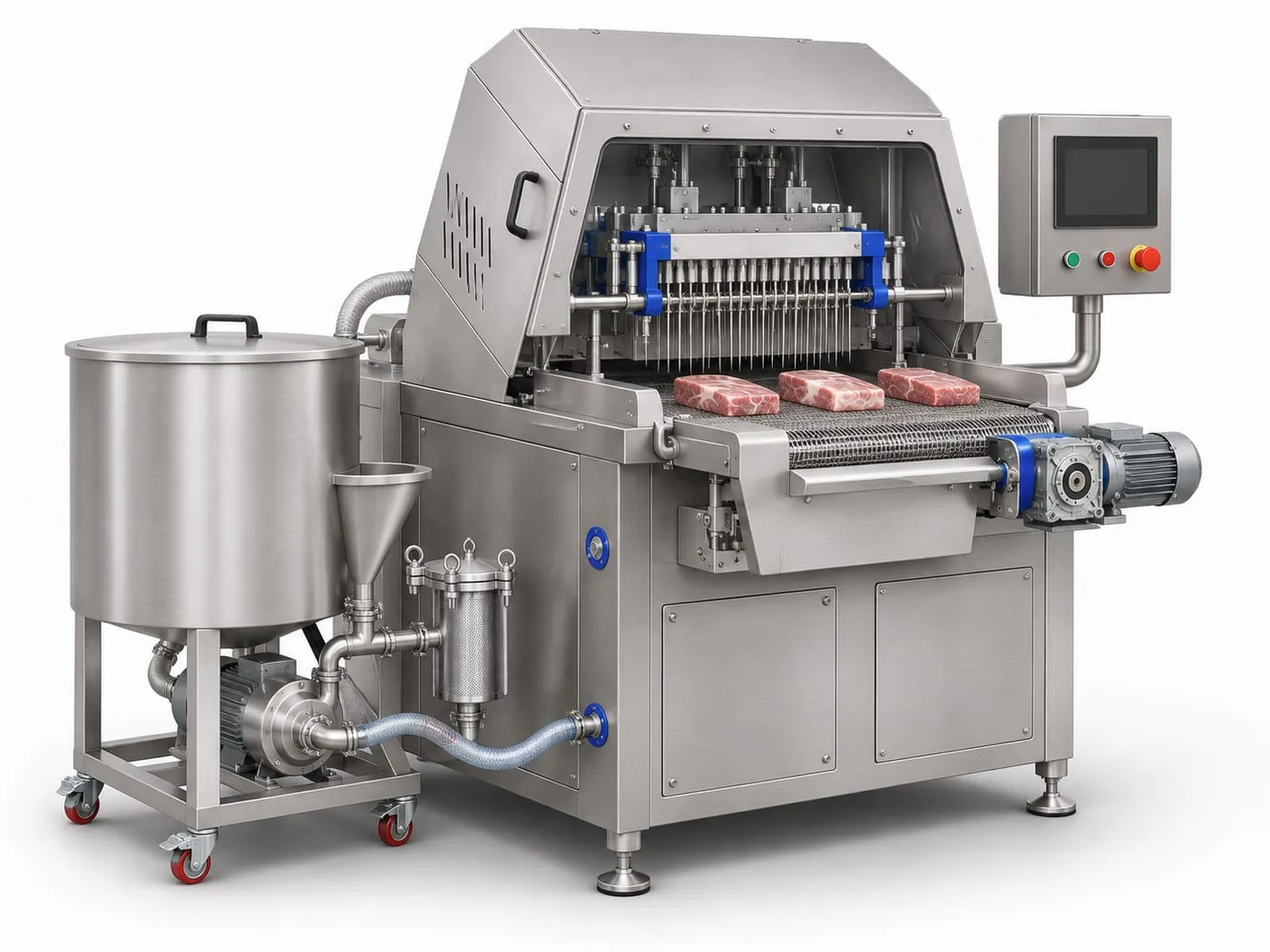
Processors making ham, bacon, cured cuts or marinated whole poultry and large cuts.
Sized to belt width and raw meat throughput (kg/h) at the target injection rate