Grain & Flour Milling
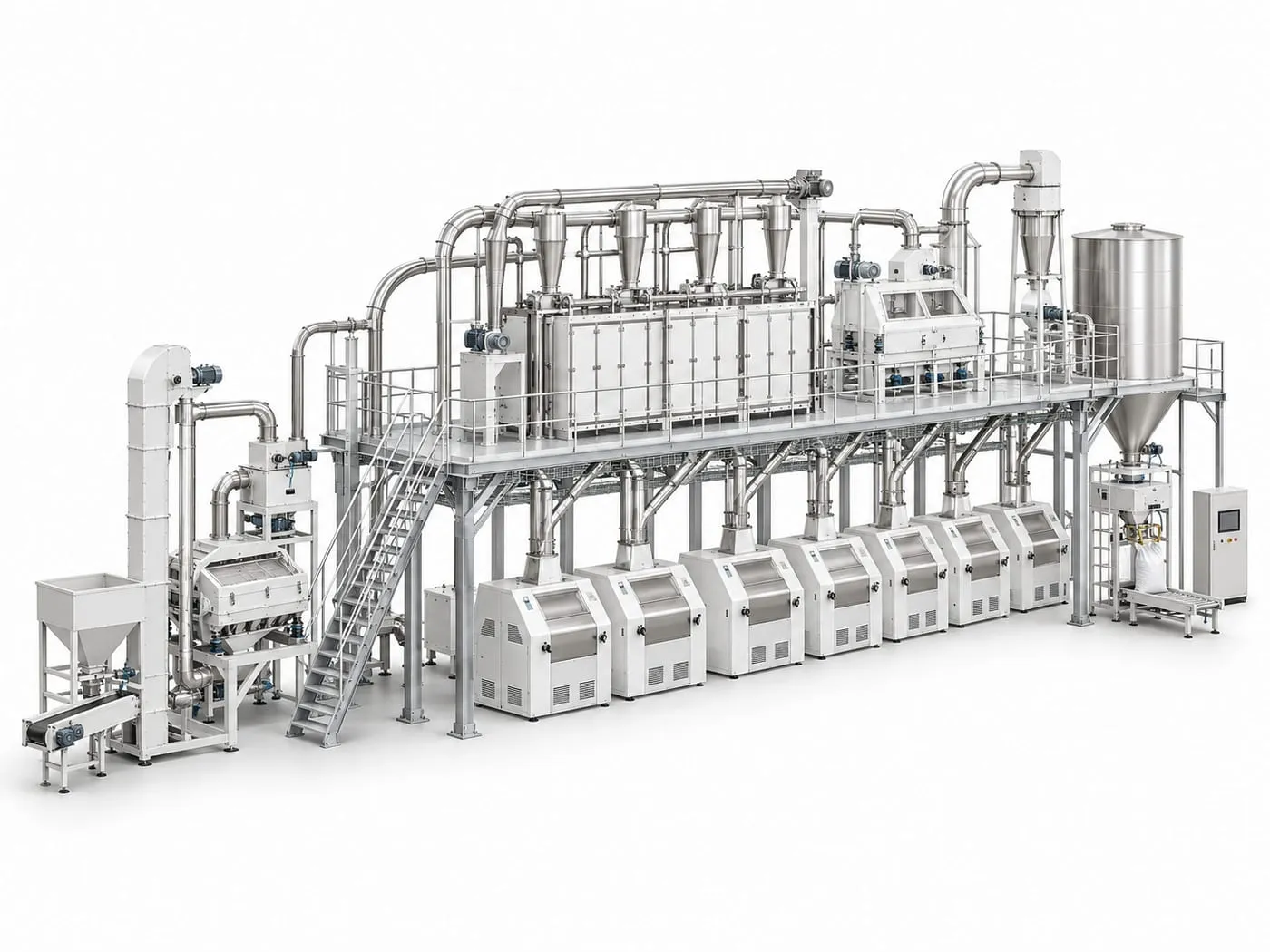
Grain Milling Line
Investors and existing mills setting up or upgrading wheat flour or maize meal production.
Sized on cleaned grain intake per day (t/24 h)

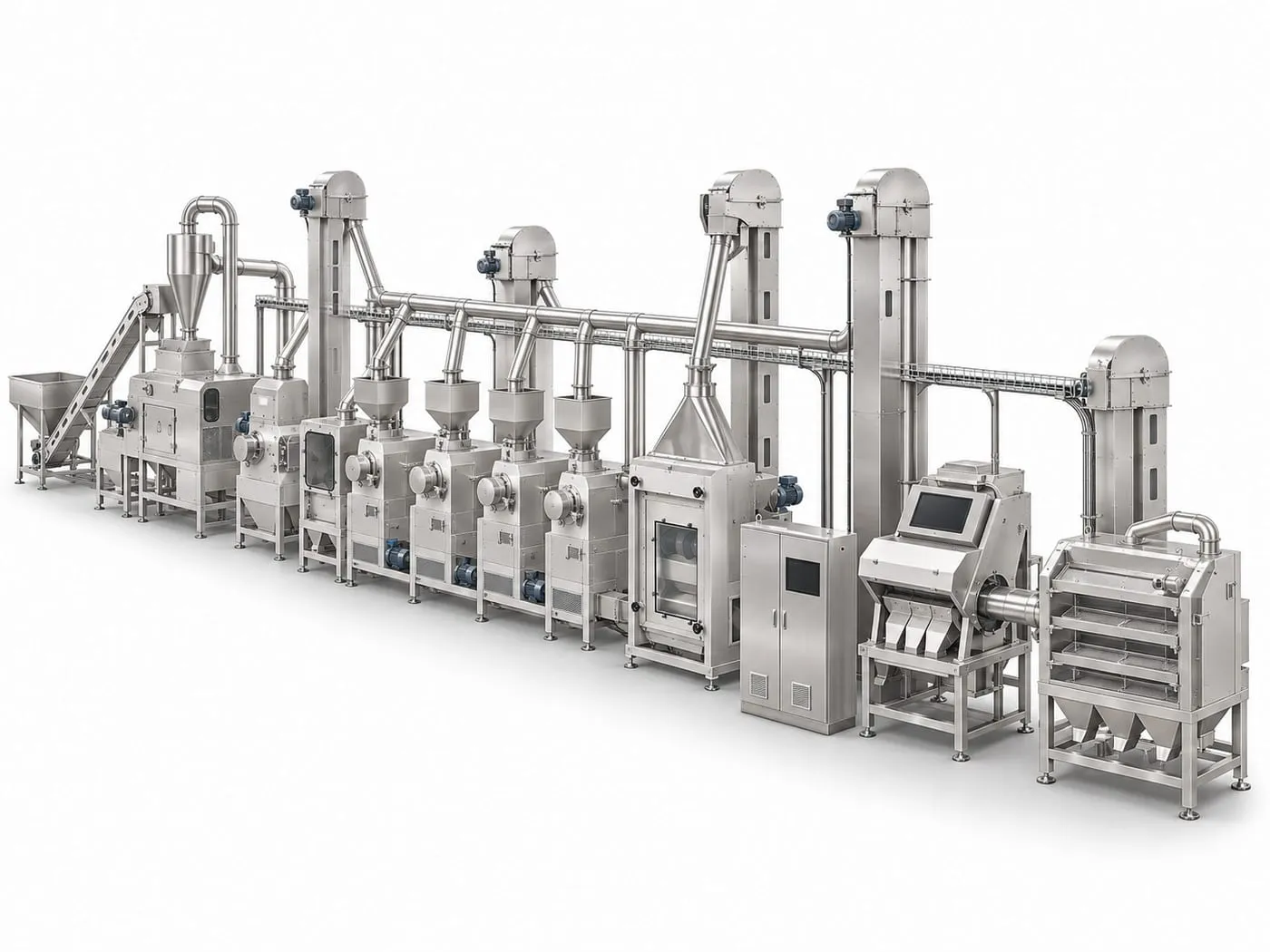
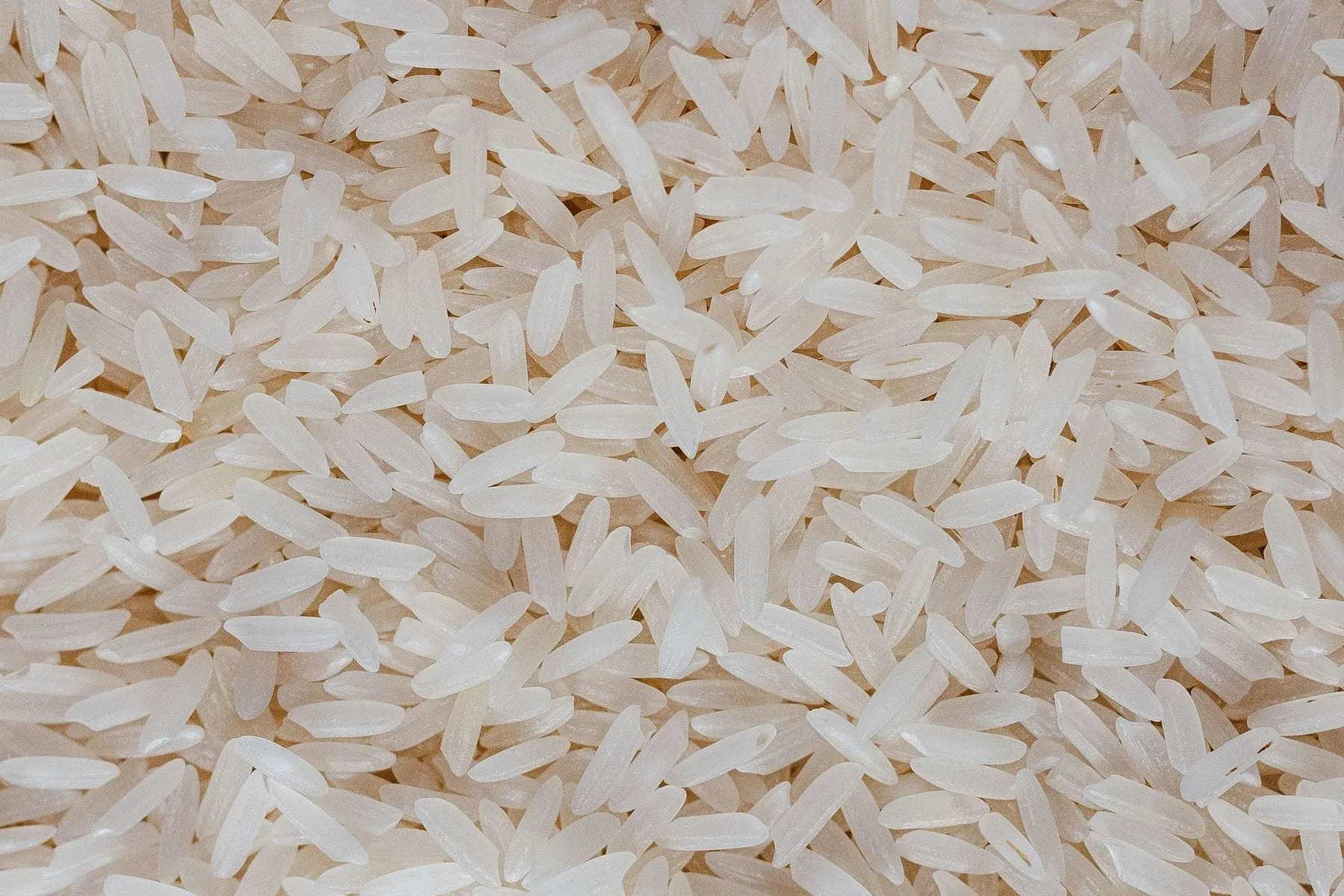
08 · Grain & Flour Milling — Production line
A rice mill that turns paddy into graded white rice, from cleaning and husking through whitening, polishing and optical sorting where needed.
Short answer: A rice milling line removes the husk and bran from paddy and grades the white rice into whole grains and brokens. The configuration depends mainly on paddy moisture and impurity, the head rice yield you need, and whether you sell bulk rice or polished, sorted rice in retail packs.
| Form | Suits | Watch out for |
|---|---|---|
| Compact combined mill | Local markets, starter mills | Fewer adjustments; yield is more sensitive to paddy quality |
| Multi-pass whitening | Commercial mills with steady supply | Needs more height, elevators and floor area |
| With colour sorting and polishing | Retail and export packs | Higher compressed air demand and more maintenance points |
If you need germ-retained or lightly milled rice, the whitening setup is chosen differently — tell us early.
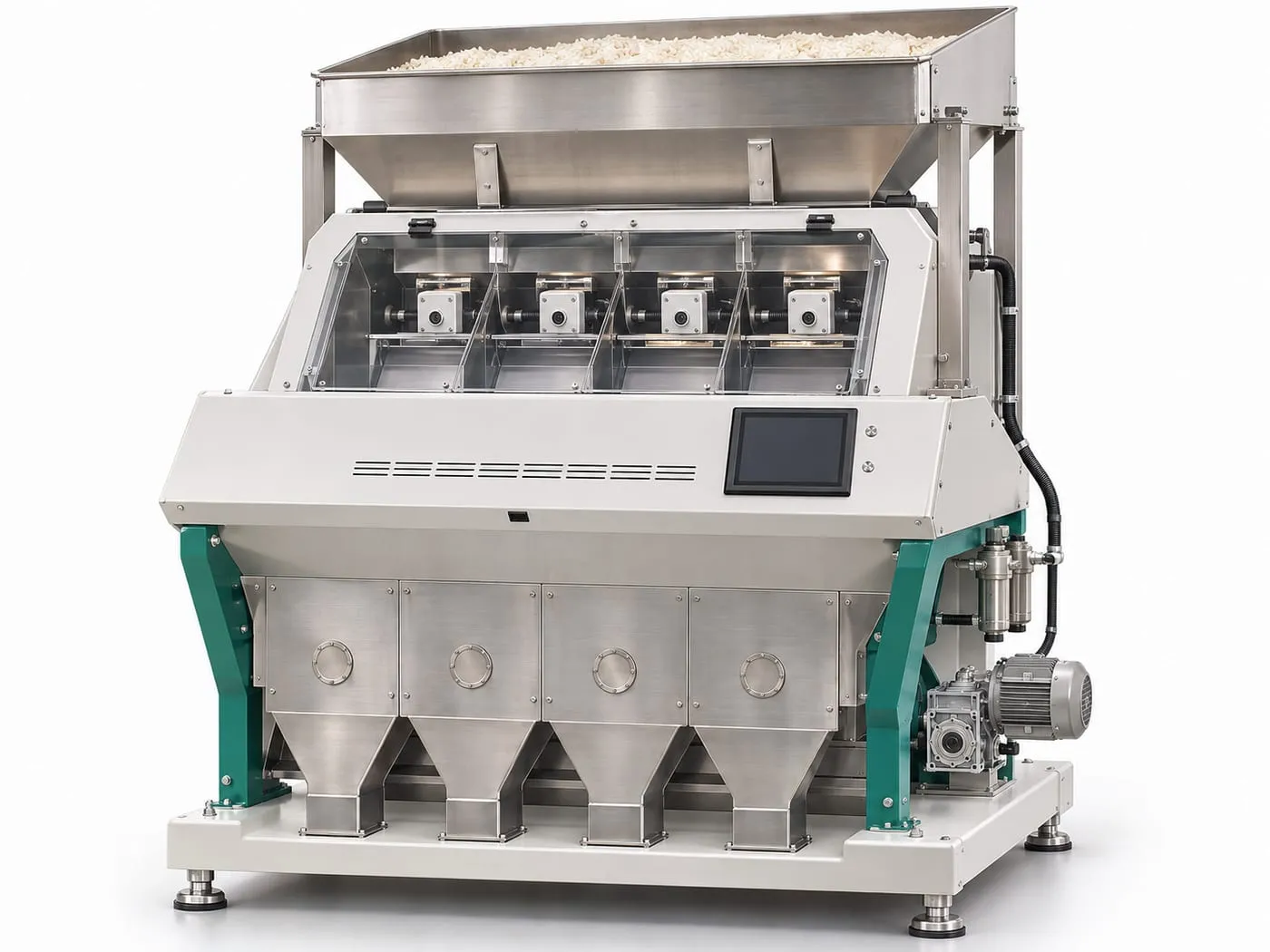
Paddy usually comes from dryers or storage silos. Within the line, a grain optical sorter handles the final quality grading. After packing, an in-line checkweigher verifies bag weights, and small retail packs can be made on a VFFS packaging machine or a vacuum packaging machine for vacuum bricks.
Compact combined mill
husking and whitening in a small integrated unit, for local markets and modest daily volumes.
Multi-pass whitening
several gentle whitening stages instead of one, to protect head rice yield on larger plants.
With colour sorting and polishing
adds water polishing and optical sorting for packaged retail or export-grade rice.
Our engineers check these points with you, so the quotation fits your site rather than a catalogue default.
Paddy that is too wet or too dry cracks more easily during husking and whitening, which raises the share of broken rice. Most mills dry paddy to a stable moisture before milling; we ask for your typical range so the line and any dryer are matched to it.
A compact mill combines steps in one unit and suits smaller volumes and local markets. A multi-pass line spreads whitening over several machines, takes off bran more gradually and usually gives better head rice yield and appearance, at a higher investment and footprint.
Paddy samples or a test report, the rice grade you sell, target daily paddy intake, building size and height, power supply, and the bag sizes you pack. Tell us what you want to do with husk, bran and broken rice.
Tell us your raw material, finished product and target output. Our engineers reply with a matched configuration and quotation.
What to send with your inquiry
Email sales@hnfoda.com
Grain & Flour Milling
Investors and existing mills setting up or upgrading wheat flour or maize meal production.
Sized on cleaned grain intake per day (t/24 h)
Grain & Flour Milling
Rice mills, bean and seed processors, and grain exporters who need to meet a visual quality grade.
Rated on feed input (t/h), varies with grain and defect rate
Grain & Flour Milling
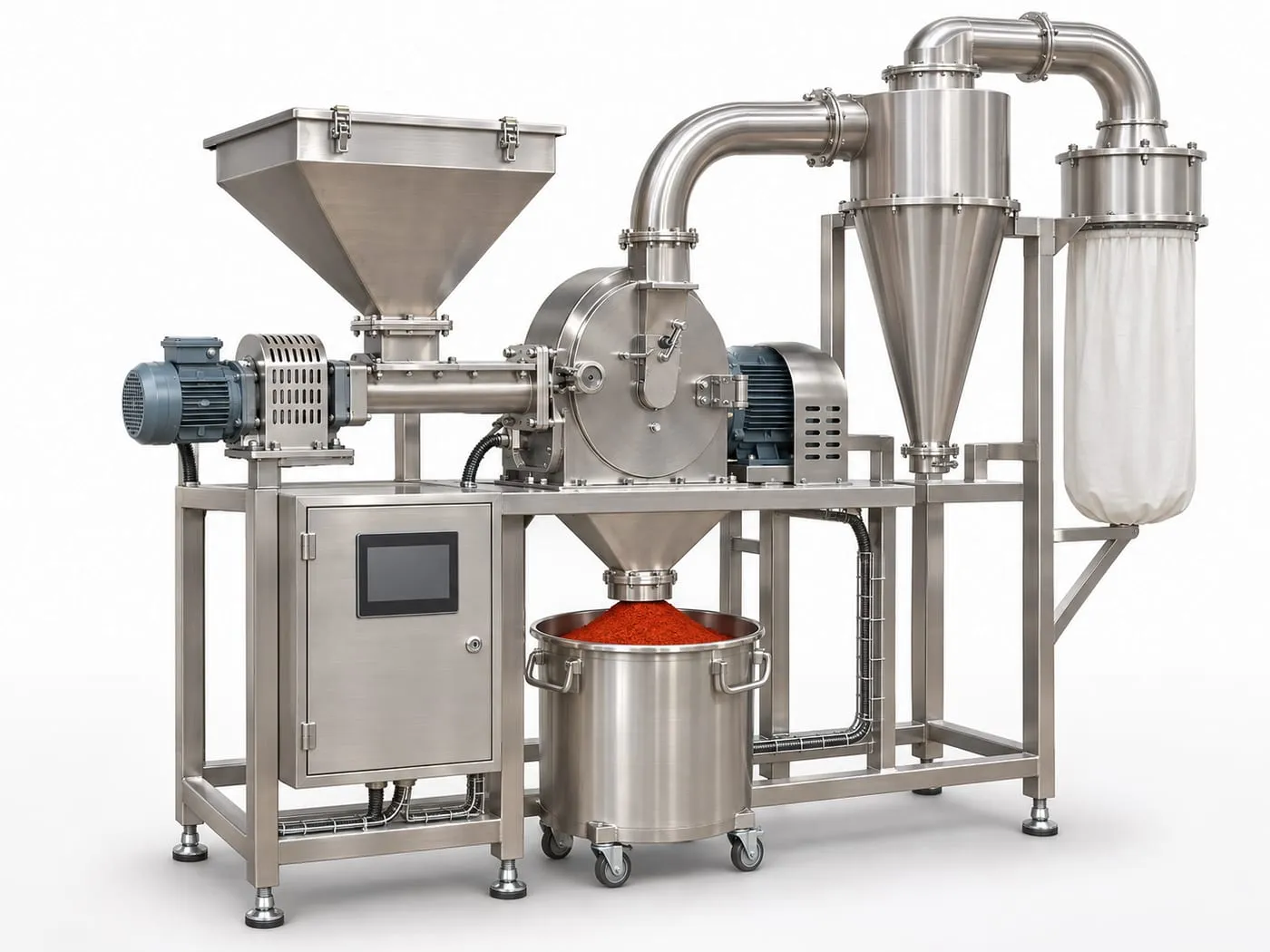
Spice processors, seasoning makers and packers who grind their own powders.
Rated on dried raw spice input (kg/h), depends on material and fineness
Meat & Seafood Processing
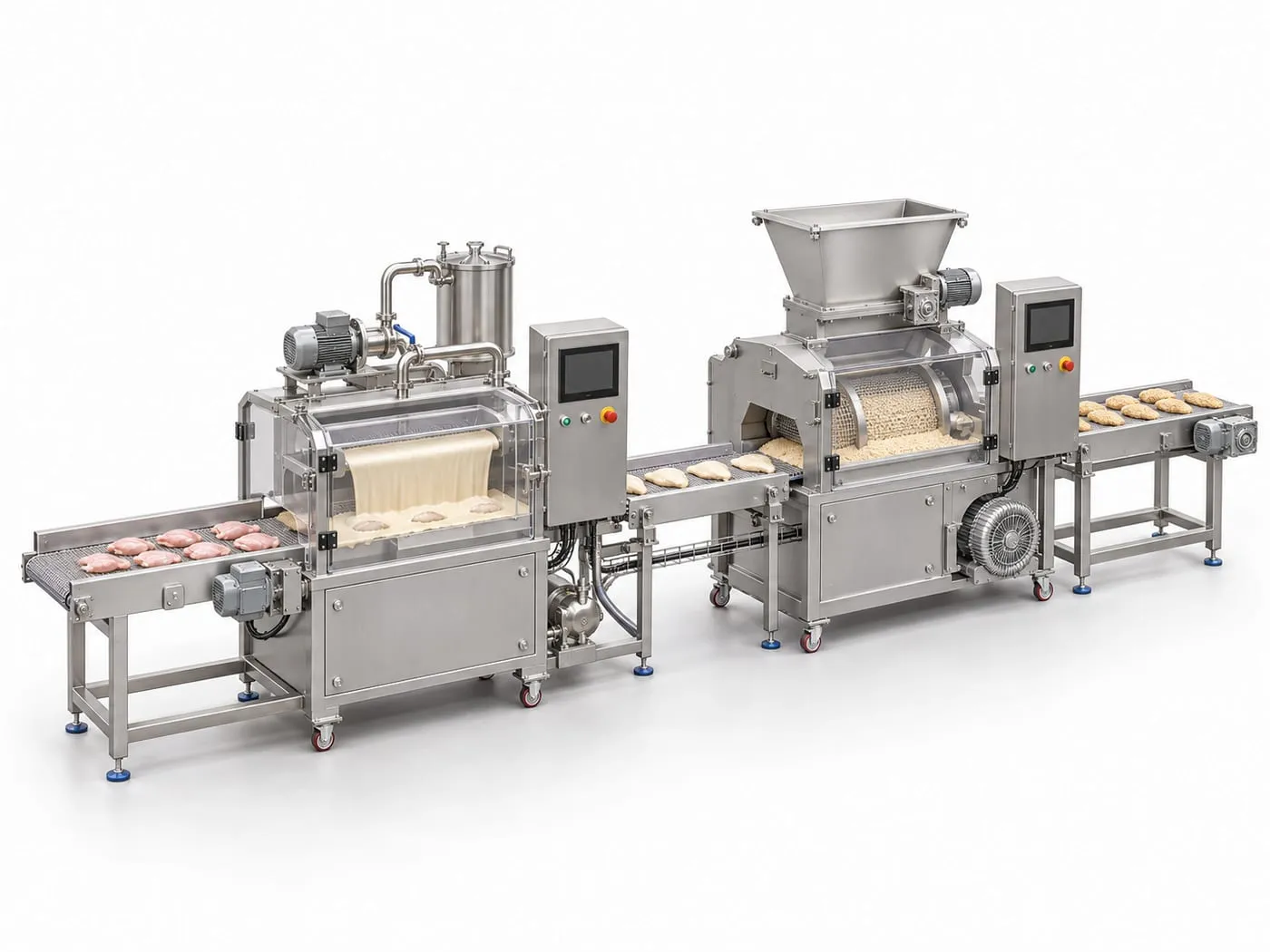
Factories making breaded chicken, fish fingers, coated vegetables or nuggets for frozen and food-service markets.
Sized to belt width and coated product output (kg/h of finished product)