Edible Oil Processing
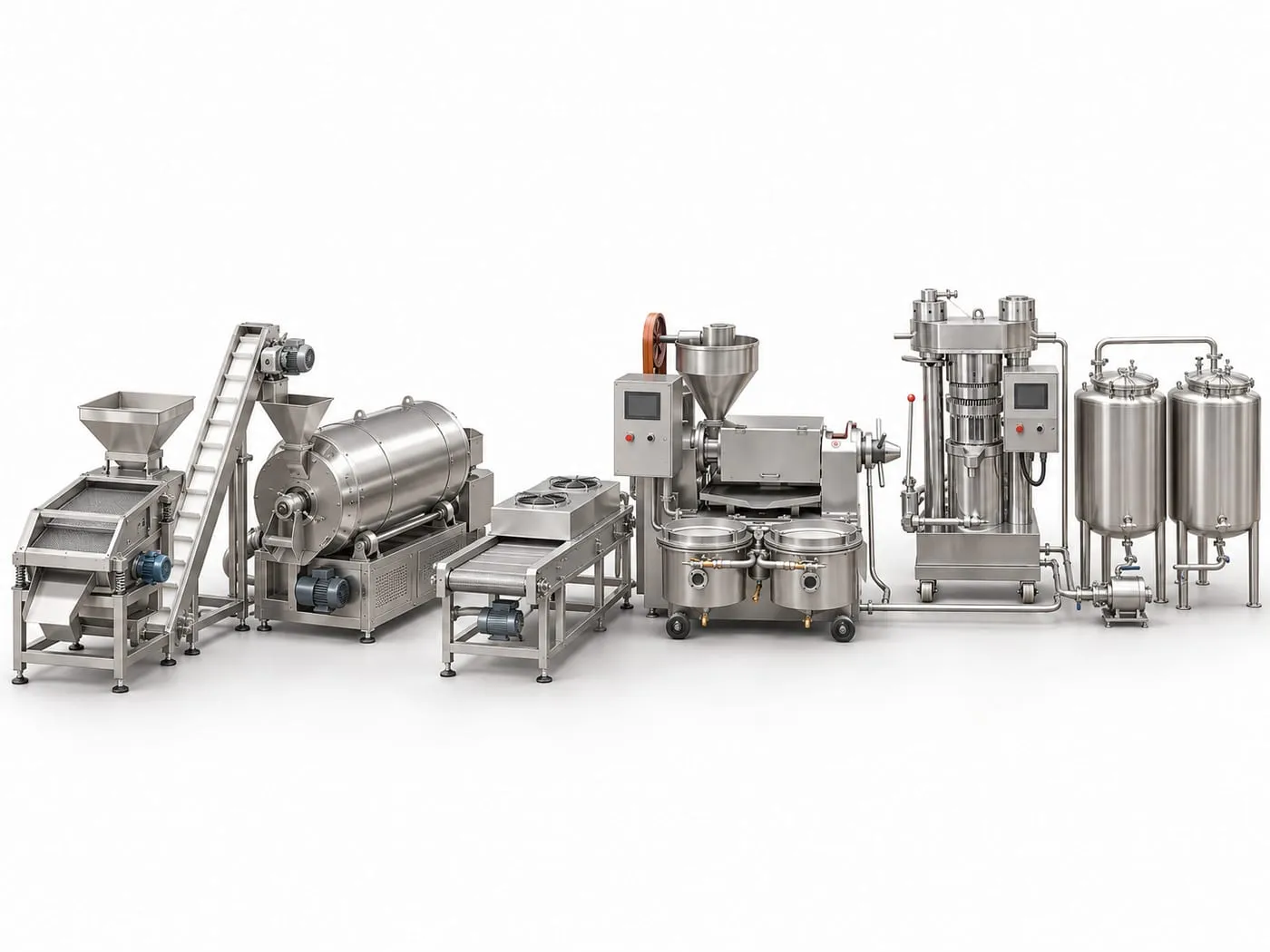
Sesame Oil Production Line
Oil mills and food companies producing roasted sesame oil, cold-pressed sesame oil or traditional sesame aroma oil.
Sized to sesame seed input (kg/h or tonnes per day)

03 · Edible Oil Processing — Equipment
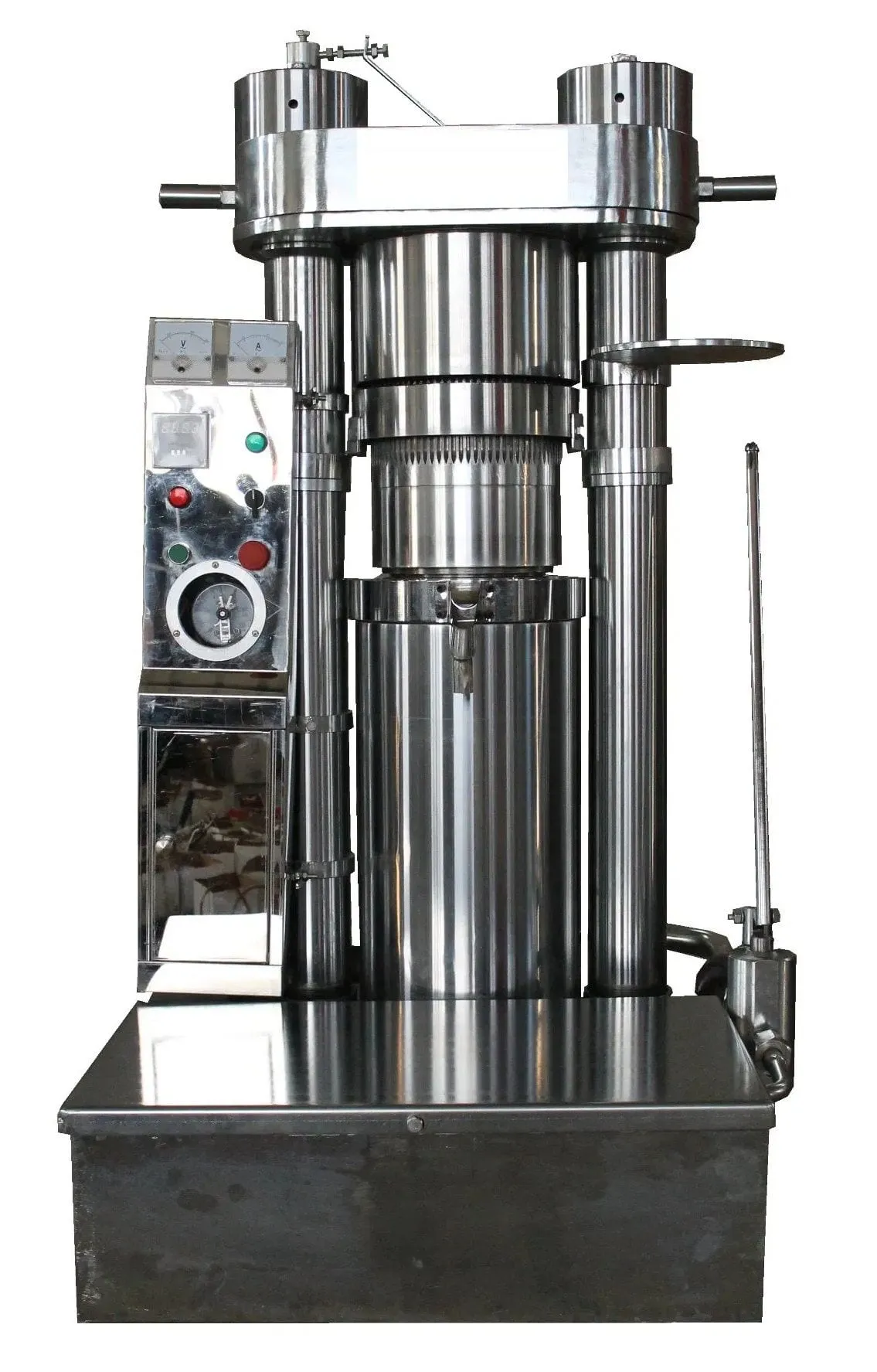
Presses oil from a batch of prepared seed or paste using hydraulic force. Vertical and horizontal designs with filter plates or press barrels.
Short answer: A hydraulic oil press puts a batch of prepared seed or paste under high pressure using a hydraulic cylinder, and the oil runs out through filter plates or the barrel wall. The configuration depends on how the seed is prepared, how large each batch is, the cycle time you can accept, and how the cake is taken out after pressing.
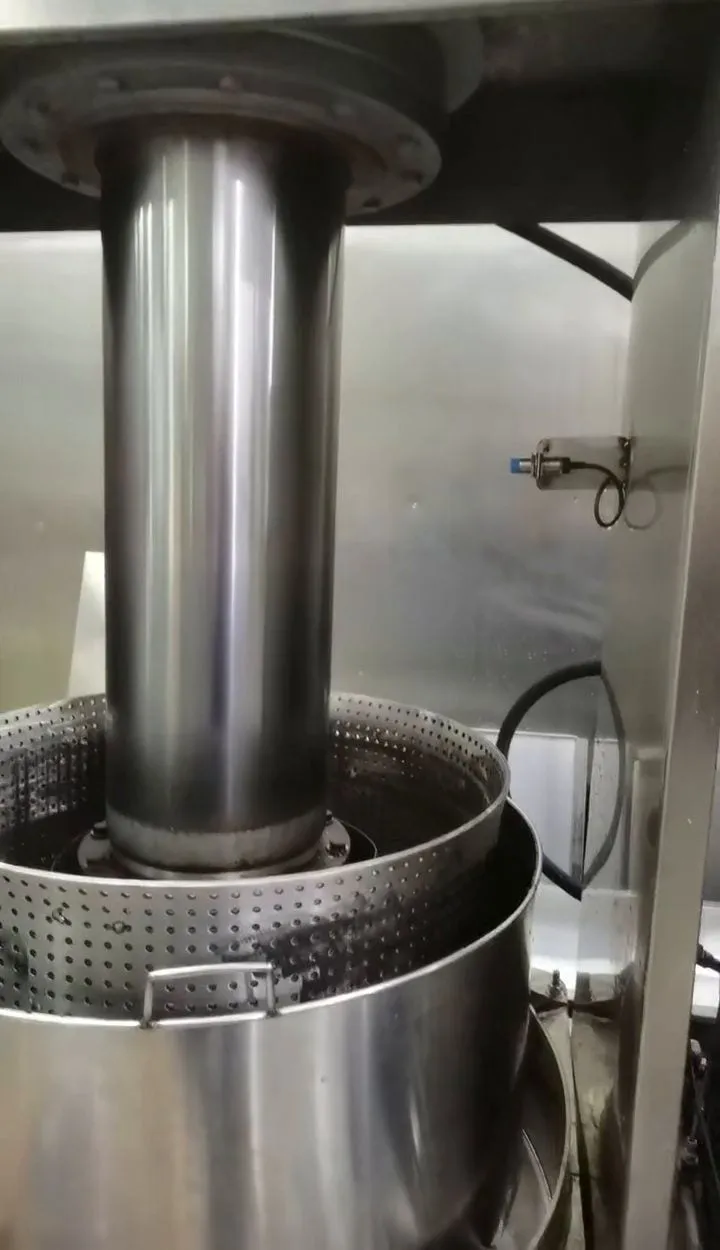
Prepared material, often roasted and ground seed or a warm paste, is loaded into a press barrel or stacked between filter plates, sometimes wrapped in filter cloth. A hydraulic pump drives a ram that pushes the material against a fixed head. Pressure rises gradually and is held for a set time while oil drains into a collecting tray. When oil flow slows, the pressure is released, the cake is pushed or lifted out, and the press is reloaded.
Because the material is pressed rather than sheared, there is little heat from friction. This is one reason hydraulic presses are used for sesame and other oils where aroma matters. The trade-off is batch operation, with loading and unloading time between charges. Output therefore depends as much on how quickly operators can load and empty the press as on the press itself, and several presses are often run side by side to keep a steady supply of oil.
| Form | Suits | Watch out for |
|---|---|---|
| Vertical press | Sesame oil workshops, small batches | Manual loading; floor height |
| Horizontal press | Larger charges, easier cake handling | Larger footprint |
| Filter plate type | Clear oil straight from pressing | Cloths and plates need cleaning |
| Barrel type | Pastes and finely ground seed | Oil may need more settling |
Seed is cleaned with oilseed cleaning equipment and roasted in an oilseed roaster. Crude oil goes to an edible oil filter before filling. It is one of the pressing options in a sesame oil production line; for continuous pressing see the screw oil press.
Vertical press
material is loaded into a barrel or stacked between plates and pressed from below; compact and common for sesame oil.
Horizontal press
pressing along a horizontal axis; easier loading and cake removal for larger charges.
Filter plate or barrel type
plates with filter cloth give clearer oil; barrels suit pastes that are wrapped or contained.
Our engineers check these points with you, so the quotation fits your site rather than a catalogue default.
A hydraulic press works in batches and generates little friction heat, which helps preserve aroma in sesame, walnut and similar oils. A screw press works continuously and suits larger volumes. Many small sesame oil workshops use hydraulic presses.
For roasted sesame oil, yes. For cold-pressed oils, seed or paste is pressed without roasting, but it often still needs warming or conditioning to release oil well.
Oil from a hydraulic press is usually fairly clear but still carries fine particles. Settling and a filter press or bag filter are normally used before filling.
Tell us your raw material, finished product and target output. Our engineers reply with a matched configuration and quotation.
What to send with your inquiry
Email sales@hnfoda.com
Start a cooking oil business: choose pressing, filtering and refining equipment by scale, plus aflatoxin control, cost drivers and a quote checklist.
What a small palm oil mill needs: sterilising, threshing, digesting, pressing, clarifying, utilities, sizing on fruit bunches and a quote checklist.
Edible Oil Processing
Oil mills and food companies producing roasted sesame oil, cold-pressed sesame oil or traditional sesame aroma oil.
Sized to sesame seed input (kg/h or tonnes per day)
Edible Oil Processing
Oil mills and edible oil brands that buy or press crude oil and sell refined cooking oil.
Sized to crude oil input (tonnes per day)
Edible Oil Processing
Small and medium oil mills, cooperatives and edible oil brands pressing their own oil.
Sized to oilseed input (kg/h or tonnes per day)
Edible Oil Processing
Oil mills and seed processors who need clean seed for pressing, roasting or hulling.
Sized to raw oilseed input (tonnes per day or kg/h)