Edible Oil Processing
Sesame Oil Production Line
Oil mills and food companies producing roasted sesame oil, cold-pressed sesame oil or traditional sesame aroma oil.
Sized to sesame seed input (kg/h or tonnes per day)

03 · Edible Oil Processing — Equipment
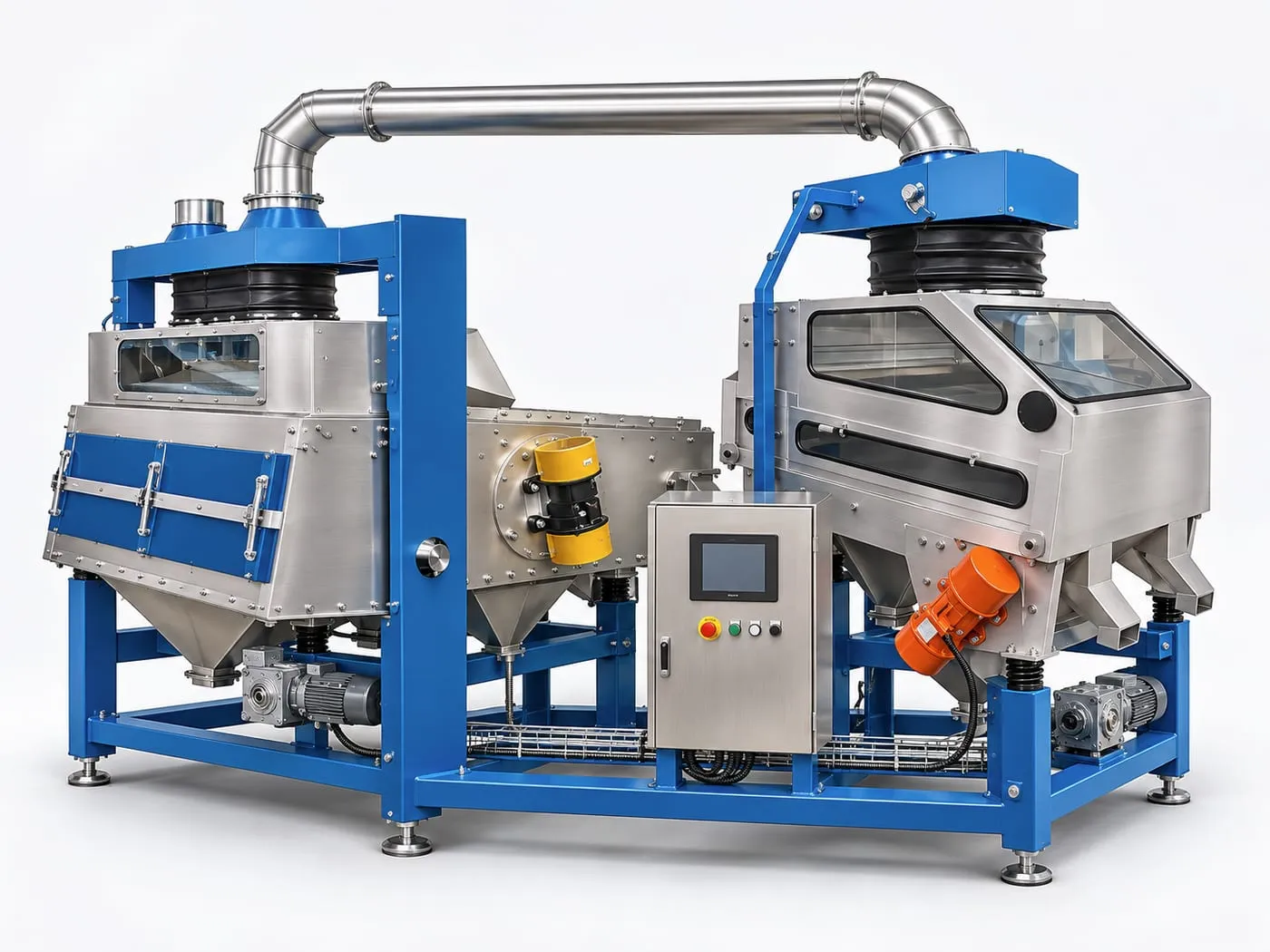
Removes large impurities, fine dust, stones and metal from oilseeds before roasting and pressing, using screens, air, destoners and magnets.
Short answer: Oilseed cleaning equipment separates large impurities, fine dust, stones and metal from oilseeds before they are roasted or pressed. The seed size, what kind and how much dirt arrives with it, and how much good seed you can afford to lose decide the combination of screens, aspirators, destoners and magnets.
Seed is fed evenly across the width of the first machine. A vibrating screen with two or more decks lets seed pass through while larger impurities, such as straw, stones and clods, stay on top; a finer screen below removes sand and dust. An aspirator then passes the seed through an air stream that lifts light material such as husks, chaff and empty seeds into a cyclone.
A destoner separates stones of similar size to the seed by density: on an inclined vibrating deck with air blown from below, light seed floats and flows down, while heavier stones move up the deck to a separate outlet. A magnetic separator, either a plate magnet or a drum magnet, catches iron and steel pieces before the seed reaches roasters and presses.
The order of the machines matters. Large impurities are taken out first so they do not block the finer equipment, and the magnet is usually placed just before the press or grinder to catch anything picked up along the way. Dust from screens and aspirators is collected through a cyclone or bag filter to keep the work area clean.
| Form | Suits | Watch out for |
|---|---|---|
| Vibrating screen | All seeds as the first cleaning step | Screen sizes must match seed |
| Aspirator | Seeds with husks, chaff and light dust | Air setting affects seed loss |
| Destoner | Seed harvested from fields with stones | Feed must be even for good separation |
| Magnetic separator | All lines before presses and grinders | Clean magnets regularly |
Cleaning is the first step of a pressing plant. Clean seed goes to an oilseed roaster and then a screw oil press or hydraulic oil press. It is also the first stage of a sesame oil production line.
Vibrating screen
separates large impurities and fine dust by size; the basic first step for most seeds.
Aspirator
uses air to lift light impurities such as husks, chaff and dust.
Destoner
separates stones of similar size to the seed by density, on an inclined vibrating deck with air flow.
Magnetic separator
removes iron and steel pieces that would damage presses and grinders.
Our engineers check these points with you, so the quotation fits your site rather than a catalogue default.
Stones and metal damage press worms and cages, sand wears parts, and dirt and foreign seeds lower oil quality and darken the cake. Good cleaning protects equipment and product.
Most mills use at least a vibrating screen and a magnet; a destoner and aspirator are added when seed arrives with stones, dust or husks. Your seed samples decide the combination.
Some loss is unavoidable, especially with small or broken seeds. Screen choice and air adjustment balance cleaning efficiency against seed loss, and we set these with your samples.
Tell us your raw material, finished product and target output. Our engineers reply with a matched configuration and quotation.
What to send with your inquiry
Email sales@hnfoda.com
Start a cooking oil business: choose pressing, filtering and refining equipment by scale, plus aflatoxin control, cost drivers and a quote checklist.
Edible Oil Processing
Oil mills and food companies producing roasted sesame oil, cold-pressed sesame oil or traditional sesame aroma oil.
Sized to sesame seed input (kg/h or tonnes per day)
Edible Oil Processing
Oil mills and edible oil brands that buy or press crude oil and sell refined cooking oil.
Sized to crude oil input (tonnes per day)
Edible Oil Processing
Small and medium oil mills, cooperatives and edible oil brands pressing their own oil.
Sized to oilseed input (kg/h or tonnes per day)
Edible Oil Processing
Small oil workshops and specialty oil producers pressing sesame, walnut, cocoa or other high-value oils.
Sized to seed or paste charge per batch (kg) and cycles per hour