Edible Oil Processing
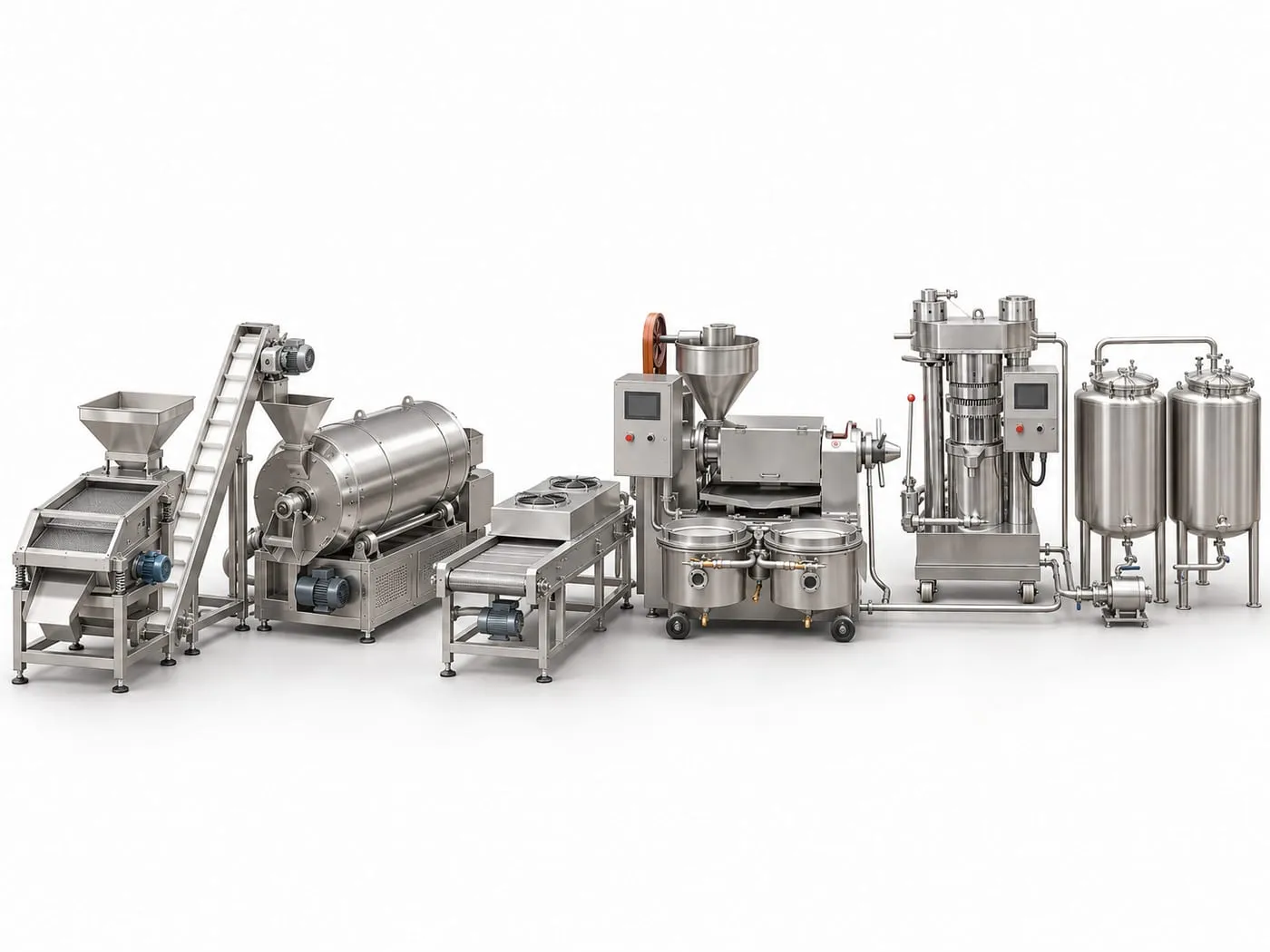
Sesame Oil Production Line
Oil mills and food companies producing roasted sesame oil, cold-pressed sesame oil or traditional sesame aroma oil.
Sized to sesame seed input (kg/h or tonnes per day)

03 · Edible Oil Processing — Equipment
Heats and conditions oilseeds before hot pressing so their moisture and temperature suit the press. Drum, stack cooker and continuous designs.
Short answer: An oilseed roaster heats and conditions seed before hot pressing so it reaches the press at the moisture and temperature that release oil most easily. The seed type, the heat source you have, the outlet moisture and temperature you need, and the press throughput it must keep up with decide the design.
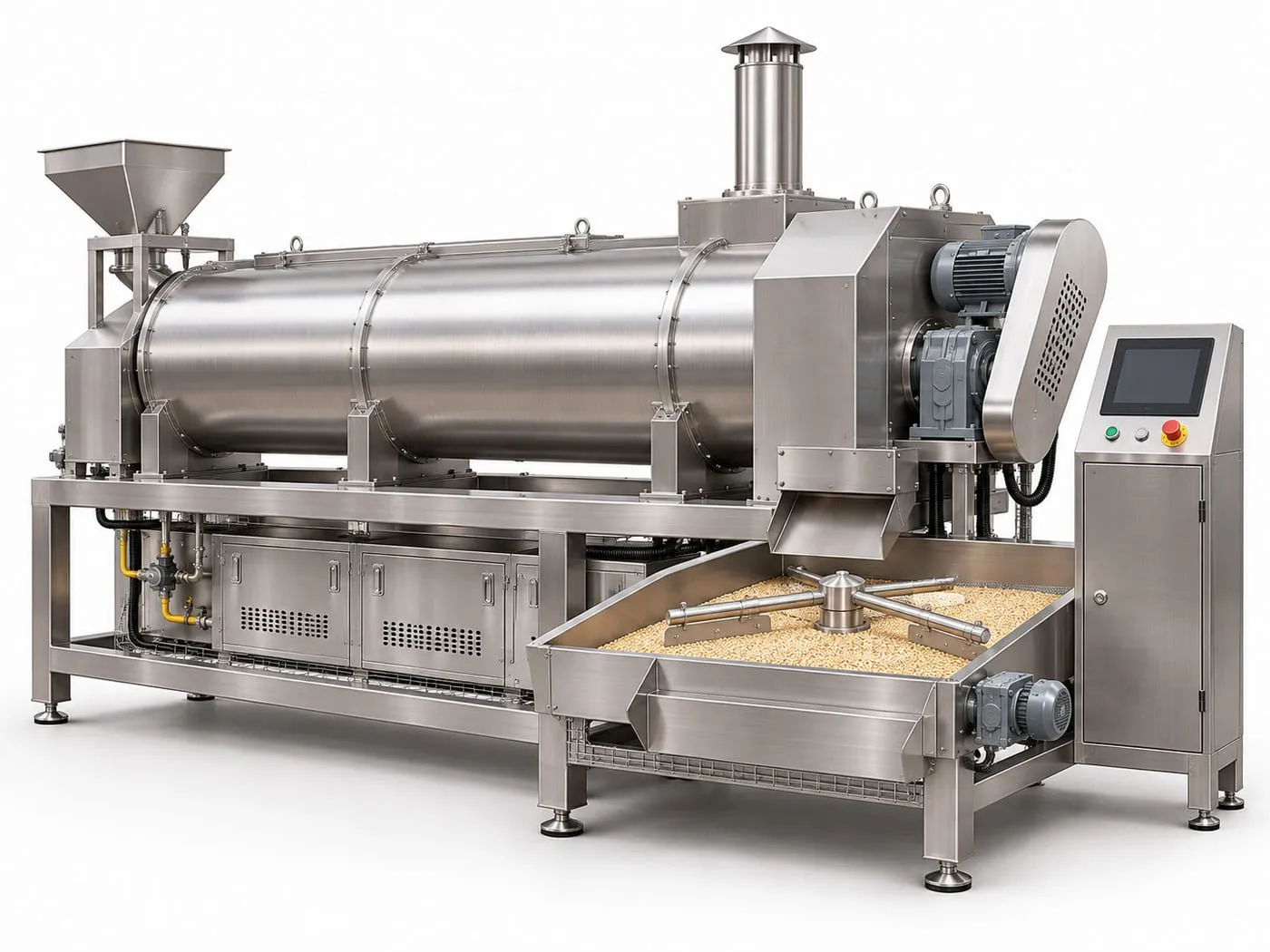
In a drum roaster, seed is fed into a rotating drum heated from outside or by hot air. Internal flights lift and turn the seed so it heats evenly, and an exhaust removes steam and smoke. The operator or controller adjusts temperature, drum speed and residence time to reach the target degree of roasting. At the end the seed is discharged, either into a cooler for flavour-led oils or straight into the press.
A stack cooker has several heated pans stacked vertically. Seed enters at the top and is swept down from pan to pan; steam or water can be added at the upper pans to adjust moisture, and the lower pans dry it to the target. A continuous conditioner uses a heated screw or belt to keep a steady flow into the press.
Whatever the design, the roaster and the press work as a pair. If seed arrives at the press too dry, the cake becomes hard and the press works harder; too wet, and the oil comes out cloudy and the cake is soft. For this reason we size the roaster around the press capacity and agree the outlet conditions during commissioning with your seed.
| Form | Suits | Watch out for |
|---|---|---|
| Drum roaster | Sesame, groundnut, flavour-led oils | Roast control; burnt flavour risk |
| Stack cooker | Rapeseed, sunflower, cottonseed, larger presses | Needs steam supply |
| Continuous conditioner | Steady feeding of a single press | Less control of roast flavour |
The roaster sits between oilseed cleaning equipment and a screw oil press or hydraulic oil press. In a sesame oil production line, roasting is the step that sets the aroma.
Drum roaster
seed tumbles in a heated rotating drum; common for sesame and groundnut where roast flavour matters.
Stack cooker
seed moves down through several heated pans with steam or moisture control; gives even conditioning for larger presses.
Continuous conditioner
heated screw or belt that feeds seed at a steady rate straight into the press.
Our engineers check these points with you, so the quotation fits your site rather than a catalogue default.
Heating breaks down cell structure and adjusts moisture so oil flows more easily. It usually raises yield and makes press operation steadier. The right moisture and temperature differ by seed.
Roasting aims for flavour and colour as well as easier pressing, as with sesame or groundnut oil. Conditioning mainly controls moisture and temperature for yield, with less change in flavour.
Yes, many layouts place the roaster or conditioner directly above or beside the press so seed arrives hot. Throughput must be matched, or a small buffer added.
Tell us your raw material, finished product and target output. Our engineers reply with a matched configuration and quotation.
What to send with your inquiry
Email sales@hnfoda.com
Start a cooking oil business: choose pressing, filtering and refining equipment by scale, plus aflatoxin control, cost drivers and a quote checklist.
Edible Oil Processing
Oil mills and food companies producing roasted sesame oil, cold-pressed sesame oil or traditional sesame aroma oil.
Sized to sesame seed input (kg/h or tonnes per day)
Edible Oil Processing
Oil mills and edible oil brands that buy or press crude oil and sell refined cooking oil.
Sized to crude oil input (tonnes per day)
Edible Oil Processing
Small and medium oil mills, cooperatives and edible oil brands pressing their own oil.
Sized to oilseed input (kg/h or tonnes per day)
Edible Oil Processing
Small oil workshops and specialty oil producers pressing sesame, walnut, cocoa or other high-value oils.
Sized to seed or paste charge per batch (kg) and cycles per hour