Edible Oil Processing
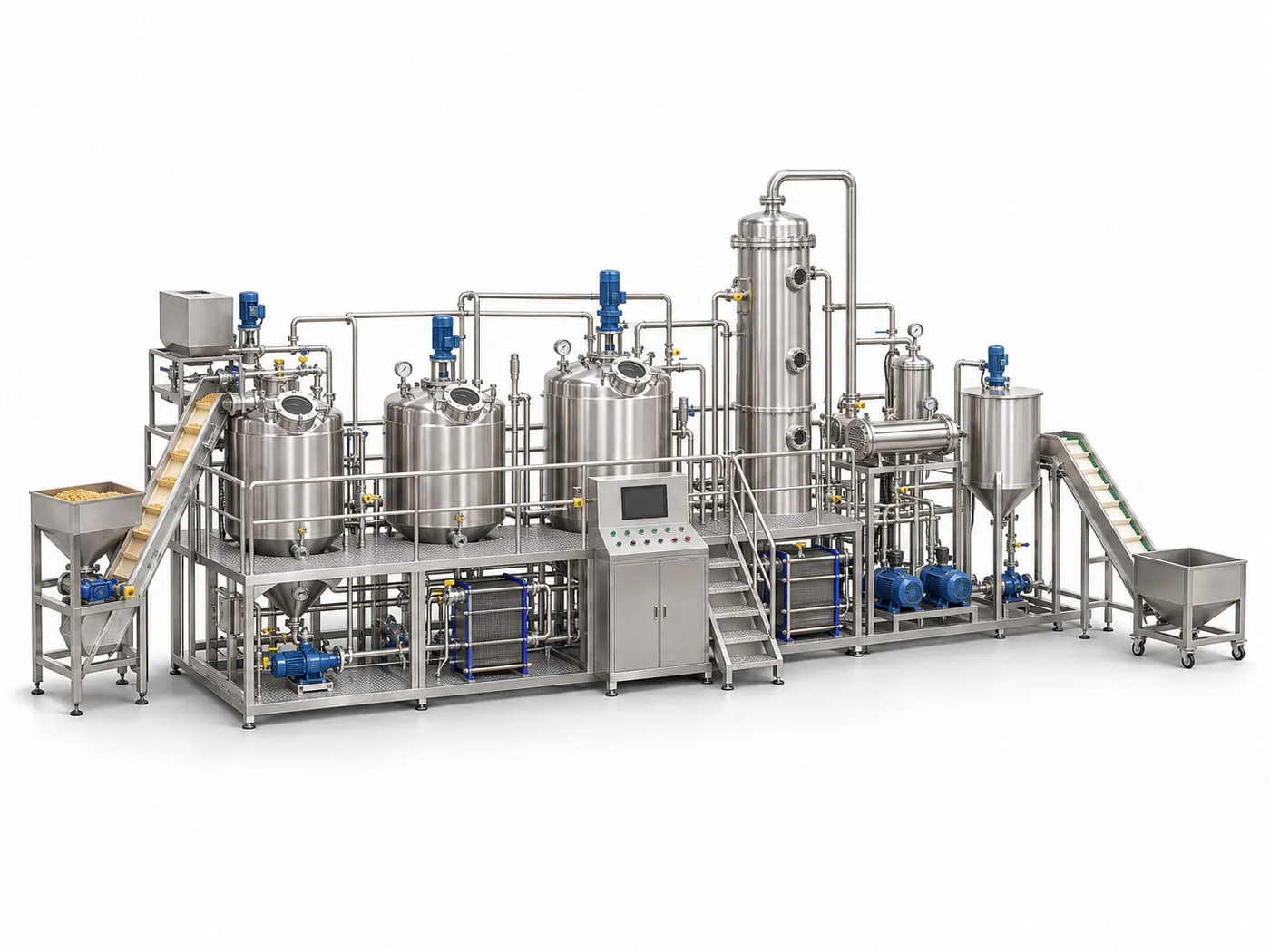
Edible Oil Refining Line
Oil mills and edible oil brands that buy or press crude oil and sell refined cooking oil.
Sized to crude oil input (tonnes per day)

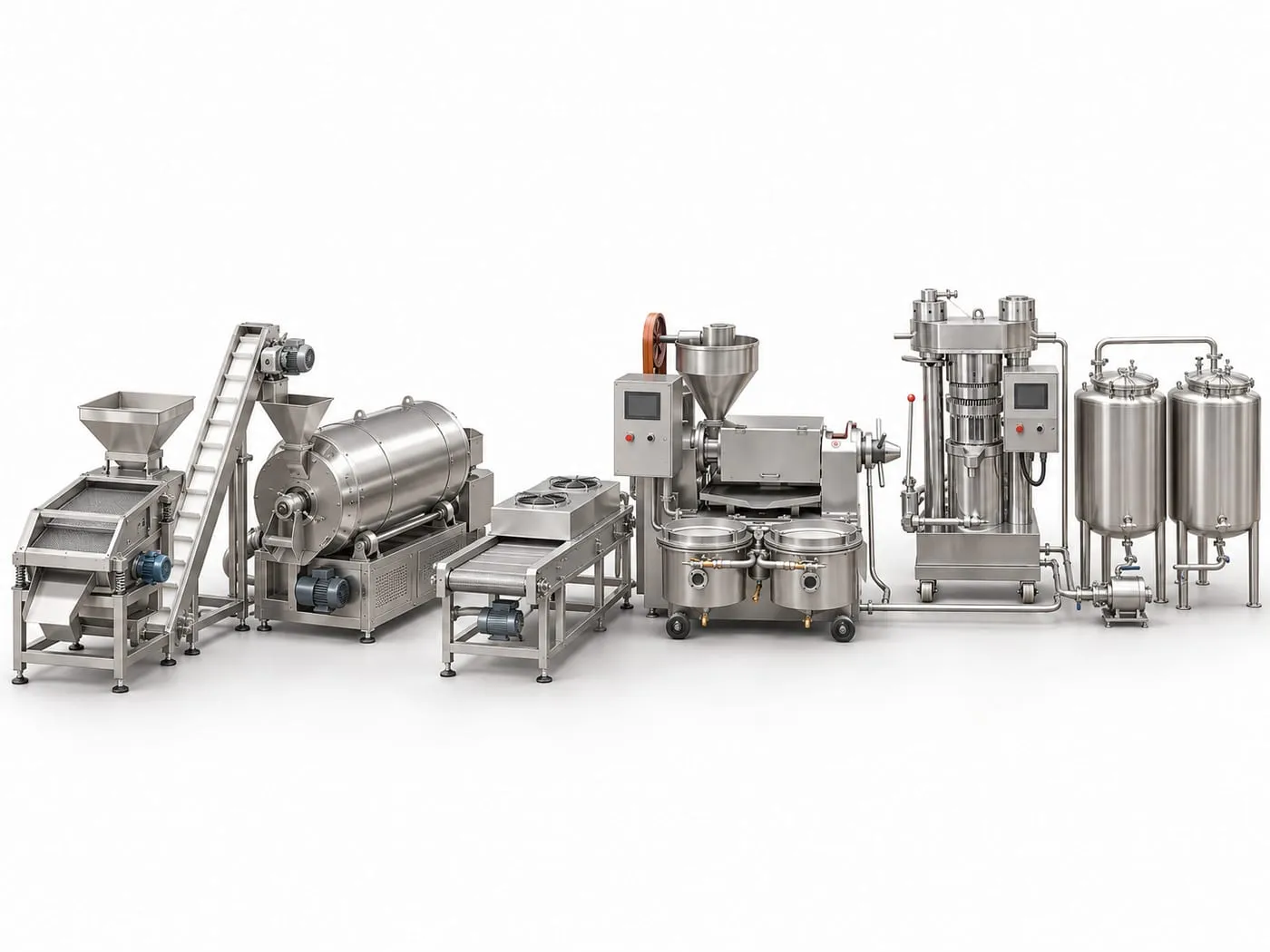
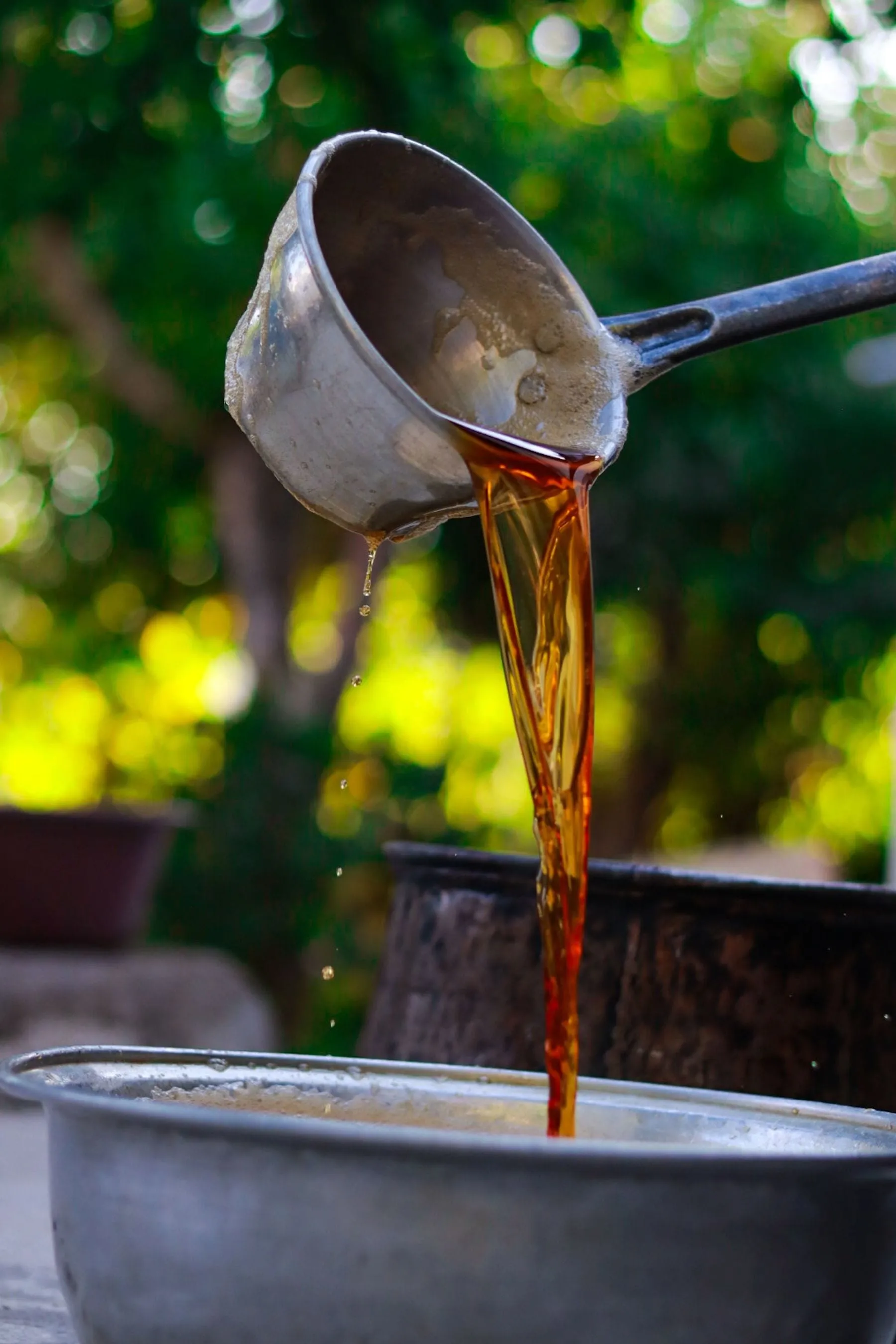
03 · Edible Oil Processing — Production line
Links sesame cleaning, roasting, pressing or stone grinding, clarification and filling for pressed sesame oil or traditional aroma sesame oil.
Short answer: A sesame oil production line cleans sesame seed, roasts it to the aroma you want, and then extracts the oil by pressing or by the traditional stone-grinding water substitution method, before clarifying and filling it. The target aroma and the crude oil quality decide the route, while material loss, residue handling and waste water shape the detailed design.
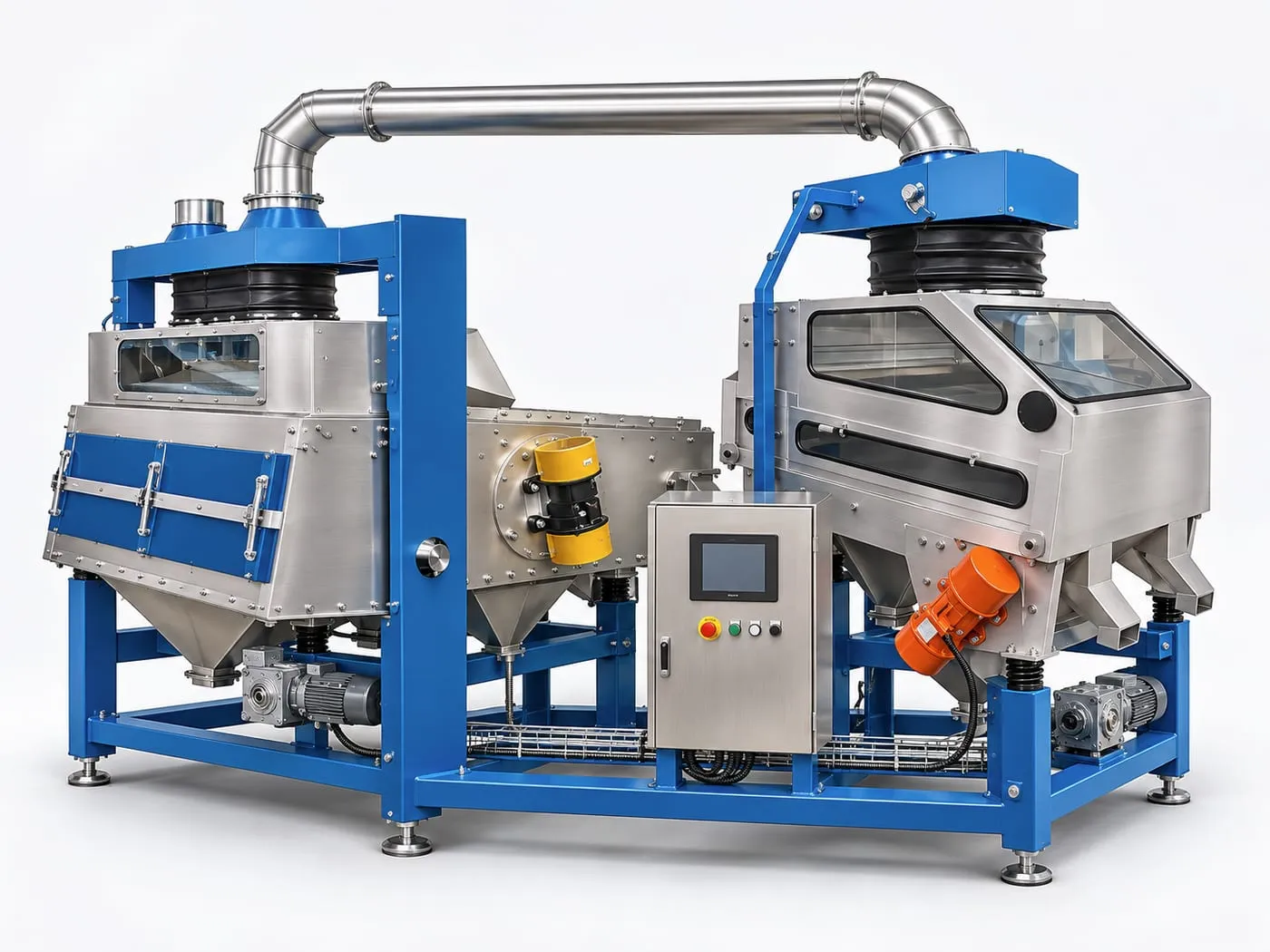
Sesame seed is small and light, so cleaning screens and aspiration are set finely to avoid losing good seed with the dust. Roasting is the step that most affects the final oil, and it is worth agreeing a reference sample before the line is designed.
| Form | Suits | Watch out for |
|---|---|---|
| Mechanical pressing line | Roasted or cold-pressed sesame oil at steady volumes | Roast control decides flavour |
| Stone-grinding water substitution | Traditional strong-aroma sesame oil | Slower; waste water and paste residue to handle |
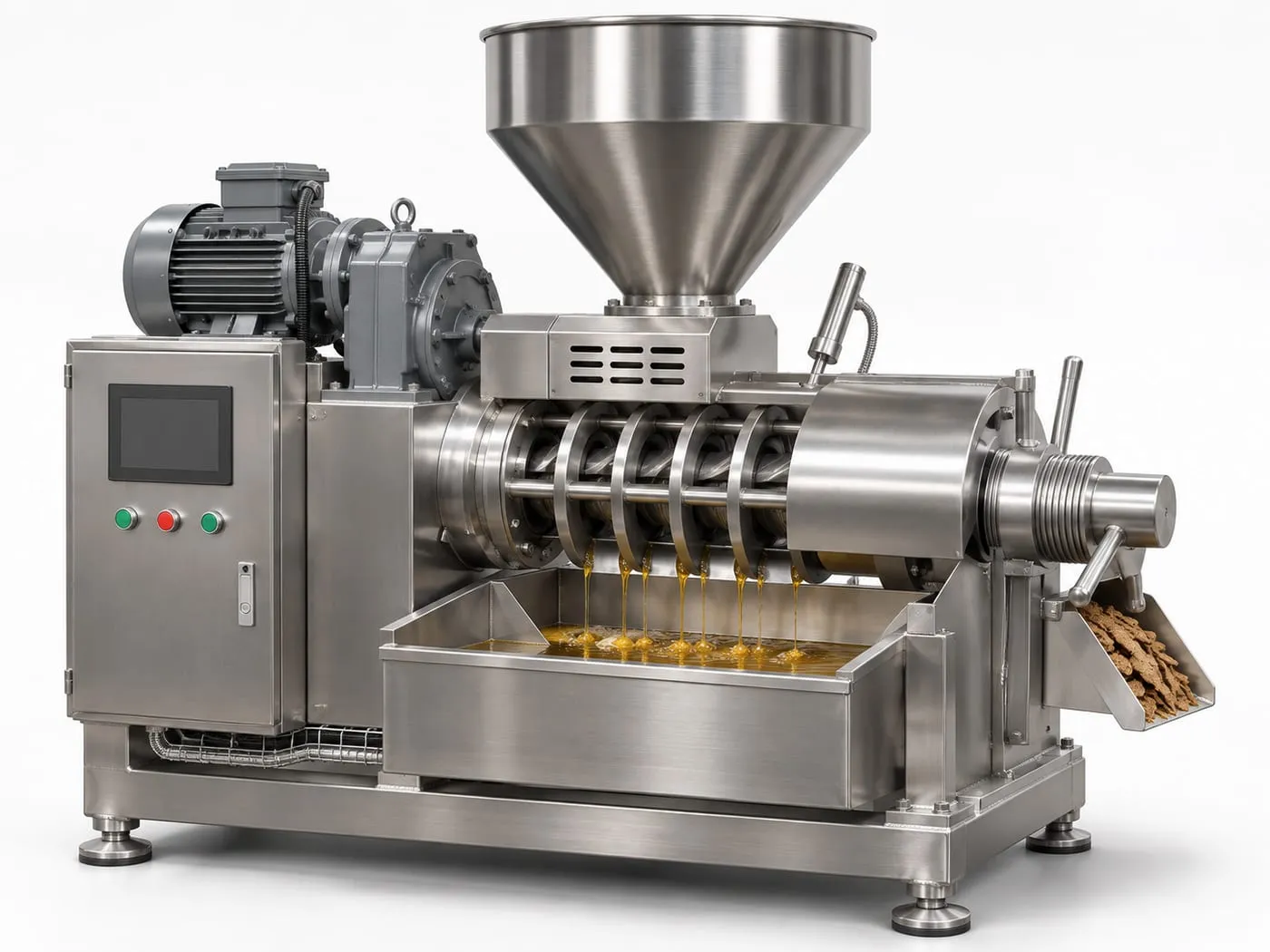
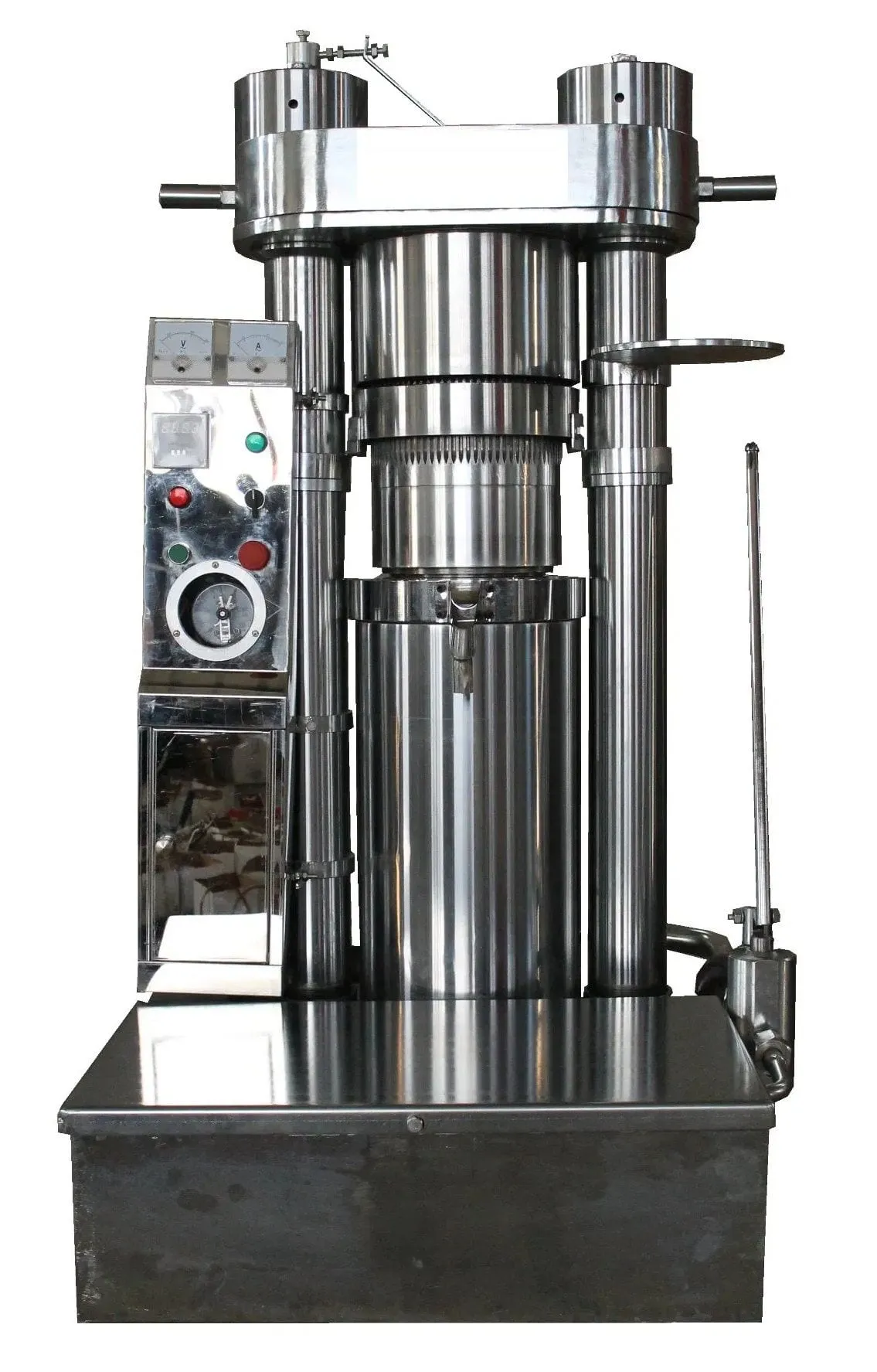
The line uses oilseed cleaning equipment, an oilseed roaster, a screw oil press or hydraulic oil press, and an edible oil filter. Bottling follows with a liquid filling machine.
Mechanical pressing line
cleaned sesame is roasted (or not, for cold-pressed oil) and pressed in a screw or hydraulic press, then filtered.
Stone-grinding water substitution section
roasted sesame is ground to a paste, mixed with hot water and the oil is separated by shaking; used for strong-aroma sesame oil.
Our engineers check these points with you, so the quotation fits your site rather than a catalogue default.
They make different products. Pressed roasted sesame oil has a clean roasted flavour and suits mechanised production. The stone-grinding water substitution method gives the strong, deep aroma of traditional sesame oil, but is slower and creates waste water to treat.
Darker roasting gives stronger aroma and darker oil but raises the risk of burnt flavour. Your market reference oil is the best guide; we set roasting temperature and time during commissioning.
Roasted sesame oil is usually sold unrefined after settling and filtering, because refining removes the aroma. Refining is used only for neutral sesame oil from unroasted seed.
Tell us your raw material, finished product and target output. Our engineers reply with a matched configuration and quotation.
What to send with your inquiry
Email sales@hnfoda.com
Edible Oil Processing
Oil mills and edible oil brands that buy or press crude oil and sell refined cooking oil.
Sized to crude oil input (tonnes per day)
Edible Oil Processing
Small and medium oil mills, cooperatives and edible oil brands pressing their own oil.
Sized to oilseed input (kg/h or tonnes per day)
Edible Oil Processing
Small oil workshops and specialty oil producers pressing sesame, walnut, cocoa or other high-value oils.
Sized to seed or paste charge per batch (kg) and cycles per hour
Edible Oil Processing
Oil mills and seed processors who need clean seed for pressing, roasting or hulling.
Sized to raw oilseed input (tonnes per day or kg/h)